← all Content & Guides
A flawless hull does more than turn heads in the marina. It improves efficiency, protects your structure, and directly impacts your yacht’s long-term value. At the core of that finish sits one essential product: Marine Fairing Compound.
If you want your antifouling to perform properly and your topsides to look professional, you must start with the right fairing process. Skipping this stage often leads to visible imperfections, uneven coatings, and repeat labour the following season.
In this guide from The Yacht Maintenance Hub, we break down everything you need to know about marine fairing, including product types, budgeting strategies, recurring maintenance cycles, and how fairing fits into long-term yacht ownership.
This post is all about Marine Fairing Compound!
What Is Marine Fairing Compound and Why It Matters
Marine fairing compound is a high-build filler designed to smooth imperfections on fiberglass, aluminium, steel, or composite hulls before priming and painting. Unlike general body fillers, a true marine grade fairing compound resists water absorption, bonds aggressively, and sands efficiently without clogging abrasives.
When you apply antifouling, primers, or topcoats over an uneven surface, those coatings highlight every low spot and ridge. Therefore, fairing does not simply improve appearance — it improves performance. A fair hull reduces drag, increases fuel efficiency, and supports even antifouling wear.
Moreover, most recurring hull maintenance projects depend on a stable base layer. If the substrate beneath your coatings fails, you will spend far more correcting peeling paint and delamination than you would investing in proper fairing from the start.
How Marine Fairing Fits Into Recurring Yacht Maintenance
Fairing Before Antifouling
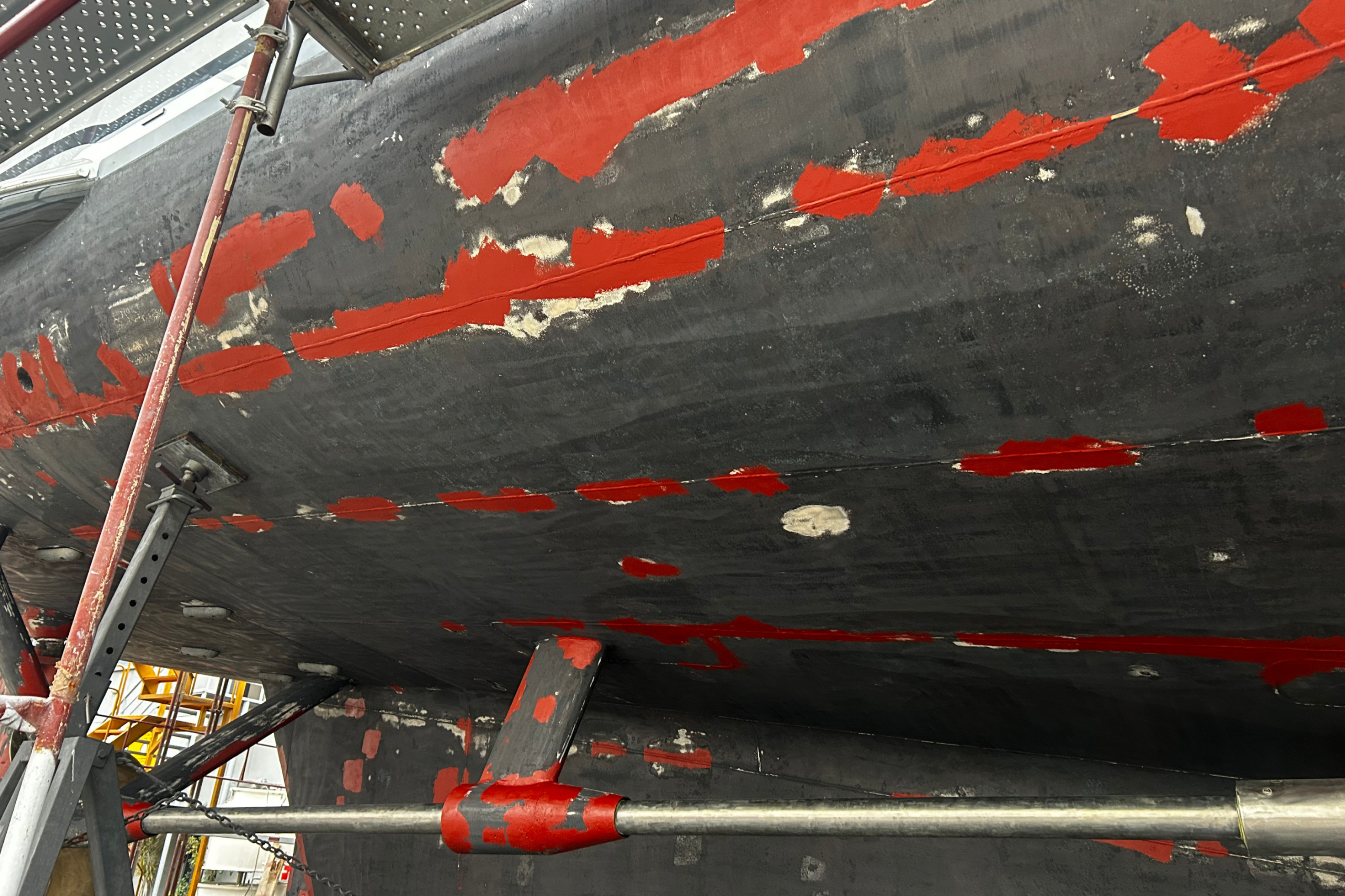
Every yacht owner understands the annual antifouling routine. However, many underestimate how crucial marine fairing compound becomes during this process. Before applying antifouling, you must address impact repairs, gelcoat blisters, and previous sanding damage.
If you ignore those imperfections, antifouling paint will thin over high spots and build up in lows. Consequently, wear becomes uneven, which reduces lifespan and forces premature reapplication. A smooth, properly faired hull allows antifouling to wear consistently, which protects your budget over multiple seasons.
Fairing During Osmosis Repairs
Osmosis treatment often involves grinding back affected laminate and rebuilding with epoxy systems. After structural repair, you must fair the surface to restore original hull lines. In this case, professionals typically select an epoxy-based marine fairing filler because it offers superior moisture resistance and adhesion.
Brands such as International, West System, and Awlgrip produce fairing products specifically engineered for underwater use. These systems integrate seamlessly with primers and barrier coats, which simplifies long-term maintenance planning.
Fairing as Part of Refit Cycles
During a full refit, fairing often represents one of the most labour-intensive stages. Whether you address hull extensions, thruster tunnels, or deck repairs, you must shape, sand, and refine surfaces until they meet original design lines. Although this stage demands patience, it defines the final result more than any topcoat ever will.
Because refits occur every 5–10 years for many yachts, budgeting for fairing materials and labour should form part of your ownership forecast rather than a surprise expense.
Types of Marine Fairing Compound
Choosing the right marine fairing compound depends on substrate, repair depth, and environmental exposure. Below we break down the most common options used in yacht maintenance projects.
Epoxy-Based Marine Fairing Compound
Epoxy systems dominate professional yards because they deliver low shrinkage, excellent adhesion, and high moisture resistance. A quality marine grade fairing compound based on epoxy works particularly well below the waterline and during structural rebuilds.
While epoxy costs more upfront, it reduces rework in the long term. Therefore, many experienced owners consider it the best marine fairing compound for underwater applications.
Marine Polyester Fairing Compound
A Marine polyester fairing compound cures quickly and sands easily, which makes it attractive for topside repairs and cosmetic fairing above the waterline. However, polyester absorbs more moisture than epoxy. As a result, professionals rarely use it for critical underwater structures.
If you choose polyester, apply proper sealing primers before painting to prevent long-term issues.
Lightweight Marine Fairing Putty
For shallow scratches, pinholes, or final skim coats, Marine Fairing Putty provides a smooth finishing layer. This material spreads easily with a flexible applicator and sands to a fine finish. It works best over cured structural fairing rather than as a bulk filler.
Essential Tools for Professional Fairing
Achieving a smooth finish depends as much on technique as it does on materials. Therefore, investing in the correct tools improves both speed and accuracy.
Marine Fairing Board and Marine Fairing Block
A long marine fairing board helps you maintain consistent pressure across wide surfaces. Because hull curves require even shaping, short sanding blocks often create waves instead of removing them.
Similarly, a marine fairing block allows controlled sanding in tighter areas around chines, keels, and transom corners. When you use long strokes and cross-hatch patterns, you reveal high and low spots quickly.
Mixing and Application Tools
Professionals often use wide metal spreaders or flexible applicators to apply marine fairing filler evenly. Additionally, controlled mixing ensures accurate catalyst ratios, especially when working with marine polyester fairing compound.
Step-by-Step Guide to Using Marine Fairing Compound
Surface Preparation
First, remove loose paint, contaminants, and wax. Then sand the repair zone to create mechanical keying. Proper preparation ensures your marine fairing compound bonds effectively and avoids future delamination.
Mixing and Application
Next, mix the compound according to manufacturer guidelines. Spread it slightly proud of the surface because sanding will remove excess material. Work in manageable sections, especially in warm climates where cure times shorten significantly.
Sanding and Fairing
After curing, sand using a marine fairing board with long, controlled strokes. Cross-sanding highlights uneven areas and reveals low spots that require additional filling. Continue refining until you achieve consistent curvature without flat patches.
Priming and Sealing
Finally, apply a suitable primer or barrier coat. This stage locks in the fair surface and prepares it for antifouling or topcoat systems. Skipping primer reduces longevity and compromises adhesion.
Budgeting for Fairing in Your Maintenance Plan
Yacht maintenance rarely follows a perfect schedule. While antifouling may occur annually, fairing needs often appear unexpectedly after impact damage, blister discovery, or survey findings.
Therefore, build a contingency fund into your maintenance budget. Many experienced owners allocate 10–15% above expected haul-out costs to cover surprises involving marine fairing compound, structural fillers, and additional labour. This strategy prevents rushed decisions and low-quality repairs.
Moreover, investing in higher-grade materials early often reduces long-term expenditure. Although a premium marine grade fairing compound costs more upfront, it lowers the risk of repeated sanding and recoating during future haul-outs.
Marine Fairing and Fuel Efficiency
A smooth hull reduces hydrodynamic drag. Consequently, engines operate more efficiently, and fuel consumption decreases. Over a full cruising season, even minor improvements in hull smoothness can translate into significant savings.
When you combine proper marine fairing with consistent antifouling maintenance, you create a performance-focused maintenance cycle rather than a reactive repair approach.
Integrating Fairing Into Your Paint System Strategy
Within the broader marine paint cluster, marine fairing compound serves as the foundation layer beneath primers, barrier coats, and antifouling systems. Without it, even the best topcoat cannot mask structural imperfections.
For example, owners using premium coatings often pair them with compatible fairing products to maintain warranty compliance and system integrity.
Additionally, maintaining consistent product systems simplifies troubleshooting. If problems arise, manufacturers can provide targeted technical support when you use integrated systems.
Common Mistakes to Avoid
Many DIY owners rush the fairing stage because sanding feels repetitive and time-consuming. However, uneven sanding pressure creates hollows that become obvious after painting. Additionally, applying thick layers of marine fairing filler in one pass often leads to cracking or shrinkage.
Instead, build layers gradually, sand methodically, and inspect surfaces using guide coats. This disciplined approach produces results comparable to professional yards.
Final Thoughts: Marine Fairing Compound as a Long-Term Investment
When you approach yacht ownership strategically, you see marine fairing compound not as a one-off purchase but as a recurring performance tool. Every antifouling season, every osmosis repair, and every refit cycle depends on the integrity of your fair surface.
By selecting the best marine fairing compound for your application, investing in proper tools like a marine fairing board and marine fairing block, and budgeting for unexpected repairs, you protect both hull performance and resale value.
At The Yacht Maintenance Hub, we encourage owners to view maintenance proactively rather than reactively. A smooth hull does more than look impressive at anchor — it reduces drag, supports coating longevity, and ultimately saves money over time.
In the marine paint cluster, few products influence long-term results as significantly as marine fairing compound. Choose wisely, apply carefully, and integrate it into your annual maintenance strategy for a finish that performs season after season.
 310
310
310
310