The Yacht Maintenance Hub, The resource for Yacht Maintenance & Repairs310310
10 July 2026 | Read it in 11 minutes
Written by Archie Wilson
Archie Wilson is a commercially endorsed Yachtmaster Offshore, experienced Bosun, yacht crew member and founder of The Yacht Maintenance Hub. His background spans superyachts, private motor yachts, chase boats and sailing yachts, with hands-on experience in maintenance, refit work, boat building, deck operations and basic engineering. Having also lived aboard sailing yachts and helped smaller boat owners manage their own maintenance, Archie created TYMH to share practical guidance grounded in real onboard experience.
Boat fenders may seem simple, but they are one of the most important pieces of protection onboard. The right setup helps prevent scratches, gelcoat chips, paint damage and costly repairs when docking, rafting or sitting alongside a marina berth.
However, choosing the best boat fenders is not just about buying the biggest option. Your boat size, hull shape, berth type, docking conditions and storage space all matter. A fender that works well on a small RIB may not be enough for a heavier yacht in a surge-prone marina.
In this guide, we compare five top boat fenders for 2026, explain the main fender types, show how to choose the right size and share practical advice on placement, care and common mistakes to avoid.
Some links on this page are affiliate links. This means The Yacht Maintenance Hub may earn a commission if you click through and make a purchase, at no extra cost to you. We only recommend products, tools and marine suppliers that we believe are useful for yacht owners, captains, crew and marine professionals.
This article is all about the Best Boat Fenders!
Quick Answer: What Are the Best Boat Fenders?
The best boat fenders are properly sized marine fenders from trusted brands such as Polyform, Taylor Made and Majoni. For most boats, cylindrical fenders work well for everyday docking, while round fenders are better for rafting, exposed berths and heavier contact points.
Best Boat Fenders in 2026: Quick Comparison
Fender
Best For
Type
Main Benefit
Polyform F Series
Best overall
Cylindrical
Strong, proven and versatile
Taylor Made Big B
Heavy-duty docking
Centre-hole cylindrical
Can hang vertically or horizontally
Taylor Made Super Gard
Smaller boats
Twin-eye cylindrical
Good value and easy to use
Polyform A Series
Rafting and exposed berths
Round fender
Excellent impact protection
Majoni Star Fender
Budget setup
Cylindrical
Affordable everyday protection
1. Polyform F Series: Best Overall Boat Fender
The Polyform F Series is one of the best boat fenders for owners and crew who want strong, reliable hull protection. It is widely used on yachts, motorboats and larger cruising boats because it offers better protection than light utility fenders.
This cylindrical fender has reinforced eyes at both ends, so it can be hung vertically or used horizontally when needed. As a result, it suits many marina and docking situations.
Best For
Polyform F Series fenders are best for:
Yachts and larger motorboats
Permanent marina berths
Exposed pontoons
Boats with higher topsides
Owners who want a long-term fender setup
Why TYMH Likes It
The F Series is a practical “buy once, buy properly” option. Although it is not always the cheapest choice, it is durable, proven and easy to build into a matching fender set.
For yacht crew, this type of fender is also easy to manage. You can add fender covers, carry spares and use different sizes for guest docks, fuel berths and rafting situations.
2. Taylor Made Big B: Best Heavy-Duty Docking Fender
The Taylor Made Big B is a useful option when normal boat fender placement does not quite work. Unlike a standard twin-eye fender, it has a centre tube that allows the line to run through the middle. Therefore, it can be hung vertically or horizontally.
This makes it especially helpful around fixed docks, pilings, tidal berths and awkward marina structures. In these situations, a standard cylindrical fender may roll, sit too low or fail to protect the main contact point.
Best For
Taylor Made Big B fenders are best for:
Fixed docks
Piling protection
Tidal marinas
Larger motorboats
Horizontal fender placement
Why TYMH Likes It
The main benefit is flexibility. If your boat often lies against rough dock faces or timber posts, the Big B can be easier to position correctly.
However, sizing still matters. If the fender is too small, it may compress too much and allow the hull to touch the dock.
3. Taylor Made Super Gard: Best Value Fender for Smaller Boats
The Taylor Made Super Gard is a good choice for smaller boats, cruisers, RIBs and owners who want reliable protection without overspending. It is a traditional twin-eye cylindrical fender with a simple, practical design.
Because it is easy to hang and widely available, it suits everyday marina use in calmer conditions. It is also a sensible choice for owners building a basic fender setup for the first time.
Best For
Taylor Made Super Gard fenders are best for:
Small boats
RIBs
Day boats
Pontoon boats
Protected marina berths
Budget-conscious owners
Why TYMH Likes It
For normal docking in calm marinas, the Super Gard range offers good value. It is simple, easy to use and available in multiple sizes.
However, it may not be the best choice for heavy yachts, exposed berths or high-value painted hulls. In those cases, it is usually better to size up or choose a heavier-duty fender.
4. Polyform A Series: Best Round Fender for Rafting
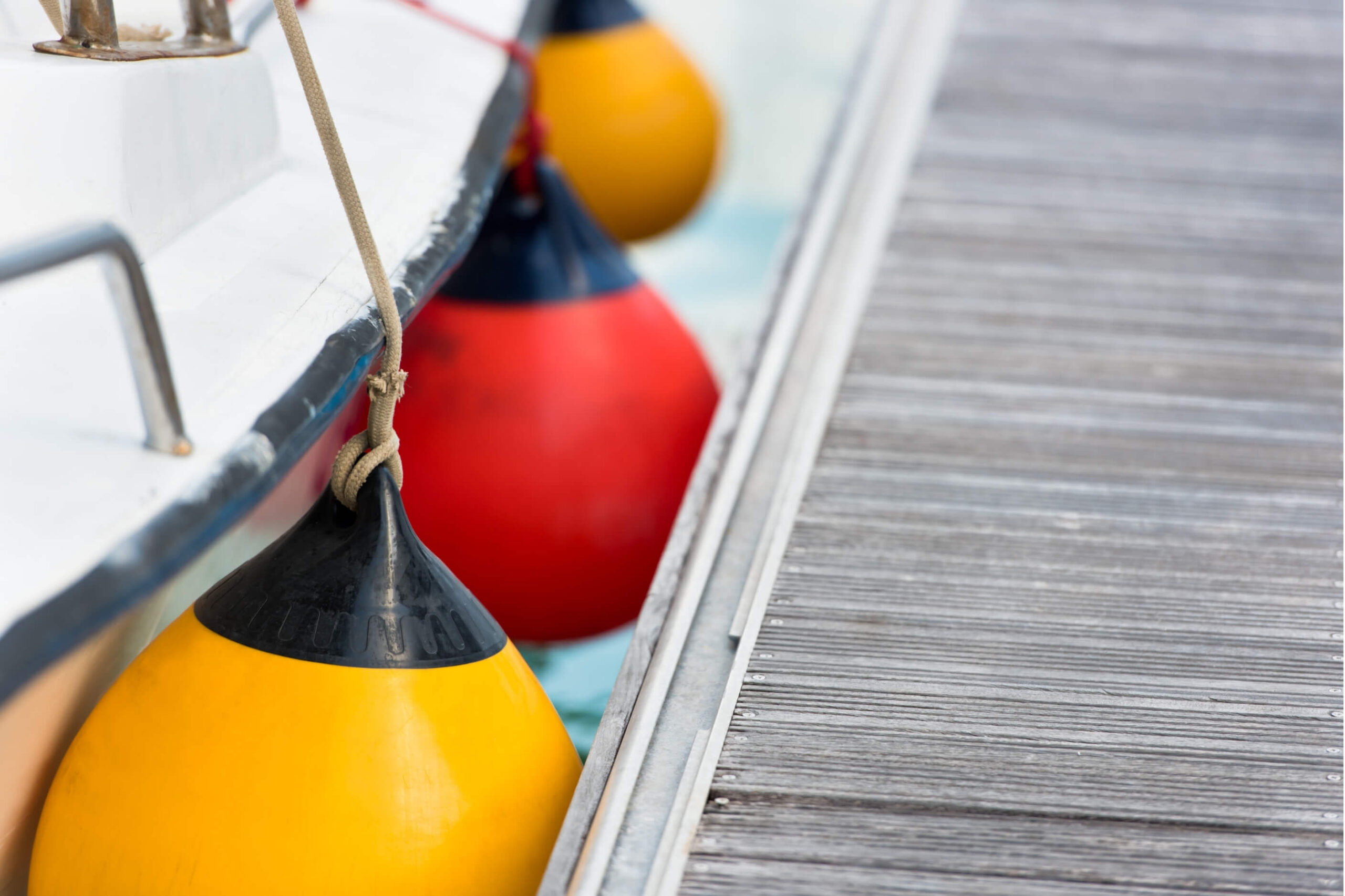
Round boat fenders are useful when you need more cushion between the hull and another surface. The Polyform A Series is a buoy-style round fender often used for rafting, exposed berths, stern-to docking and heavier contact points.
Unlike cylindrical fenders, round fenders create a larger buffer. Therefore, they are very useful when the boat may move, roll or push heavily against another vessel or dock.
Best For
Polyform A Series fenders are best for:
Rafting up
Exposed berths
Heavy contact points
Stern-to docking
Larger yachts and motorboats
Why TYMH Likes It
Round fenders are not as easy to store, but they are extremely useful when conditions become awkward. Many yachts use cylindrical fenders for normal marina berthing and keep one or two round fenders ready for fuel docks, rafting or heavy-weather situations.
For owners, even one good round fender can help prevent expensive gelcoat, paint or stainless damage.
5. Majoni Star Fender: Best Budget-Friendly Fender
Majoni Star Fenders are widely used across Europe and are a good budget-friendly option for general boating. They are simple cylindrical fenders that work well for everyday marina use.
Because they are affordable, they are useful for owners who need several fenders without spending too much. They also work well as spare fenders onboard.
Best For
Majoni Star Fenders are best for:
Everyday docking
Small to medium boats
Budget fender setups
Spare fenders
Protected marina berths
Why TYMH Likes It
Not every fender onboard needs to be premium. For lower-load areas or spare use, Majoni fenders can be a practical choice.
That said, owners with larger yachts, painted topsides or exposed berths should still invest in heavier-duty fenders where the hull takes the most pressure.
What Size Boat Fenders Do You Need?
Boat fender size is one of the most important buying decisions. A fender that is too small may look fine in calm conditions, but it can flatten under load and allow the hull to hit the dock.
As a general guide, use roughly 1 inch of cylindrical fender diameter for every 4–5 feet of boat length. However, boat weight, windage, berth exposure and dock height also matter.
Boat Length
Suggested Fender Diameter
Typical Use
15–20 ft
5–6 inches
Small boats and RIBs
20–30 ft
6–8 inches
Day boats and cruisers
30–40 ft
8–10 inches
Larger cruisers
40–55 ft
10–12 inches
Motor yachts
55 ft+
12 inches+
Yachts and exposed berths
If your boat is heavy, your berth is rough or your marina has surge, size up.
How Many Boat Fenders Do You Need?
Most boats should carry at 8 fenders. As a General rule aim for 4 each side plus 2 spare. Crewed yachts often carry more because they need extra protection for guest docks, tenders, fuel berths and rafting.
Main Boat Fender Types Explained
Cylindrical Boat Fenders
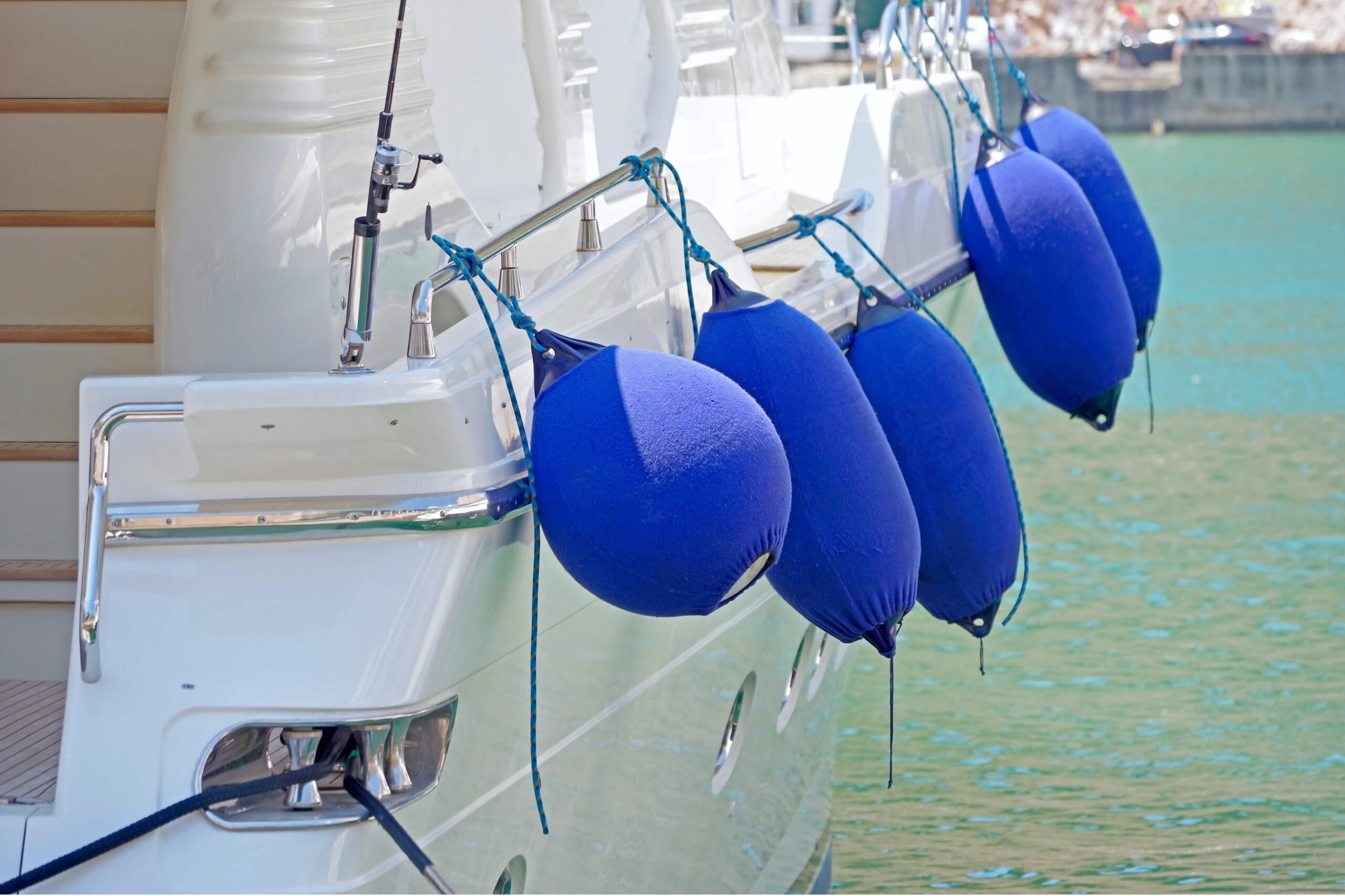
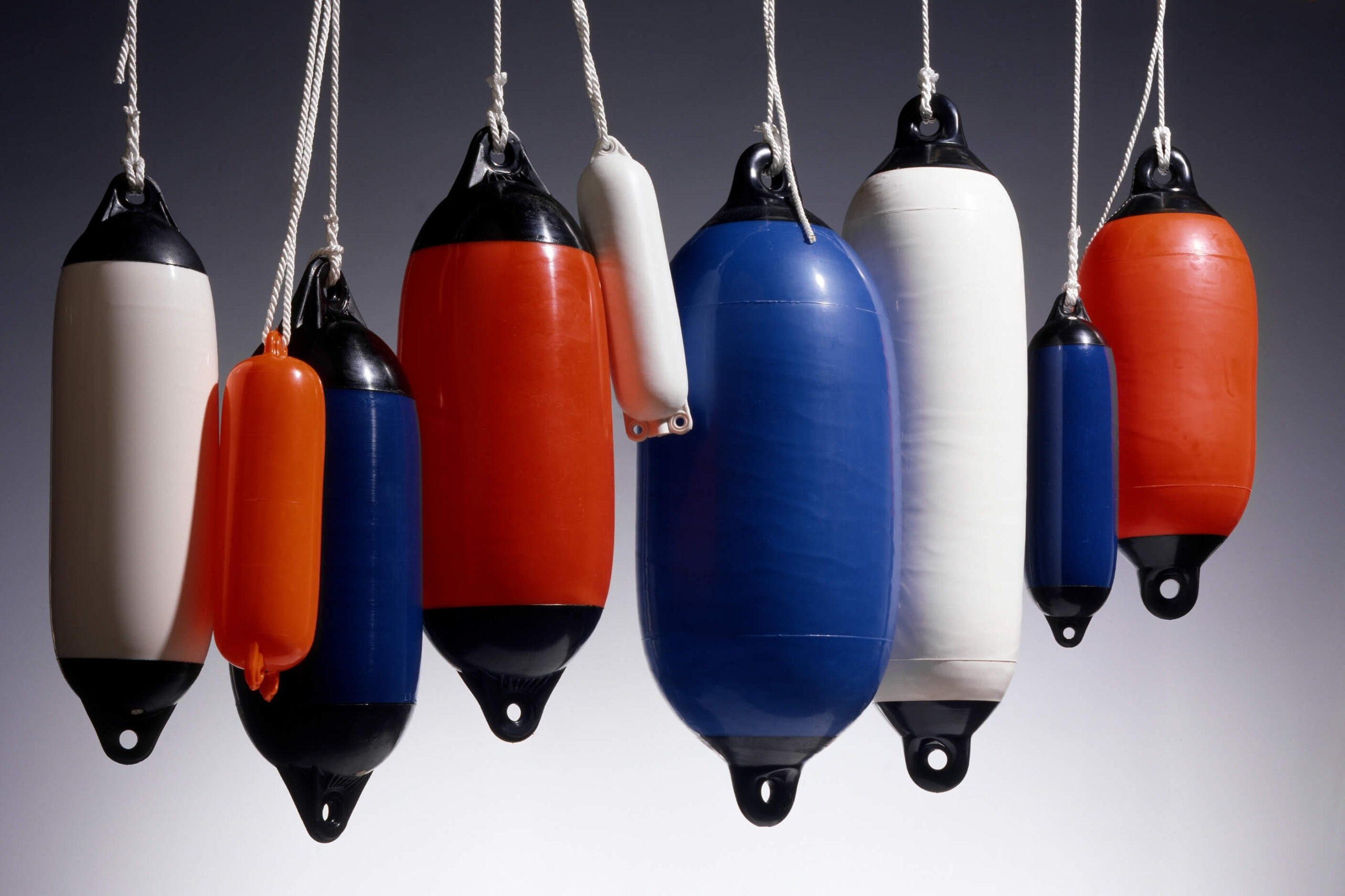
Cylindrical boat fenders are the most common type. They are easy to hang, simple to store and suitable for most marina berths.
They work well alongside pontoons and dock walls. However, they must be set at the correct height to protect the actual contact point.
Round Boat Fenders
Round fenders give more cushion and are better for rafting, stern-to berthing and exposed docks. They are also helpful when the boat may move heavily against another surface.
The downside is storage. Because they take up more space, many boats carry one or two rather than a full set.
Flat Boat Fenders
Flat boat fenders are useful for small boats, tight storage spaces and low-impact docking. They do not roll around as much and are easy to stow.
However, they usually do not offer the same protection as properly sized cylindrical or round marine fenders.
Inflatable Boat Fenders
Most modern marine fenders are inflatable. This makes them lighter and easier to handle. However, inflation pressure matters. An underinflated fender can collapse, while an overinflated fender may become too hard and transfer shock to the hull.
Boat Fender Placement: Where Should Fenders Go?
Correct boat fender placement depends on the dock height, hull shape and expected contact point. The aim is simple: keep the hull away from the dock before contact happens.
Start by placing fenders at the widest part of the boat. Then add extra protection near the bow or stern if either end may swing in.
For alongside berthing, use:
One fender near the bow quarter
One fender around midships
One fender near the stern quarter
Extra fenders at high-load points
A round fender for awkward or exposed berths
On yachts with flared bows, curved topsides or high freeboard, standard placement may need adjusting during docking.
Fender Covers: Are They Worth It?
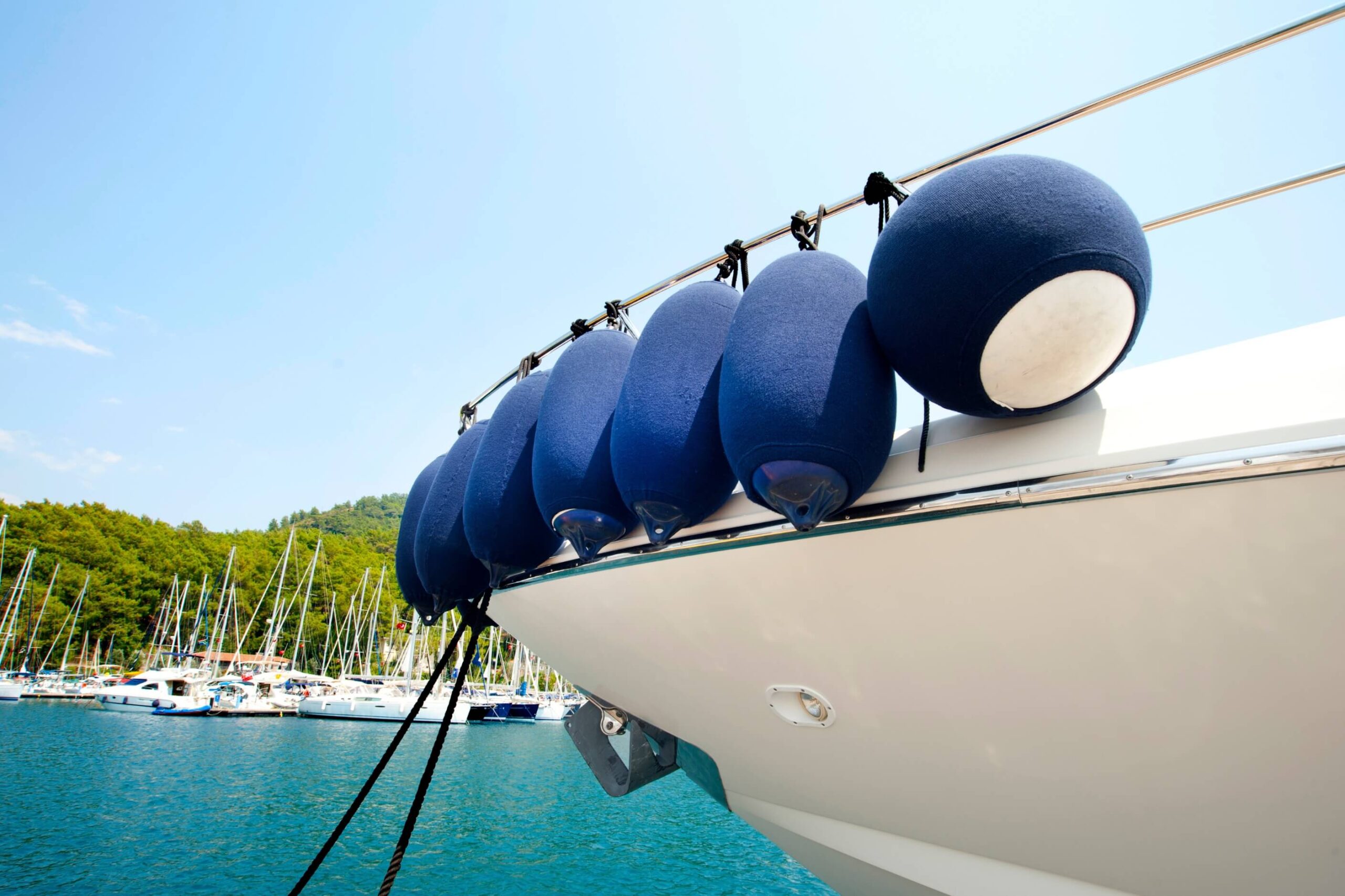
Fender covers can help protect gelcoat, paint and polished topsides from rubbing marks. Therefore, they are especially useful on dark hulls and painted yachts.
However, dirty fender covers can cause scratches. Salt, grit and dust trapped in the fabric can act like sandpaper. For that reason, covers should be washed regularly and replaced when worn.
Boat Fender Maintenance Checklist
Task
How Often
Why It Matters
Rinse with fresh water
After salty use
Removes salt and grit
Check inflation
Monthly
Prevents collapse
Inspect eyes and rope holes
Monthly
Finds cracks early
Clean fender covers
Monthly
Prevents scratches
Check fender lines
Monthly
Reduces failure risk
Replace damaged fenders
As needed
Protects the hull
Common Mistakes to Avoid
Choosing Fenders That Are Too Small
Small fenders are cheaper and easier to store, but they may not protect the hull properly. If in doubt, size up.
Hanging Fenders Too High or Too Low
A fender only works if it sits between the hull and the dock. Always check the real contact point.
Using Dirty Fender Covers
Clean covers protect paint. Dirty covers can scratch it, especially on dark or painted hulls.
Ignoring Tide and Surge
A setup that works at low tide may fail at high tide. Therefore, check your fenders through the full tidal range where possible.
Using Weak Fender Lines
A strong fender is useless if the line fails. Use proper marine-grade fender lines and inspect them for chafe.
Practical Advice for Owners and Crew
For small boats in calm marinas, a good set of cylindrical fenders is usually enough. Choose the correct size, keep them clean and position them properly before docking.
For larger yachts, painted hulls or exposed berths, use a mixed setup. Cylindrical fenders should handle normal docking, while round fenders should be kept ready for heavier contact points.
For crew, fenders should be part of the regular deck routine. Check inflation, lines, covers and storage before guest trips. Also, train junior crew to set fenders at the correct height because poor placement can cause avoidable damage.
FAQs: Best Boat Fenders
What are the best boat fenders for docking?
The best boat fenders for docking are correctly sized cylindrical fenders from trusted marine brands. For exposed berths or heavy boats, round fenders can add extra protection.
How many boat fenders do I need?
Most boats should carry at least 8 fenders. As a general rule of thumb use 4 per side.
Are round boat fenders better than cylindrical fenders?
Round fenders are better for rafting and exposed berths. Cylindrical fenders are better for everyday marina docking because they are easier to hang and store.
How do I choose the right boat fender size?
Start with boat length, then consider weight, berth exposure, dock height and hull shape. If conditions are rough, choose a larger fender.
When should boat fenders be replaced?
Replace boat fenders when they crack, lose air, split around the eyes, become sticky or no longer hold their shape under load.
Conclusion
The best boat fenders are the ones that suit your boat, berth and docking conditions. Polyform F Series, Taylor Made Big B, Taylor Made Super Gard, Polyform A Series and Majoni Star fenders all offer useful options depending on boat size, budget and use.
However, brand is only part of the decision. Size, placement, fender lines and regular cleaning matter just as much. Choose the right setup, maintain it properly and you will reduce hull damage, protect your topsides and avoid unnecessary repair costs.
Join the newsletter for practical yacht maintenance advice, new guide releases, downloadable resources, product recommendations and seasonal reminders designed to help owners, captains and crew make better maintenance decisions onboard. As TYMH grows, subscribers will also get early access to new checklists, maintenance resources, recommended products and exclusive offers or discounts from selected marine brands.
Success
Thank you for signing up to receive updates from The Yacht Maintenance Hub.
Blog / Best Boat Fenders: 5 Top Picks to Protect Your Hull in 2026
We track how people interact with our online web content and resources, and some of that tracking involves storing cookies on your device. By continuing to use our site you accept that you agree to this. For more details see our Privacy Statement.
 310
310
310
310