Boat wax is one of the simplest ways to protect gelcoat, improve gloss, and make regular washdowns easier. However, choosing the best boat wax can be confusing because marine waxes, polishes, cleaner waxes, glazes, and sealants all do slightly different jobs.
For yacht owners, captains, and crew, the right boat wax is not just about shine. It helps protect the surface from UV, salt, water staining, light oxidation, and everyday dirt build-up. On a yacht that lives outside all season, that protection can make a noticeable difference.
In this guide, we compare the best marine wax options for fiberglass, gelcoat, saltwater boats, white hulls, and lightly oxidised surfaces. We also explain when to use a pure wax, when to use a cleaner wax, and when the surface needs polishing before waxing.
Boat wax creates a protective layer over gelcoat, paint, or fiberglass. This layer helps reduce UV damage, salt staining, water marks, grime build-up, and early oxidation.
Without wax, gelcoat slowly becomes dull and chalky. Once oxidation gets worse, a simple wax will no longer restore the finish. At that point, the boat may need compounding, polishing, and then waxing.
A good waxing routine helps:
Keep gelcoat glossy for longer
Make washdowns quicker
Reduce staining from salt, soot, and water run-off
Protect against UV and weathering
Delay heavier polishing work
Improve the overall appearance of the boat
Boat Wax vs Boat Polish vs Cleaner Wax
Many owners use the terms wax and polish as if they mean the same thing. However, they are different.
Product Type
Main Job
Best For
Boat wax
Protects and adds shine
Clean, polished gelcoat
Boat polish
Restores gloss and removes light defects
Dull or tired gelcoat
Cleaner wax
Cleans, lightly corrects, and protects
Quick one-step maintenance
Glaze
Adds depth and hides light marks
Final visual enhancement
Compound
Removes oxidation and heavier defects
Badly faded gelcoat
A wax protects the finish. A polish improves the finish. Therefore, if the surface is dull, chalky, or oxidised, waxing alone will not fix the problem.
Best for: Long-lasting protection on clean gelcoat and fiberglass.
Collinite No. 885 Fleetwax Paste is one of the most trusted marine waxes for durability. Collinite describes it as a high-gloss sealant designed to provide its longest-lasting marine weather protection, and also clarifies that No. 885 is a pure wax rather than a cleaner wax.
This makes it a strong choice once the surface has already been cleaned, polished, or restored. However, because it is a pure wax, it should not be expected to remove oxidation.
Best suited to:
Fiberglass boats
White hulls
Clean gelcoat
Owners who want long-lasting protection
Yachts that receive regular maintenance
Avoid it if: the boat is heavily oxidised and needs correction first.
Collinite 885 Fleetwax Paste is a good choice for protecting polished gelcoat, combining a deep gloss with durable UV protection. A little goes a long way, offering good value for owners looking to wax less often. Remove oxidation first, as this is a finishing wax with no cleaning action.
Best for: Easy application, gloss, and light oxidation.
Meguiar’s Flagship Premium Marine Wax is designed for fiberglass and gelcoat surfaces. Meguiar’s states that it can help remove light oxidation and dullness, restore gloss, and add UV protection when used after the surface has been cleaned and restored.
This is a good option for owners who want an easy-to-apply liquid wax that improves appearance without stepping into a full professional polishing process.
Meguiar’s Premium Marine Wax is a marine wax designed for painted and gelcoat surfaces. It is commonly used to add gloss, enrich colour and provide a protective finish after cleaning, polishing or light gelcoat restoration.
Best for: Professional-style finishing and high gloss.
3M Perfect-It Boat Wax is a finishing wax designed for gelcoat, paint, fiberglass, and metal. 3M says it uses a blend of carnauba wax, silicones, polymers, and resins to add gloss and durability, and that the liquid formula can perform even on warm surfaces.
This makes it a useful option for crew, detailers, and owners who want a polished final finish after compounding or polishing.
3M Perfect-It Boat Wax adds a glossy carnauba finish that helps protect gelcoat against weathering. Its easy wipe-off formula makes it a practical final step after polishing, helping keep your boat’s hull and topsides looking well maintained.
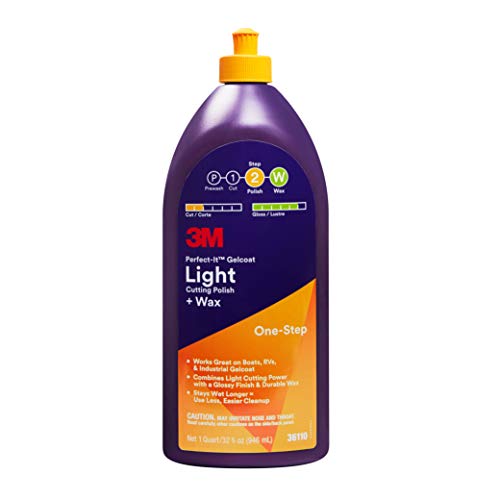
This is not just a wax. It is a light cutting polish and wax in one. 3M says it is formulated to remove light to medium oxidation, light scratches, swirl marks, and minor defects from gelcoat, while leaving a polished wax finish.
It is a good choice when the surface needs more than protection but does not require heavy compounding.
Best suited to:
Light oxidation
Swirl marks
Slightly tired gelcoat
One-step maintenance jobs
Owners who want correction and protection together
Important: Do not use this as a simple maintenance wax if the gelcoat is already in excellent condition. A pure finishing wax may be enough.
3M Perfect-It Gelcoat Light Cutting Polish + Wax is a one-step product made for restoring lightly faded or oxidised marine gelcoat. It combines a light abrasive polish with a wax finish, allowing minor correction, gloss improvement and basic protection to be completed in one stage.
A glaze is not the same as a traditional wax. 3M Perfect-It Finishing Glaze is designed to give a high lustre on paint surfaces and contains carnauba wax for lasting protection. It can be applied by hand or machine.
For yacht maintenance, this type of product is best viewed as a final enhancement product rather than a heavy-duty protective wax.
Best for: UV protection and easy ongoing maintenance.
Star brite Premium Marine Polish with PTEF is often used as a wax alternative because it leaves a protective polymer coating. Star brite says the coating provides UV protection, repels stains, and delivers a deep, long-lasting gloss.
This is a practical option for owners who want an easy-to-use protective product for fiberglass, metal, painted surfaces, and glass.
Star brite Premium Marine Polish helps keep gelcoat glossy, with UV protection and a coating that repels stains to make routine cleaning easier. A useful choice for maintaining clean or freshly restored surfaces—treat heavier oxidation before applying.
Star brite Premium Cleaner Wax is best for owners who want to clean light staining, improve gloss, and add protection in one step.
It will not replace a full compound and polish on heavily oxidised gelcoat, but it can work well for routine maintenance on boats that are not too far gone.
STAR BRITE Premium Cleaner Wax removes light to medium oxidation while restoring shine and adding UV protection in one application. A practical choice for refreshing dull gelcoat when you want to tackle cleaning and waxing in the same job.
Collinite 925 adds a glossy finish to clean gelcoat and fibreglass while helping protect against UV exposure and salt spray. Its liquid formula spreads easily by hand or machine, making it a practical choice for larger hulls and topsides. Apply after cleaning and removing oxidation to protect the prepared surface.
Most boats should be waxed two to three times per year, depending on use, climate, and storage.
A boat kept in strong sun, saltwater, and regular use will need more frequent protection than a boat kept under cover. As a general guide:
Boat Use
Waxing Interval
Light seasonal use
1–2 times per year
Regular saltwater use
2–3 times per year
Charter or high-use yacht
Every 2–4 months
Stored outside in strong UV
2–3 times per year
For yachts, it often makes sense to wax high-exposure areas more often. These include topsides, transoms, flybridge mouldings, radar arches, and areas affected by exhaust staining.
DIY vs Professional Boat Waxing
Many owners can wax a small or medium-sized boat themselves. However, larger yachts or heavily oxidised boats often need professional detailing.
Option
Best For
Considerations
DIY waxing
Clean gelcoat, smaller boats, regular maintenance
Lower cost but time-consuming
Crew maintenance
Yachts with regular washdown routines
Works well with a planned maintenance schedule
Professional detailing
Oxidation, large hulls, premium finish
Higher cost but better correction and finish
If the gelcoat needs compounding, machine polishing, or defect removal, call a professional or use experienced crew. Poor machine technique can create swirl marks, holograms, burns, and uneven gloss.
Common Boat Waxing Mistakes to Avoid
Waxing Over Oxidation
Wax protects what is already there. If the gelcoat is chalky, the wax may improve shine briefly, but it will not properly restore the surface.
Using Automotive Wax Without Checking Suitability
Some car waxes work on certain surfaces, but marine gelcoat faces different conditions. A marine gelcoat wax is usually the safer choice.
Applying Too Much Product
More wax does not mean more protection. Thick layers are harder to remove and often leave streaks.
Waxing in Direct Sun
Heat can make wax flash too quickly, causing smearing and difficult removal. Work in shade where possible.
Ignoring Non-Skid Areas
Do not apply slippery wax to walking surfaces unless the product is specifically safe for that use. Non-skid decks need suitable cleaning and protection methods.
Forgetting Stainless, Rubber, and Trim
Wax residue can stain rubber, textured plastic, and some trim. Tape sensitive edges or apply carefully around fittings.
Practical Advice for Owners and Crew
The best boat wax is the one that matches the surface condition.
If the boat is clean and glossy, use a pure protective wax such as Collinite Fleetwax or 3M Perfect-It Boat Wax. When surface is slightly dull, use a cleaner wax or light polish and wax. For Chalky gelcoat, start with compounding and polishing before applying protection.
For yachts, keep a simple exterior maintenance log. Record when each area was washed, polished, waxed, or corrected. This helps crew avoid over-polishing some areas while neglecting others.
FAQs: Best Boat Wax
What is the best boat wax for fiberglass?
he best boat wax for fiberglass is a marine-specific wax designed for gelcoat or fiberglass surfaces. Collinite Fleetwax, Meguiar’s Flagship Premium Marine Wax, 3M Perfect-It Boat Wax, and Collinite 925 Fiberglass Boat Wax are all strong options depending on the surface condition.
Can boat wax remove oxidation?
Pure boat wax will not properly remove oxidation. For light oxidation, use a cleaner wax or polish and wax product. For heavier oxidation, compound and polish the gelcoat before applying wax.
Is paste wax better than liquid boat wax?
Paste wax often gives strong durability, while liquid wax is usually easier to apply. For large yachts, liquid wax can save time. For long-lasting protection on clean gelcoat, a paste wax can be worth the extra effort.
How long does boat wax last?
Boat wax can last from a few months to a full season depending on UV exposure, saltwater use, washing frequency, and product type. High-use saltwater boats usually need waxing more often
Should I polish or wax my boat first?
Polish first if the gelcoat is dull, lightly scratched, or oxidised. Wax comes after polishing to protect the restored surface.
Summary
The best boat wax depends on the condition of your gelcoat and how the boat is used. For clean gelcoat, choose a proper protective wax. If dull or lightly oxidised, use a cleaner wax or polish and wax. For badly faded gelcoat, correct the surface first before applying protection.
A good waxing routine keeps the boat looking sharper, makes washdowns easier, and helps prevent expensive restoration work later. For the best results, wash properly, inspect the surface, choose the right product, and keep a regular maintenance schedule.
Join the newsletter for practical yacht maintenance advice, new guide releases, downloadable resources, product recommendations and seasonal reminders designed to help owners, captains and crew make better maintenance decisions onboard. As TYMH grows, subscribers will also get early access to new checklists, maintenance resources, recommended products and exclusive offers or discounts from selected marine brands.
Success
Thank you for signing up to receive updates from The Yacht Maintenance Hub.
Blog / Best Boat Wax: Top Options for Long-Lasting Shine and Protection
We track how people interact with our online web content and resources, and some of that tracking involves storing cookies on your device. By continuing to use our site you accept that you agree to this. For more details see our Privacy Statement.
 310
310
310
310