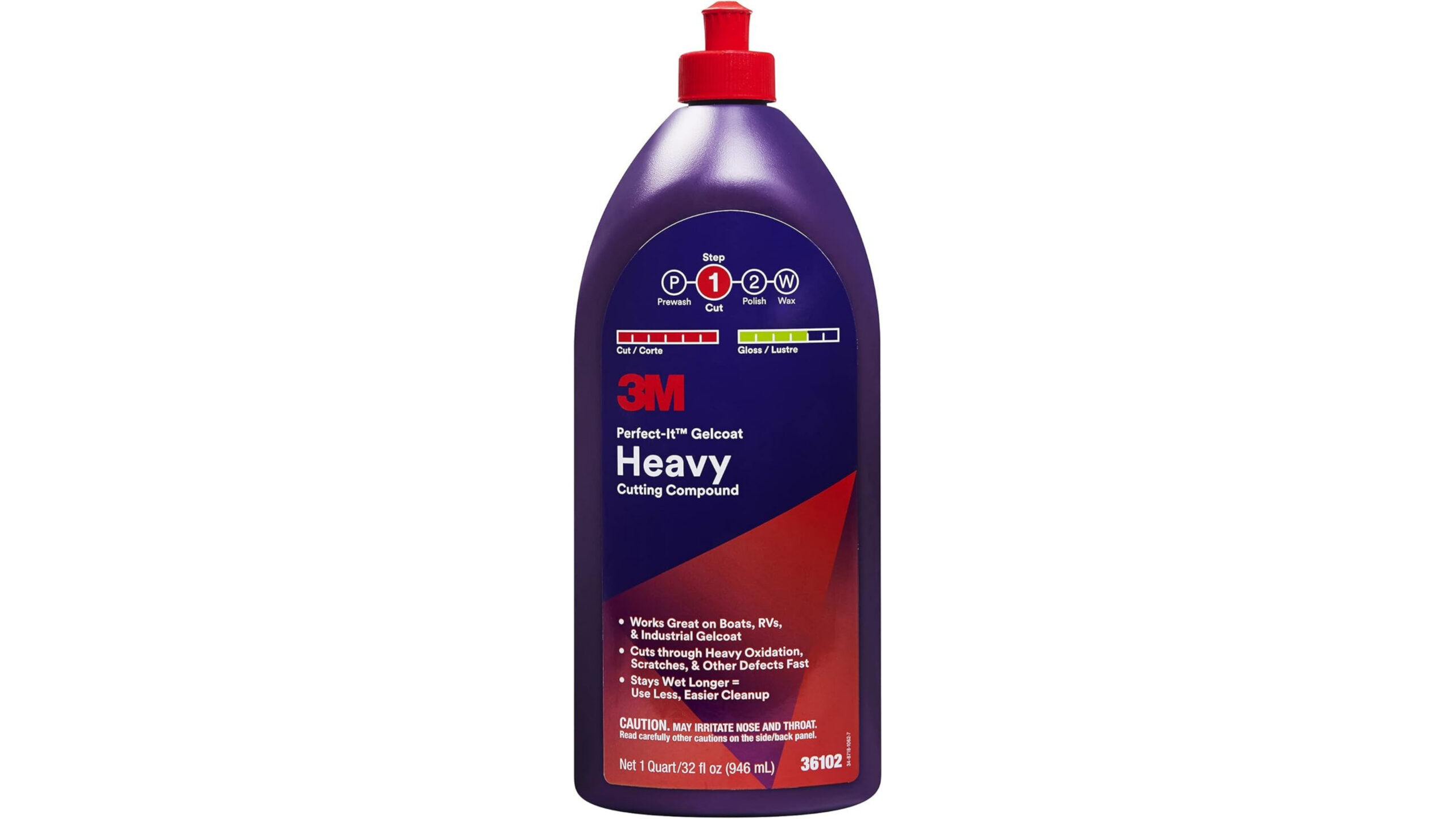
3M™ Perfect-It™ Gelcoat Heavy Cutting Compound
Polishing & Protection
 1200
627
1200
627
Polishing & Protection
Last updated 7 September 2026
3M™ Perfect-It™ Gelcoat Heavy Cutting Compound is an aggressive machine compound designed for gelcoat that has become heavily oxidised, chalky or badly weathered.
According to 3M, it is the company’s fastest-cutting gelcoat formula and can remove heavy oxidation, surface blemishes and P800 or finer sanding scratches. Its longer working time also gives you more time to compound an area before the product begins to dry out.
TYMH has used this product and found it effective and relatively straightforward when restoring gelcoat that genuinely needs a heavy correction. However, this is not the bottle to reach for simply because a hull has lost a little shine.
The compound removes material from the surface. If the gelcoat is only lightly faded, using such an aggressive product can take away more material than necessary and potentially make the finish worse. It is also less forgiving than a light or medium-cut product, so TYMH would not recommend it as a first choice for beginners.
Once the heavy cutting stage is complete, inspect the finish carefully. Any haze or compounding marks may need refining with a finer polish before applying wax or another suitable protective product. Deep scratches that extend into or through the gelcoat will require proper repair rather than continued compounding.
TYMH recommends this compound because it does what a genuine heavy-cut product should: it removes severe oxidation quickly and gives you enough working time to control the correction.
We have used it on heavily oxidised gelcoat and found it much more capable than trying to force a light polish to deal with damage it was never designed to remove. It also fits neatly into the wider 3M Perfect-It gelcoat system, making it easier to move from heavy correction to finer polishing and final protection.
However, our recommendation comes with clear caution. Its cutting strength is also its main limitation. TYMH would only choose this product after a test patch shows that a lighter option will not achieve the required result.
If the gelcoat does not need this level of correction, do not use it. Start with the least aggressive process capable of restoring the finish.
Detail |
Product Information |
| Product type | Heavy-cut gelcoat compound |
| Suitable surfaces | Marine, RV and industrial gelcoat; confirm compatibility on repaired, painted or unknown surfaces |
| Typical use | Very aggressive; described by 3M as its fastest-cutting gelcoat formula |
| Application method | Machine application using a rotary polisher and suitable wool compounding pad |
| Available sizes | 3M literature lists 473 mL, 946 mL and 3.6 L formats; availability varies by market |
| Brand | 3M Perfect-It |
| Maintenance level | Advanced or professional |
| Best suited for | Heavily oxidised gelcoat that cannot be corrected with a lighter product |
| Notes | Start with a test patch and use the least aggressive method that achieves the required correction |
It is used to remove heavy oxidation, chalking, weathering, scuffs and P800 or finer sanding scratches from gelcoat. It is intended for serious correction rather than routine polishing.
Generally, no. A light or medium-cut compound is usually the better starting point for mild fading. Using an unnecessarily aggressive compound removes more gelcoat than required.
TYMH would not recommend it as a beginner’s first compound. It requires controlled machine technique, careful assessment and an understanding of how much correction the gelcoat can safely tolerate. The US manufacturer listing also designates it for industrial or occupational use.
It is designed to remove P800 and finer sanding scratches. Deep scratches, cracks or gouges that extend into the gelcoat require proper filling or repair rather than repeated aggressive compounding.
3M states that some surfaces may achieve enough gloss to proceed directly to waxing. However, TYMH recommends inspecting the finish closely and using a finer finishing polish if haze, micro-marring or visible compounding marks remain—particularly on darker gelcoat.
No final protection should be assumed. Once the finish has been corrected and refined, apply a compatible marine wax, sealant or protection product in accordance with its instructions.
Explore the newest articles, from practical repair advice and product recommendations to preventive maintenance guides designed for owners, captains, crew and marine professionals.
This product page may contain affiliate links. If you buy through one of these links, The Yacht Maintenance Hub may earn a small commission at no extra cost to you. Our recommendations are based on product relevance, practical use and suitability for yacht maintenance, not simply on commission value.
Join the newsletter for practical yacht maintenance advice, new guide releases, downloadable resources, product recommendations and seasonal reminders designed to help owners, captains and crew make better maintenance decisions onboard. As TYMH grows, subscribers will also get early access to new checklists, maintenance resources, recommended products and exclusive offers or discounts from selected marine brands.