The Yacht Maintenance Hub, The resource for Yacht Maintenance & Repairs310310
30 June 2026 | Read it in 9 minutes
Written by Archie Wilson
Archie Wilson is a commercially endorsed Yachtmaster Offshore, experienced Bosun, yacht crew member and founder of The Yacht Maintenance Hub. His background spans superyachts, private motor yachts, chase boats and sailing yachts, with hands-on experience in maintenance, refit work, boat building, deck operations and basic engineering. Having also lived aboard sailing yachts and helped smaller boat owners manage their own maintenance, Archie created TYMH to share practical guidance grounded in real onboard experience.
Boat seats deal with constant abuse. Salt, sunscreen, body oils, food spills, wet swimwear, mildew and UV exposure can quickly make clean upholstery look stained, sticky or tired.
Because of this, choosing the right boat seat cleaners matters. A good marine vinyl seat cleaner or leather cleaner helps remove grime safely, protect the surface and prevent long-term damage.
In this guide, we compares practical vinyl and leather boat seat cleaners, explains what each product is best for, and shows how owners, captains and crew can clean marine upholstery without damaging it.
Some links on this page are affiliate links. This means The Yacht Maintenance Hub may earn a commission if you click through and make a purchase, at no extra cost to you. We only recommend products, tools and marine suppliers that we believe are useful for yacht owners, captains, crew and marine professionals.
This article is all about Boat Seat Cleaners!
Quick Answer: What are the best boat seat cleaners for vinyl and leather seats?
The best boat seat cleaners are marine-safe products matched to the seat material. For vinyl seats, Star Brite Ultimate Vinyl Clean, Meguiar’s Marine/RV Vinyl & Rubber Cleaner/Conditioner and 303 Marine Clear Vinyl Protective Cleaner are strong options. For leather seats, Lexol Leather Cleaner and Collinite No. 855 Leather & Vinyl Wax are better suited to gentle cleaning and protection.
What Makes a Good Boat Seat Cleaner?
A good cleaner for boat seats should remove dirt without stripping, drying or weakening the upholstery surface. Most exterior boat seats are made from marine vinyl, coated fabric or synthetic upholstery. However, some yachts still use leather on helm seats, saloon seating or interior areas.
Therefore, the first step is simple: identify the material before choosing a product.
A good boat seat cleaner should:
Be safe for marine vinyl, leather or coated upholstery
Remove salt, sunscreen, body oils and grime
Help lift mildew marks without harsh scrubbing
Leave little or no greasy residue
Work with a soft brush or microfibre cloth
Avoid harsh solvents, strong bleach and abrasives
This matters because boat seat damage usually happens slowly. First, the surface feels sticky. Then it starts to dull or stain. Eventually, the vinyl may crack, split or fail around the seams.
Vinyl vs Leather Boat Seats
Marine Vinyl Seats
Most exterior boat seats are vinyl because it handles water, salt and UV better than natural leather. However, vinyl still has a protective surface coating. Once that coating wears away, stains become harder to remove.
A proper boat vinyl cleaner should clean the surface without drying it out. For light cleaning, mild soap and fresh water are often enough. However, for sunscreen, grime, mildew and salt build-up, a dedicated marine upholstery cleaner is usually better.
Vinyl seats are common on cockpit cushions, helm seats, tender seats, flybridge seating, sun pads and chase boats.
Leather Boat Seats
Leather needs a softer approach. It can dry, crack or absorb staining if cleaned with the wrong product. Therefore, avoid aggressive vinyl cleaners unless the manufacturer confirms they are safe for leather.
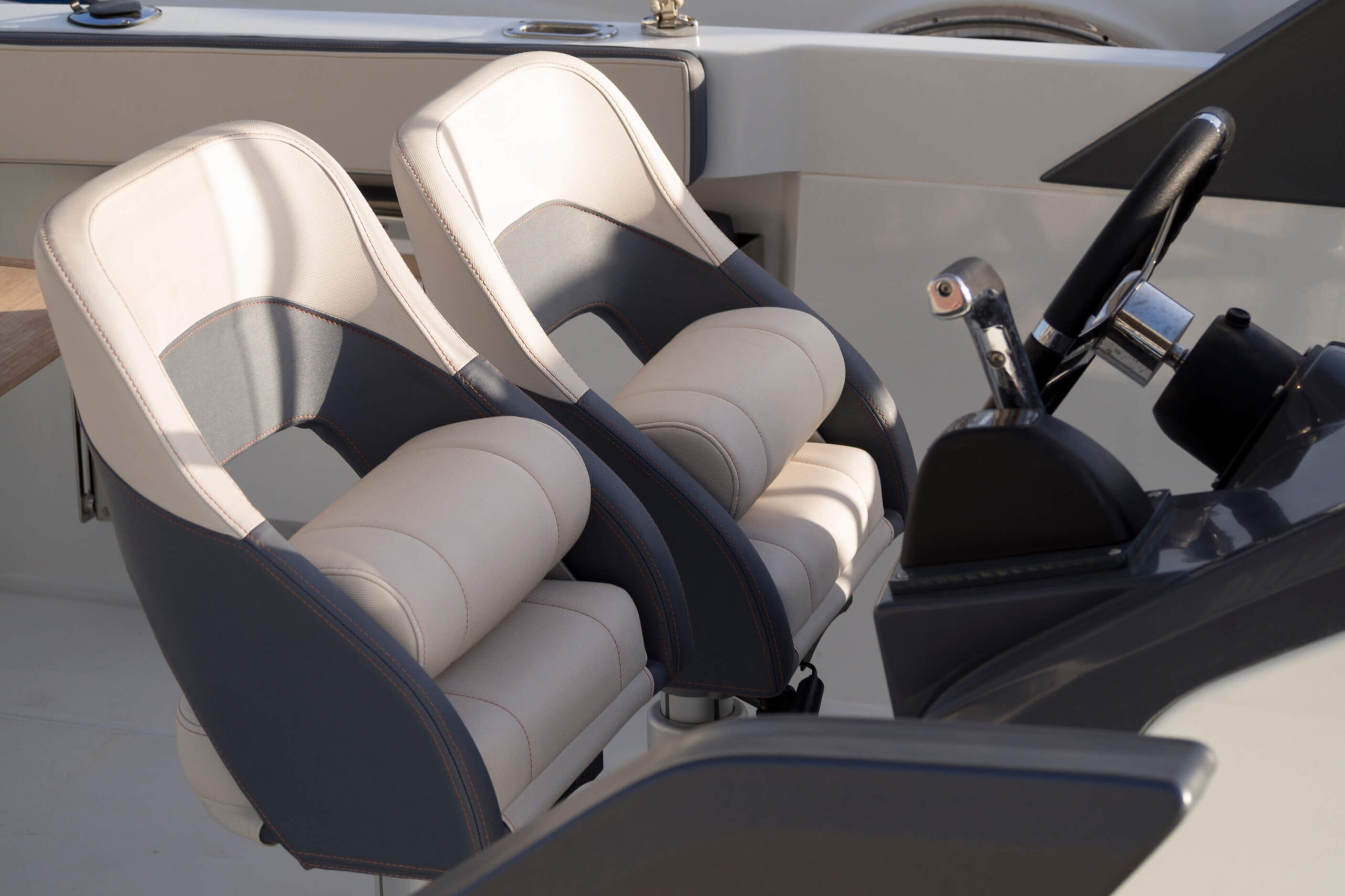
Leather is more common inside yachts, at helm stations or on premium seating. For these areas, Lexol and Collinite are better options than harsh marine cleaners.
Star Brite Ultimate Vinyl Clean is a strong choice for dirty vinyl boat seats. It is useful for cockpit cushions, tender seats and exterior upholstery that has collected sunscreen, body oils, salt and general grime.
It works best when used with a soft brush or microfibre cloth. However, avoid scrubbing too hard, especially around stitching and textured vinyl. After cleaning, wipe the surface with fresh water to remove any residue.
Best for: General vinyl seat cleaning Use with: Soft brush or microfibre cloth Avoid: Delicate leather unless tested first
Meguiar’s Marine/RV Vinyl & Rubber Cleaner/Conditioner is a useful all-rounder for regular maintenance. It suits owners and crew who want a simple boat seat cleaner and protectant for vinyl and rubber areas.
Because it cleans and conditions in one step, it is helpful for routine seat care rather than heavy restoration. However, it will not repair cracked vinyl or remove severe mildew that has already worked into the material.
Best for: Regular vinyl and rubber care Use with: Routine cleaning kit Avoid: Expecting it to fix cracked or damaged seats
3. 303 Marine Clear Vinyl Protective Cleaner
303 Marine Clear Vinyl Protective Cleaner is a good option to include in a boat cleaning setup. It is especially useful for clear vinyl panels, enclosure windows, isinglass-style screens and plastic surfaces near seating areas.
It is not always the first choice for heavily dirty textured vinyl seats. However, it is useful where clear vinyl needs cleaning and UV protection.
Best for: Clear vinyl and plastic panels Use with: Enclosures, screens and clear panels Avoid: Using it as a heavy-duty upholstery cleaner
2 Leather Boat Seat Cleaners Worth Considering
1. Lexol Leather Cleaner
Lexol Leather Cleaner is a better option for leather yacht seating than aggressive marine vinyl products. It is designed for leather, so it suits helm seats, interior seating and leather-trimmed areas.
Use it gently with a damp cloth or soft applicator. Then wipe away residue and allow the leather to dry naturally. In addition, consider a suitable conditioner if the leather feels dry.
Best for: Finished leather seating Use with: Interior leather care Avoid: Harsh scrubbing or soaking
2. Collinite No. 855 Leather & Vinyl Wax
Collinite No. 855 Leather & Vinyl Wax is useful because it works as a light cleaner, conditioner and protectant. It can suit both leather and some vinyl surfaces, which makes it practical for mixed upholstery areas.
However, it is not the best first step for very dirty vinyl. Instead, use it after light cleaning or as part of regular seat protection.
Best for: Light cleaning and protection Use with: Leather and selected vinyl areas Avoid: Heavy dirt as the only cleaner
Common Boat Seat Problems
Mildew Spots
Mildew appears as black, grey or green marks. It usually forms when dirt and moisture sit on the surface. Therefore, clean and dry cushions before storage.
If mildew reaches stitching or foam, surface cleaning may not remove it fully.
Sticky Vinyl
Sticky vinyl can come from sunscreen, body oils, salt or coating breakdown. Start with fresh water and mild soap. If it still feels tacky, use a proper vinyl boat seat cleaner.
Yellowing Vinyl
Yellowing may come from UV exposure, ageing, chemical damage or trapped moisture. A cleaner may improve the surface, but it may not fully reverse old yellowing.
Cracking
Cracking usually means the vinyl has aged, dried or lost flexibility. Unfortunately, cleaners cannot repair cracked vinyl. At that stage, replacement or professional upholstery repair may be needed.
Common Mistakes to Avoid
Using Harsh Household Cleaners
Household cleaners can be too aggressive for marine upholstery. Some may strip protective coatings or dry the surface. Instead, use mild soap for routine cleaning and marine-safe products for deeper cleaning.
Scrubbing Too Hard
Aggressive scrubbing can damage stitching, flatten texture and leave shiny marks. Use gentle pressure and repeat the process if needed.
Leaving Seats Damp
Damp cushions create mildew. Therefore, always dry seats fully before covering or storing them.
Cleaning in Direct Sun
Products dry too quickly on hot seats. This can cause streaks and residue. Instead, clean in shade or during cooler parts of the day.
Using the Same Cloth Everywhere
Exterior cloths can carry salt, grit and product residue. For this reason, keep separate cloths for interior leather, exterior vinyl and clear vinyl panels.
Practical Advice for Owners and Crew
For yacht crew, seat cleaning should be part of the regular exterior routine. Light weekly cleaning works better than occasional aggressive deep cleaning.
For owners, a simple boat interior cleaner kit should include:
Marine vinyl cleaner
Leather cleaner, if the boat has leather seating
Soft detailing brush
Microfibre cloths
Fresh water spray bottle
Mild soap
Vinyl or UV protectant
Nitrile gloves
In addition, inspect seats after guest use, fishing trips or heavy sun exposure. Sunscreen, fake tan, food dye and wet swimwear can stain quickly if left untreated.
When DIY Is Enough
DIY cleaning is usually enough for salt, grime, sunscreen residue and light mildew. However, call a marine upholsterer or detailer if:
Vinyl is cracked or splitting
Mildew keeps returning
Stains have reached the foam
Leather is cracked or badly dried
Seams are failing
The upholstery is expensive or custom-made
Professional help costs more, but it can save high-value seating before replacement becomes necessary.
FAQs: Boat Seat Cleaners
What is the best boat seat cleaner for vinyl seats?
The best boat seat cleaner for vinyl seats is a marine-safe vinyl cleaner that removes grime without damaging the protective coating. Star Brite, Meguiar’s and 303 are all useful options depending on the surface.
How do you remove mildew from boat seats?
Start with fresh water, mild soap and a soft brush. If mildew remains, use a marine-safe mildew cleaner or vinyl cleaner designed for boat upholstery.
Can I use household cleaner on boat seats?
Can I use household cleaner on boat seats?
How often should you clean boat seats?
Clean exterior boat seats weekly during regular use. Also clean them after heavy salt, sunscreen, food or wet swimwear exposure.
Can boat seat cleaners fix cracked vinyl?
No. Cleaners can improve appearance, but they cannot repair cracked vinyl. Once vinyl splits, you may need professional repair or replacement.
Summary
The best boat seat cleaners depend on the seat material. For vinyl, Star Brite, Meguiar’s and 303 are practical options. For leather, Lexol and Collinite are better suited to gentle cleaning and protection.
Overall, regular light cleaning is the best way to prevent mildew, staining and cracking. Clean early, rinse properly, dry fully and use the right product before small marks become expensive upholstery problems.
Work through essential checks for your boat’s hull, engine, electrical systems, plumbing and safety equipment. Use the printable checklist and launch log to record completed jobs, flag outstanding work and organise your return to the water.
Success
Thank you for submitting the form, we will be in touch with you shortly with your Spring Commissioning Checklist.
Prepare Your Boat Properly Before Winter
Use TYMH’s practical winterisation checklist to help protect your engine, plumbing, batteries, deck gear, safety equipment and onboard systems before the cold weather sets in.
Success
Thank you for submitting the form, we will be in touch with you shortly.
Sign up for updates
Join the newsletter for practical yacht maintenance advice, new guide releases, downloadable resources, product recommendations and seasonal reminders designed to help owners, captains and crew make better maintenance decisions onboard. As TYMH grows, subscribers will also get early access to new checklists, maintenance resources, recommended products and exclusive offers or discounts from selected marine brands.
Success
Thank you for signing up to receive updates from The Yacht Maintenance Hub.
Blog / Best Boat Seat Cleaners: Remove Mildew, Stains & Salt Fast
We track how people interact with our online web content and resources, and some of that tracking involves storing cookies on your device. By continuing to use our site you accept that you agree to this. For more details see our Privacy Statement.
 310
310
310
310