The Yacht Maintenance Hub, The resource for Yacht Maintenance & Repairs310310
6 October 2026 | Read it in 11 minutes
Written by Archie Wilson
Archie Wilson is a commercially endorsed Yachtmaster Offshore, experienced Bosun, yacht crew member and founder of The Yacht Maintenance Hub. His background spans superyachts, private motor yachts, chase boats and sailing yachts, with hands-on experience in maintenance, refit work, boat building, deck operations and basic engineering. Having also lived aboard sailing yachts and helped smaller boat owners manage their own maintenance, Archie created TYMH to share practical guidance grounded in real onboard experience.
A tender can collect salt, muddy footprints and a dirty waterline in a single outing. The temptation is to reach for a stronger cleaner and scrub until everything looks new.
However, cleaning an inflatable boat starts with knowing what its sponsons can tolerate. PVC and Hypalon need suitable products, and a cleaner intended for the rigid hull may not suit the fabric beside it.
This guide explains how to clean an inflatable dinghy or RIB, choose compatible products and tackle common stains. It also covers the warning signs that call for a repair specialist rather than another round of cleaning.
Some links on this page are affiliate links. This means The Yacht Maintenance Hub may earn a commission if you click through and make a purchase, at no extra cost to you. We only recommend products, tools and marine suppliers that we believe are useful for yacht owners, captains, crew and marine professionals.
Quick Answer: What Is the Safest Way to Clean an Inflatable Boat?
Rinse loose dirt and salt away with fresh water, then wash the tubes with a soft sponge or brush and a cleaner approved for their material. Follow the product’s dilution and application instructions, rinse thoroughly and let the boat dry before covering or packing it away. Avoid aggressive scrubbing, unapproved solvents and high-pressure washing.
Is Your Inflatable Boat Made from PVC or Hypalon?
Check the owner’s manual, original specification or tube supplier’s records before choosing a cleaner. A lot of manufacturers have a recommened product for there sponsons. If someone has replaced the tubes, the original boat specification may no longer describe the material fitted.
Both PVC and Hypalon tubes need careful cleaning. Although Hypalon generally offers greater chemical resistance, that does not make every solvent or stain remover suitable. We warn against continuous use of aggressive chemicals as this can damage the material over time.
Sponson material
Sensible cleaning approach
Main precaution
PVC
General boat soap or a cleaner that explicitly lists PVC inflatable tubes
Keep general-purpose solvents out of routine cleaning
Hypalon
Mild washing followed by a compatible tube cleaner where needed
Check compatibility with the fabric, fittings and existing repairs
Unknown
Identify the fabric through the manufacturer or a tube specialist
Do not experiment with chemicals to identify it
The floor needs a separate check. An inflatable air deck, painted aluminium floor and synthetic teak insert may each have different cleaning requirements.
What Tools and Cleaning Products Do You Need?
Build a small kit that you can keep clean between jobs:
Fresh water and a hose with a gentle spray setting.
A bucket and the correct inflatable boat cleaner.
A soft sponge or clean microfibre cloths.
A soft brush that the boat manufacturer permits.
Drying cloths and a separate cloth for greasy marks.
Gloves and eye protection where the product label requires them.
Inspect brushes for trapped grit before touching the tubes. Also keep the brush used on a dirty hull separate from the one used on fabric.
For general washdown options, see our guide to boat soaps. Check inflatable-tube compatibility separately before using any of those products on your tender.
Which Inflatable Boat Cleaner Should You Choose?
For loose salt, start with fresh water. For ordinary dirt, use the mild cleaning method in your boat’s manual. A specialist cleaner becomes useful when that routine leaves ingrained grime or marks.
At TYMH, we have personally used the products below when cleaning inflatable boats. Choose the product around your tube material and the type of mark you need to remove. Always check the boat manufacturer’s guidance before using it on your own tender.
Occasional local scuff removal only where the tube manufacturer permits melamine foam
These sponges are abrasive. If permitted, wet with water, squeeze out excess and test a hidden area using very light pressure. Avoid repeated scrubbing and printed, painted or glossy finishes.
ORCA fabric tubes where you want to follow the fabric manufacturer’s cleaning process
A 3 step process that will also remove mold and scuff marks. use with caution as the new magic cleaner is strong.
Take extra care with Magic Erasers. Their abrasive action can dull or wear a surface, so use a soft sponge for routine tube washing. Magic erases, sjhould only be used for last resorts. They can help get some scuffs out but can wear down the surface quickly.
The two Star brite products have different instructions: the heavy-duty cleaner uses a cloth-and-buff method, while the spray cleaner requires rinsing. The ORCA link covers a cleaning system with separate washing, stain-removal and protection stages. Follow the exact product label rather than applying the same method to every bottle.
A useful option for refreshing inflatable tubes and fenders affected by scuffs, grime and oxidation stains. Applied by cloth and buffed after cleaning, it helps restore their appearance while leaving a protective coating against UV rays and saltwater.
Description:
A convenient spray for lifting salt residue, grime and bird droppings from PVC or Hypalon tubes. It combines cleaning with a protective polymer layer that helps shield against UV exposure and dirt, making it useful for routine RIB and tender care.
Description:
Handy for removing stubborn scuffs from suitable hard surfaces using water alone. Test first and use light pressure, as its abrasive action can dull glossy or polished finishes; check the boat manufacturer’s guidance before using it on inflatable tubes.
A useful option for refreshing inflatable tubes and fenders affected by scuffs, grime and oxidation stains. Applied by cloth and buffed after cleaning, it helps restore their appearance while leaving a protective coating against UV rays and saltwater.
A convenient spray for lifting salt residue, grime and bird droppings from PVC or Hypalon tubes. It combines cleaning with a protective polymer layer that helps shield against UV exposure and dirt, making it useful for routine RIB and tender care.
Handy for removing stubborn scuffs from suitable hard surfaces using water alone. Test first and use light pressure, as its abrasive action can dull glossy or polished finishes; check the boat manufacturer’s guidance before using it on inflatable tubes.
We earn a commission if you make a purchase, at no additional cost to you.
What Are the Steps for Cleaning an Inflatable Boat?
Remove salt, dirt and light stains from inflatable boat tubes with these five steps.
Prepare the Boat
Secure the boat in shade and switch off the engine. Remove the key or safety lanyard, clear loose equipment and close inflation valves. When cleaning ashore, make sure your run off is going into a safe area.
Rinse Away Salt and Dirt
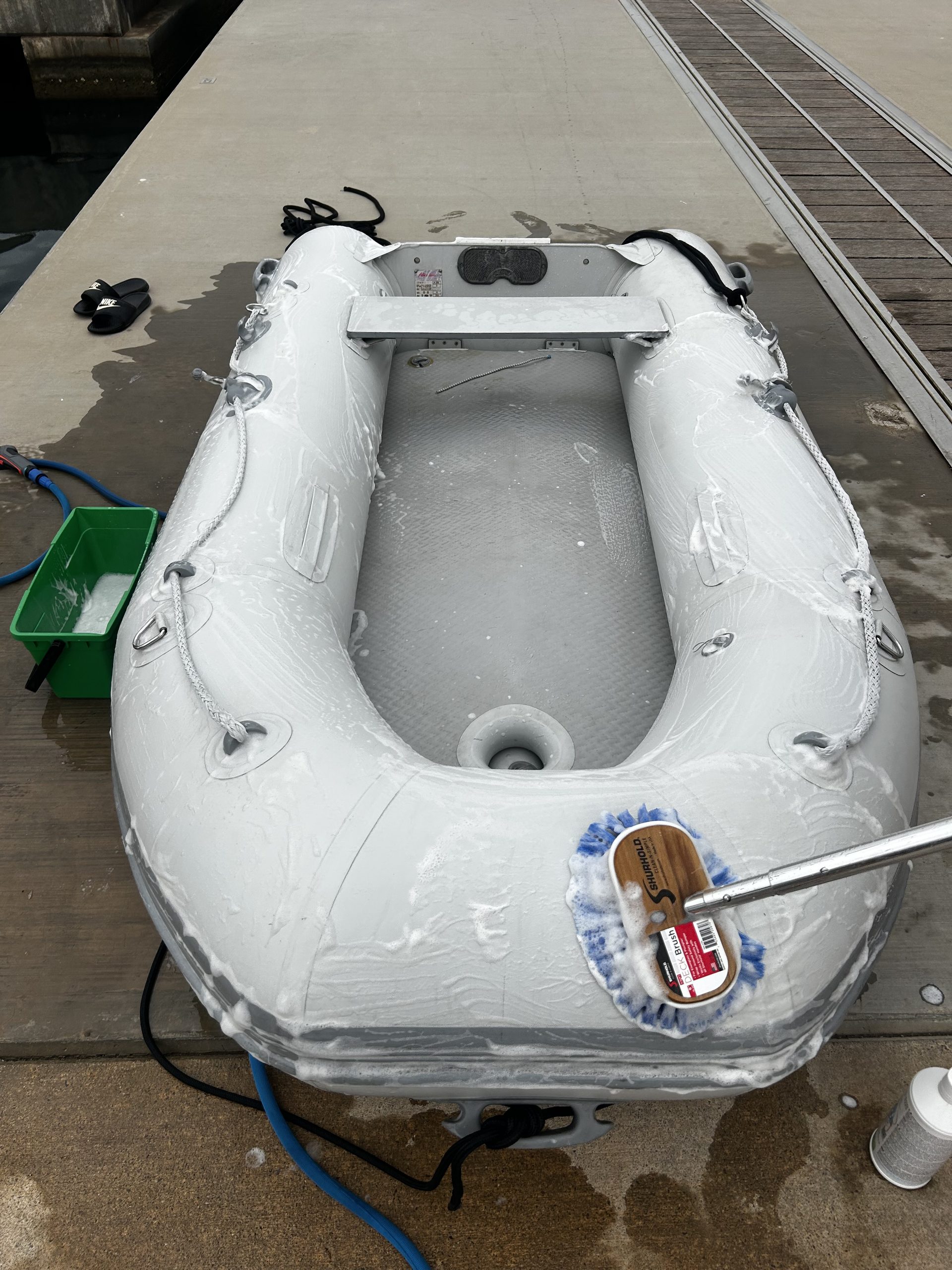
Rinse tubes, seams and floor edges with fresh water to remove salt and loose grit. Use a gentle hose spray and avoid pressure washers.
Apply a Compatible Cleaner
Choose a cleaner suitable for your tube material. Test a hidden area first, then clean small sections with a soft sponge, cloth or brush. Follow the label’s dilution and contact time.
Treat Remaining Marks
Treat stubborn marks with a compatible stain remover, following its instructions. Stop if the fabric changes colour or texture, and avoid increasing concentration or scrubbing pressure.
Finish and Dry Thoroughly
Rinse wash-off cleaners or buff cloth-applied products as directed. Remove standing water and let folds and floor edges dry fully before covering or storage. Apply a compatible protectant only if your boat manufacturer recommends it.
How Do You Remove Stains from Inflatable Boat Sponsons?
Identify the likely contamination before choosing a treatment. A grey rub mark, green film and orange stain may need different approaches.
Mark or contamination
First step
When to stop or change approach
Salt residue and dusty dirt
Thorough fresh-water rinse, then mild washing if needed
Persistent white or chalky areas may need assessment rather than more rinsing
Green algae or a slimy waterline
Gentle washing with a compatible tube cleaner
Ask for advice if established growth remains; avoid scraping the coating
Black scuff marks
Local treatment with an approved inflatable cleaner and soft cloth
Stop if you see a texture change or start removing the surface finish
Brown or yellow waterline staining
Wash first, then check which stain treatment the tube maker permits
Do not assume an acid hull cleaner is safe on the tubes
Orange marks near metal fittings
Identify the staining source and possibly compatible rust treatment
Protect surrounding materials and address the fitting that caused the stain
How Do You Remove Mould and Mildew Safely?
Start by washing away surface dirt. If dark spotting remains, choose a mould-stain treatment only when its label and your tube manufacturer confirm compatibility with the exact fabric.
Follow its specified concentration and contact time, protect adjacent materials and rinse as directed. Never mix cleaning chemicals.
Cleaning alone will not solve repeated damp storage. Dry the boat, clean the cover and check ventilation. For the wider seasonal routine, read our winter boat storage guide.
What If the Tubes Feel Sticky or Stay Discoloured?
Persistent stickiness can indicate surface deterioration rather than removable dirt. Sunscreen, fuel contamination and weather exposure can contribute to problems on PVC.
Stop experimenting with solvents. Photograph the area and ask the boat maker or an inflatable repair specialist to assess it. A cleaner may improve appearance without restoring damaged fabric.
How Often Should You Clean an Inflatable Boat?
Match the routine to use and exposure. A working tender needs more frequent attention than a dinghy stored dry between occasional outings.
When
Recommended action
After saltwater use
Rinse thoroughly and remove obvious dirt
After fish residue, bird droppings or a spill
Deal with the contamination promptly using a compatible method
During regular use
Check weekly for grime, damp areas and developing marks; wash when needed
Before storage
Complete a thorough clean, inspect the fabric and let everything dry
During storage
Check periodically for moisture, cover rubbing and new staining
The weekly check is a practical starting point, not a universal manufacturer interval. Add these tasks to your boat maintenance plan and adjust them to your conditions.
What Affects the Cost, and When Should You Call a Professional?
Routine DIY washing needs little equipment. If you already own a suitable bucket, sponge and cloths, your main purchase may be the correct cleaner.
Compare usable quantity as well as bottle price. A permitted concentrate may cover more washes, but never dilute a ready-to-use product unless its instructions allow it. Buy a stain remover only when you have identified a problem that needs one.
Professional costs depend on boat size, access, contamination and whether the work includes repairs. Request an itemised quote separating cleaning, protective treatment, lifting or transport, and repair work.
Call a tube specialist for lifting seams, exposed fabric reinforcement, recurring air loss or persistent tackiness. Keep the boat out of service if you suspect its tubes or attachments are unsafe.
How Can Owners and Crew Prevent Repeat Stains?
Keep a short cleaning record with the product name, dilution and any areas needing attention. A photograph helps the next crew member distinguish an old cosmetic mark from a developing fault.
Store tube-cleaning supplies together and label spray bottles clearly. Keep fuel spills and oily equipment away from the fabric, and check that covers or straps are not rubbing the same spot repeatedly.
Clean fenders also reduce the chance of transferring grime during berthing. For that separate task, follow our guide to cleaning boat fenders.
Scrubbing before rinsing: remove loose grit before putting a cloth against the fabric.
Choosing by brand alone: check the exact product and its approved surfaces.
Increasing strength without instructions: more concentrated cleaner can create a new problem.
Using abrasive pads: begin with soft tools and follow the boat maker’s limits.
Cleaning hot tubes: move into shade and let the surface cool first.
Ignoring nearby materials: protect painted panels, fittings and existing repairs from incompatible runoff.
Chasing every cosmetic mark: stop when further treatment risks the fabric.
Packing away damp: allow drying time for folds and floor edges, not just the visible upper tubes.
Frequently Asked Questions About Cleaning An Inflatable Boat
Can You Use Bleach When Cleaning An Inflatable Boat?
Do not use household bleach as a routine tube cleaner. Use a bleach-containing treatment only if the boat manufacturer permits that specific product and method.
Can You Pressure Wash an Inflatable Boat?
Use a gentle hose rinse for the tubes. Zodiac advises against high-pressure cleaning equipment. Follow separate manufacturer instructions for the rigid hull, and keep any permitted pressure-washing operation away from fabric, seams, valves and bonded fittings.
Can You Use Washing-Up Liquid when Cleaning an Inflatable Boat?
Do not use household washing up liquied in any yacht cleaning. Start with a boat soap and work up to strong pvc or hypalon cleaners if stains persist.
Will Cleaning Make Yellowed Inflatable Tubes Look New Again?
It depends on the cause. Cleaning may remove surface contamination, but ageing or material damage can leave lasting discolouration. Test a compatible product on a small area and judge the dry result before attempting a larger treatment.
Can You Clean an Inflatable Boat While It Is Afloat?
A light fresh-water rinse may be practical afloat, provided you keep drainage configured correctly and avoid flooding the boat. Plan chemical stain treatments in a suitable shore-based wash area, following product disposal instructions and the marina’s requirements.
Summary
Cleaning an inflatable boat works best as a regular, gentle routine. Identify the tube material, rinse away salt and grit, and use compatible products only where needed. Start with the owner’s manual, assemble a simple cleaning kit and include a quick fabric inspection in your next washdown.
This post was all about Cleaning An Inflatable Boat.
Join the newsletter for practical yacht maintenance advice, new guide releases, downloadable resources, product recommendations and seasonal reminders designed to help owners, captains and crew make better maintenance decisions onboard. As TYMH grows, subscribers will also get early access to new checklists, maintenance resources, recommended products and exclusive offers or discounts from selected marine brands.
Success
Thank you for signing up to receive updates from The Yacht Maintenance Hub.
Blog / Cleaning An Inflatable Boat: The Safe Way To Remove Dirt, Salt And Stains
We track how people interact with our online web content and resources, and some of that tracking involves storing cookies on your device. By continuing to use our site you accept that you agree to this. For more details see our Privacy Statement.
 310
310
310
310