A deck can look dirty for several different reasons. Salt leaves a crust after a passage. Sunscreen and foot traffic create greasy patches. Rust, food spills and mildew leave marks that an ordinary wash may struggle to shift.
Choosing boat deck cleaners starts with identifying the surface. A product that suits moulded non-skid can be unsuitable for natural teak. Meanwhile, synthetic teak and teak-look foam flooring need their own cleaning methods.
This guide covers all three categories, explains where familiar products fit, and shows when a brush is enough. It also explains when a jet wash can help, when stronger chemicals make sense, and when further cleaning risks making the problem worse.
Some links on this page are affiliate links. This means The Yacht Maintenance Hub may earn a commission if you click through and make a purchase, at no extra cost to you. We only recommend products, tools and marine suppliers that we believe are useful for yacht owners, captains, crew and marine professionals.
Quick Answer: What are the best boat deck cleaners?
The best boat deck cleaners match both the deck material and the contamination. Start with fresh water for salt, use a compatible detergent for grime, and choose a surface-approved stain remover for persistent marks. Non-skid, natural teak and synthetic teak need different products, brushes and pressure-washing precautions.
Choose the Cleaner for the Surface and the Stain
Before opening a bottle, check the boat handbook or decking supplier’s care instructions. In this guide, non-skid means textured fibreglass, gelcoat or painted decks. Natural teak and synthetic decking can also provide grip, but their maintenance requirements differ.
Then identify what you need to remove:
Salt deposits: Start with a thorough fresh-water rinse. Detergent helps when salt sits within an oily layer of dirt.
General grime: Use a compatible boat wash and gentle agitation.
Grease or sunscreen: Try a suitable spot cleaner after the initial wash.
Rust or persistent discolouration: Select a stain-specific product approved for that exact surface.
If a white mark remains after rinsing and drying, investigate it before adding stronger cleaner. Water spotting, trapped detergent and a deteriorating finish can require different treatments.
Boat Deck Cleaners Compared
These are application-based choices using published product guidance and tymh testing. Select the product for the job rather than treating every bottle as interchangeable.
Non-Skid Boat Deck Cleaners: Lift Dirt from the Texture
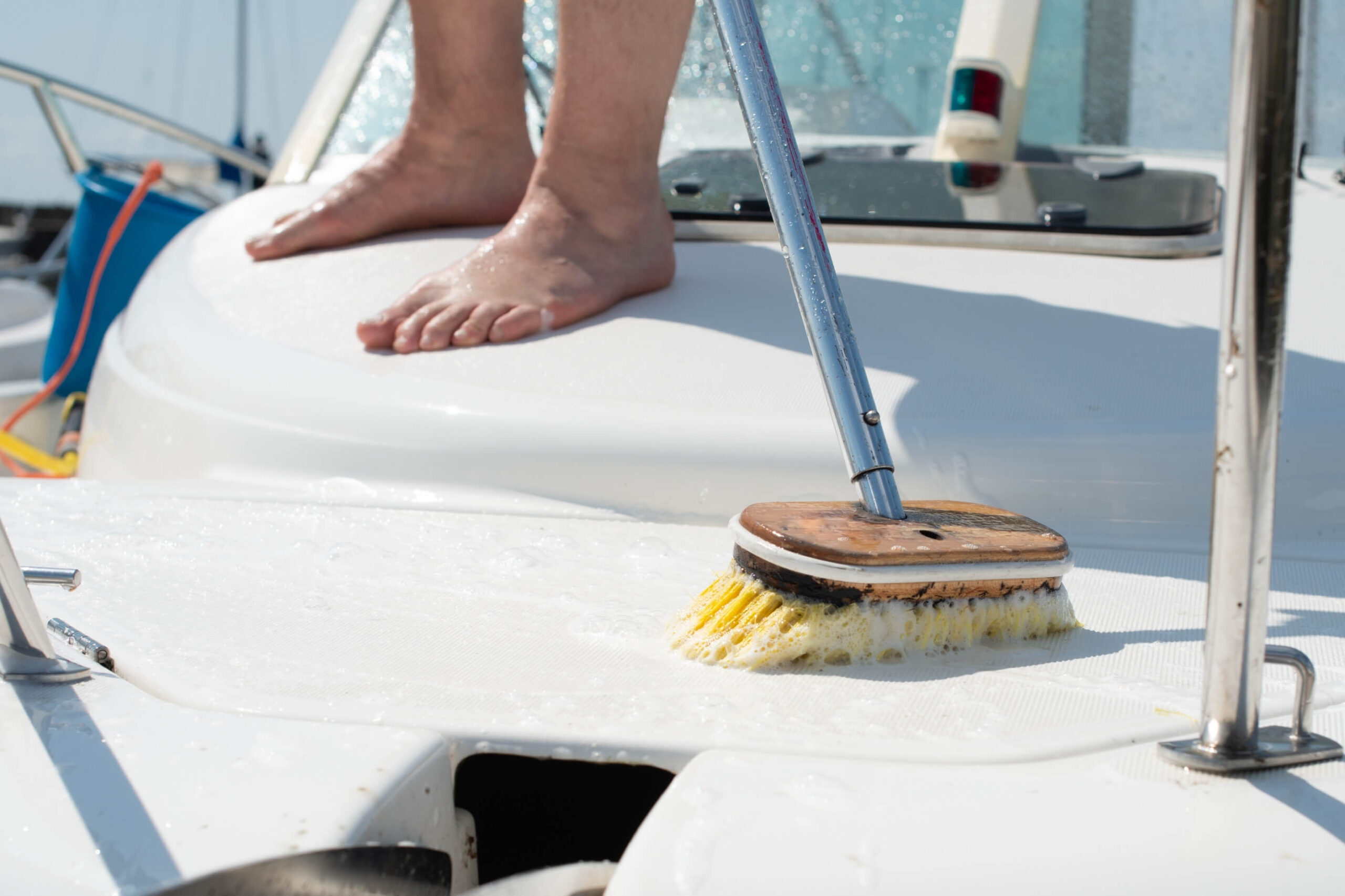
Textured decks hold dirt in their low points. A quick pass with a sponge may clean the raised pattern while leaving grime underneath. Give the correct cleaner time to loosen that dirt before increasing brush pressure.
Star brite for Textured Decks
Star brite Non-Skid Deck Cleaner is a relevant choice for dirty textured fibreglass and compatible painted decks. TYMH recommends the following procedure, wet the surface, spread the cleaner, wait two to three minutes, scrub with a soft or medium bristle brush and rinse. Remember to always keep the working area from drying out. For more on this check Star brite application guidance.
The practical benefit is a product intended for the texture you are cleaning. However, an old painted deck still needs a compatibility check. Loose paint, worn texture and exposed substrate need repair rather than harder scrubbing.
Where Meguiar’s and Sea Power Boat Wash Fit
For light dirt, a routine marine wash may be enough. Meguiar’s Boat/RV Gel Wash targets everyday contamination, including salt spray and bird droppings, while preserving existing wax protection. That makes it worth considering for regular washing of compatible surfaces. Check the exact label for dilution and suitability. Meguiar’s product information.
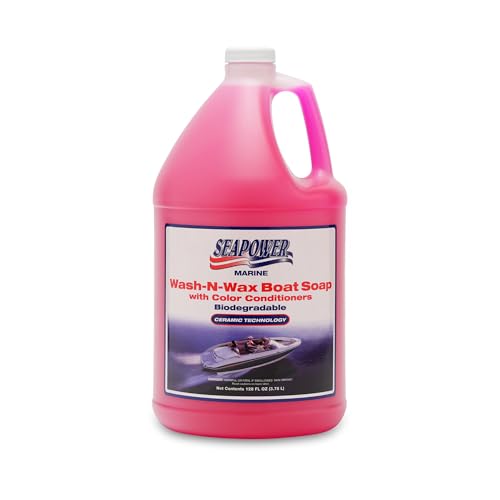
Seapower wash n wax is pH-neutral and suitable for several marine surfaces, including teak. It also leaves a protective film, so can be benifical when leaving a small protective layer on your non skid deck without causing it to become slippery.
Time needed: 30 minutes
How to Clean Non-Skid Boat Decks
Remove loose grit and rinse away salt.
Test the chosen product in a discreet area.
Apply it at the labelled strength and contact time.
Agitate with a brush suited to the coating and texture.
If a grease mark remains, consider a compatible spot treatment. Marine Spray Nine combines cleaning and degreasing functions, making it a candidate for appropriate hard surfaces. Test first with a diluted mixture to reduce chance of further damage. For further guidance check Marine Spray Nine product information.
An orange mark around a fitting may need a rust treatment after the general wash. Star brite Rust Stain Remover is one option for compatible fibreglass and other listed surfaces. Apply and leave on for one to two minutes of contact time while agitating before a fresh-water rinse. To be sure of not contaminating the paint wash off the product with a general boat wash after. For further guidance check Star brite rust-removal instructions.
Use this as a targeted treatment, and investigate the fitting if staining returns. A general deck wash and a rust remover perform different jobs. Do not transfer the same treatment to natural teak or foam without checking.
Teak Boat Deck Cleaners: Preserve the Wood While Cleaning
Natural teak needs restraint. Aggressive cleaning removes wood, and a deck has a limited thickness available for future repairs. A pale finish immediately after cleaning means little if the process leaves deep grain or damages seams.
TDS ECO-300 for Teak Maintenance
TDS ECO-300 is a ready-to-use liquid, not a powder or a concentrate that you should automatically dilute. It cleans and brightens teak, and its consistency allows application with a scrubbing pad. For more on this product check the TDS ECO-300 product information.
It is a sensible starting option when routine rinsing no longer removes the dirt. Work in manageable sections so you can control application and rinsing. There is little benefit in covering the entire deck if the first section dries before you return to it.
Snappy Teak-Nu for More Intensive Restoration
Snappy Teak-Nu uses Formula No. 1 followed by Formula No. 2 to restore weathered or heavily soiled teak. Treat it as a separate restoration process, with its own instructions, rather than a substitute for ordinary routine cleaning. Snappy Teak-Nu manufacturer directions.
Check your deck thickess before choosing a two-part treatment. Some professionals advise against acid-based two-part cleaners because they can accelerate surface wear and affect caulking. Protect your hands and eyes, manage runoff, and follow the complete product sequence.
How to Clean Teak Boat Decks
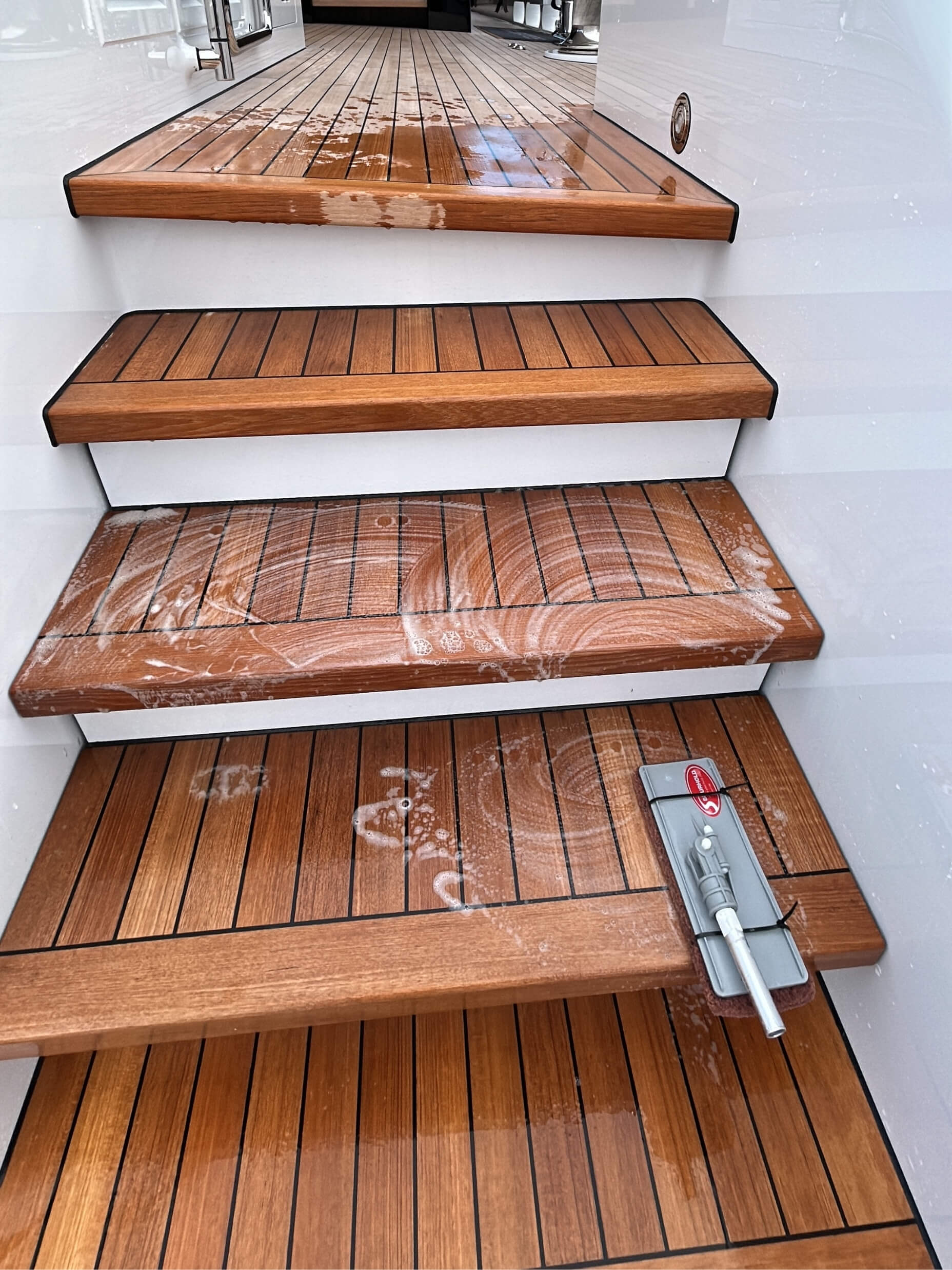
For routine cleaning, use a soft brush or suitable soft pad with a compatible teak deck cleaner. We advise gentle work across the natural grain, followed by thorough rinsing. Avoid digging into the softer wood with pads or brushes. Check out our guide for more a in depth guide, Cleaning Teak Decks Like a Pro: 7 Expert Tips Anyone Can Use
After the deck dries, check seams, plugs and any patches that stay wet longer than the surrounding timber. Persistent moisture can indicate a seam or plug problem. Arrange an inspection before repeating chemical treatments.
If uneven grain remains, read TYMH’s guide to sanding teak decks before removing any material.
Synthetic Teak Boat Deck Cleaners: Identify the Material First
“Fake teak” can describe different products. Some use PVC-based synthetic planks, while others use soft foam with a teak-style pattern. SeaDek, for example, uses a PE/EVA foam blend. These materials need different care routines.
Cleaning Synthetic Teak Planks
Start with fresh water and prompt removal of spills. For more stubborn contamination use a ph nuteral soap, somtimes a degreaser and clean with the grain. That differs from the natural-teak method above.
The best cleaner for synthetic teak decking is one that the decking manufacturer accepts for the stain involved. A bottle labelled “teak cleaner” may target natural wood. It does not automatically suit PVC, the perimeter sealant or the adhesive beneath the deck.
If a stain persists, photograph it and ask the installer for the next approved step. Avoid experimenting with solvents, strong brighteners or abrasive pads across a visible panel.
Cleaning Teak-Look Foam
Use the foam manufacturer’s recommended cleaner and method. SeaDek recommends its Dek Magic cleaner and specifically warns against acid-based cleaners. Other foam brands may have different requirements. SeaDek cleaning advice.
Check edges while cleaning. If a pad lifts or a seam opens, stop directing water at that area and arrange a repair. More chemical strength will not fix an adhesive failure.
A jet wash is a cleaning tool, and its suitability depends on the complete deck system.
Surface
Practical approach
Natural teak
Use a hose and gentle manual cleaning; We advise avoiding pressure washers
Painted or moulded non-skid
Air on the side of caution and should be a only used in bad cases of grime or mold
Synthetic decking
Is a preferred choice for most synthetic teak decks
Teak-look foam
General boat wash or degreasers work well
Do not chase a stubborn stain by moving the nozzle progressively closer. Keep water away from damaged seams, lifting edges and electrical fittings.
Practical Advice for Owners and Crew
Build a Small, Useful Cleaning Kit
Keep a compatible routine wash, a deck-specific cleaner, suitable brushes, a small detailing brush and clean cloths onboard. Add chemical-resistant gloves, eye protection and absorbent pads when the products and contamination require them.
Label brushes by task. A brush used around greasy machinery should not return straight to a guest deck. Also, use separate equipment for incompatible chemicals and rinse tools after each job.
The following is a practical starting routine. Adjust it for use, climate and the deck maker’s instructions.
When
Action
After saltwater exposure
Rinse salt from the deck and fittings where appropriate
After food, fuel or sunscreen spills
Remove the contamination promptly using the approved method
During regular use
Inspect weekly and wash when dirt builds up
Before stronger treatment
Check seams, coatings and adhesive edges; identify the stain
Absorb oil or fuel before washing. Collect contaminated waste through the marina or yard’s disposal arrangements. Do not use detergent to disperse a spill into the water.
Compare Cost per Clean
Bottle price alone can mislead. Compare the quantity required, likely coverage, brush life and time spent rinsing.
For illustration, a $20 one-litre bottle used at 50 ml per bucket provides 20 buckets at $1 each. This is a calculation example, not a product price or dilution recommendation. Ready-to-use cleaners require a different comparison based on coverage.
Routine rinsing and early spot cleaning often reduce the need for expensive restorative work. Buy larger containers only when you can use and store them sensibly.
Know When to Call a Professional
Most owners can handle routine washing and approved spot treatments. Ask a deck specialist to assess loose caulking, lifting panels, exposed fasteners, persistent damp patches or repeated staining around a fitting. Cleaning can reveal these problems, but it cannot repair them.
Common Mistakes to Avoid
Using one cleaner everywhere: Check the surface, coating, seams and adjacent materials.
Adding extra concentrate: Measure the labelled dose; excess product creates more rinsing work.
Letting chemicals dry: Work in smaller areas, especially in sun or wind.
Treating every mark as dirt: Wear, fading and damaged coatings may need repair.
Scrubbing natural teak aggressively: Protect the remaining wood thickness.
Assuming biodegradable means harmless runoff: Product claims do not remove the need to control contaminated wash water.
A dedicated non-skid boat deck cleaner is useful when dirt sits inside the texture. Star brite is one option for compatible fibreglass and painted decks. For light contamination, a suitable routine boat wash may be enough.
Can I Use Ordinary Boat Soap on Teak?
Use it only when the soap label and deck maker permit it. A compatible wash can handle light dirt, while ingrained stains may need a dedicated teak deck cleaner. Check any protective film or coating requirements before choosing a wash-and-wax product.
How Do I Remove Black Stains from Teak Decking?
Start with a gentle, approved teak-cleaning method. If the mark remains, identify whether it relates to contamination, dampness or a seam problem before choosing a stain treatment. Repeated dark patches around a joint deserve inspection.
Can Natural Teak Cleaner Clean Synthetic Teak?
Only when the synthetic decking manufacturer approves that exact cleaner. Natural teak, PVC-based decking and PE/EVA foam are different materials. Use the care guide for the installed product rather than relying on the phrase “faux teak deck cleaner”.
How Often Should I Clean My Boat Deck?
Remove spills promptly and rinse salt after exposure where the deck guidance permits. Inspect regularly, then wash when dirt builds up. Reserve stronger stain treatments and restoration work for a specific need rather than a fixed weekly routine.
Summary
Effective boat deck cleaners remove the contamination while preserving the surface beneath it. Match the cleaner to non-skid, natural teak or synthetic decking, then use the least aggressive approved method that works.
Start by identifying your deck material, checking its care instructions and testing a small area. For the rest of your washdown kit, compare TYMH’s boat soap guide.
Join the newsletter for practical yacht maintenance advice, new guide releases, downloadable resources, product recommendations and seasonal reminders designed to help owners, captains and crew make better maintenance decisions onboard. As TYMH grows, subscribers will also get early access to new checklists, maintenance resources, recommended products and exclusive offers or discounts from selected marine brands.
Success
Thank you for signing up to receive updates from The Yacht Maintenance Hub.
Blog / Boat Deck Cleaners: What Actually Works on Salt, Grime & Stains
We track how people interact with our online web content and resources, and some of that tracking involves storing cookies on your device. By continuing to use our site you accept that you agree to this. For more details see our Privacy Statement.
 310
310
310
310