The Yacht Maintenance Hub, The resource for Yacht Maintenance & Repairs310310
8 September 2026 | Read it in 7 minutes
Written by Archie Wilson
Archie Wilson is a commercially endorsed Yachtmaster Offshore, experienced Bosun, yacht crew member and founder of The Yacht Maintenance Hub. His background spans superyachts, private motor yachts, chase boats and sailing yachts, with hands-on experience in maintenance, refit work, boat building, deck operations and basic engineering. Having also lived aboard sailing yachts and helped smaller boat owners manage their own maintenance, Archie created TYMH to share practical guidance grounded in real onboard experience.
A boat battery can show normal voltage yet fail when the starter or windlass operates. Therefore, the helm display does not tell the whole story.
Proper testing a boat battery covers resting voltage, charging performance and power under load. These checks can expose a weak battery, poor connection or charging fault before a breakdown.
This guide explains how to test flooded lead-acid, AGM and lithium batteries safely and interpret the results correctly.
Some links on this page are affiliate links. This means The Yacht Maintenance Hub may earn a commission if you click through and make a purchase, at no extra cost to you. We only recommend products, tools and marine suppliers that we believe are useful for yacht owners, captains, crew and marine professionals.
Quick Answer: How to Test a Boat Battery Properly
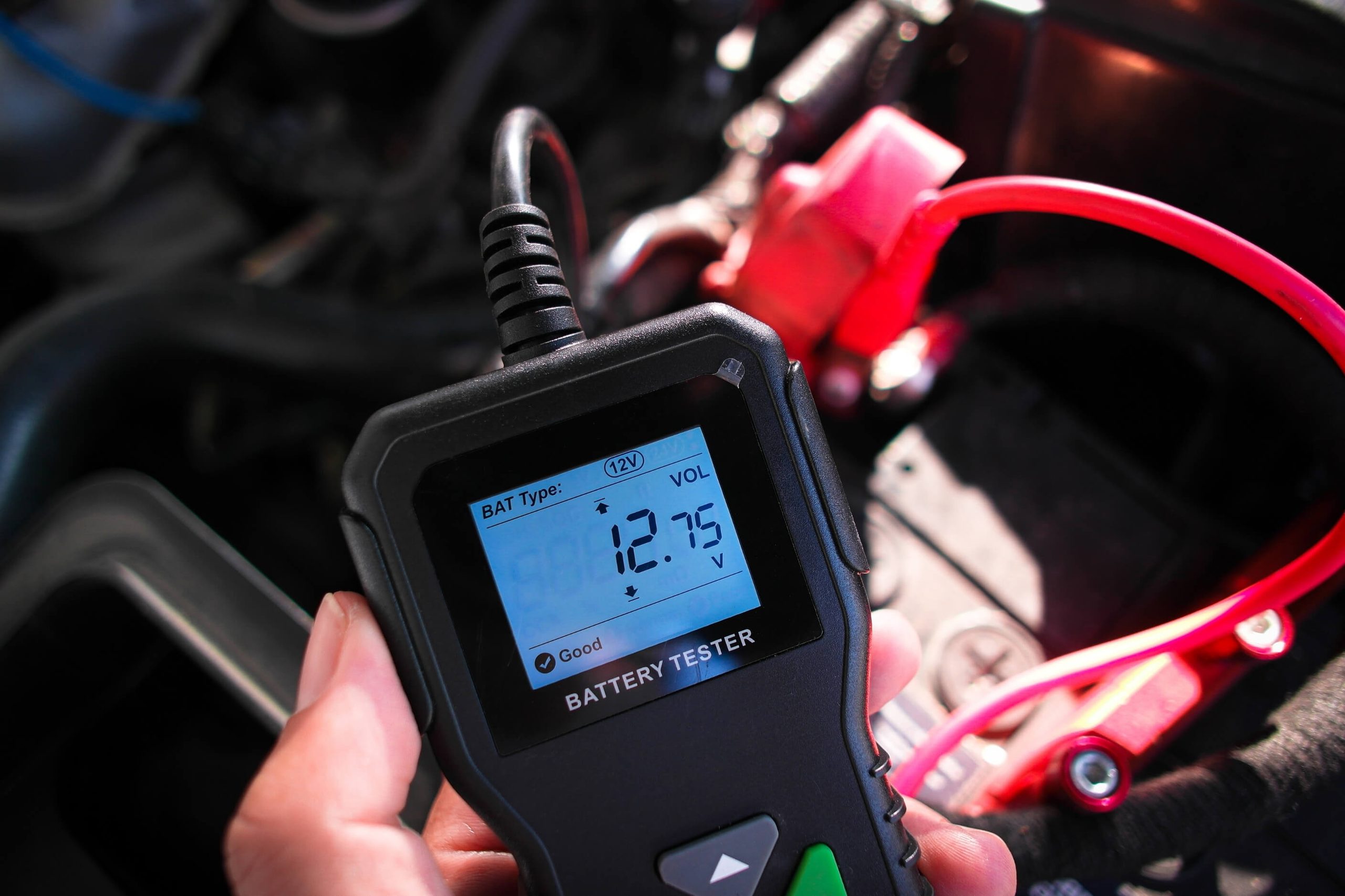
Switch off charging sources and loads, allow the battery to rest, then measure DC voltage directly across its terminals. A fully charged, rested 12V flooded lead-acid battery should generally read about 12.7V. However, voltage only indicates charge, so use a load, conductance or capacity test to confirm battery health.
What Does a Boat Battery Test Show?
A useful boat battery health check covers more than one measurement:
Test
What it checks
What it may reveal
Resting voltage
Charge level
Discharge or abnormal voltage
Charging voltage
Charging output
Poor charging or overvoltage
Load or conductance
Starting power
Weak battery or high resistance
Capacity
Usable amp-hours
Tired house battery
Parasitic draw
Current while switched off
Hidden loads
A failing battery may reach 12.7V after charging but collapse under load. Equally, a healthy battery may read low because it needs charging. Recharge and retest before replacing it.
Safety Precautions for Marine Battery Testing
Batteries can cause fire or injury if a tool creates a short circuit. Before marine battery testing:
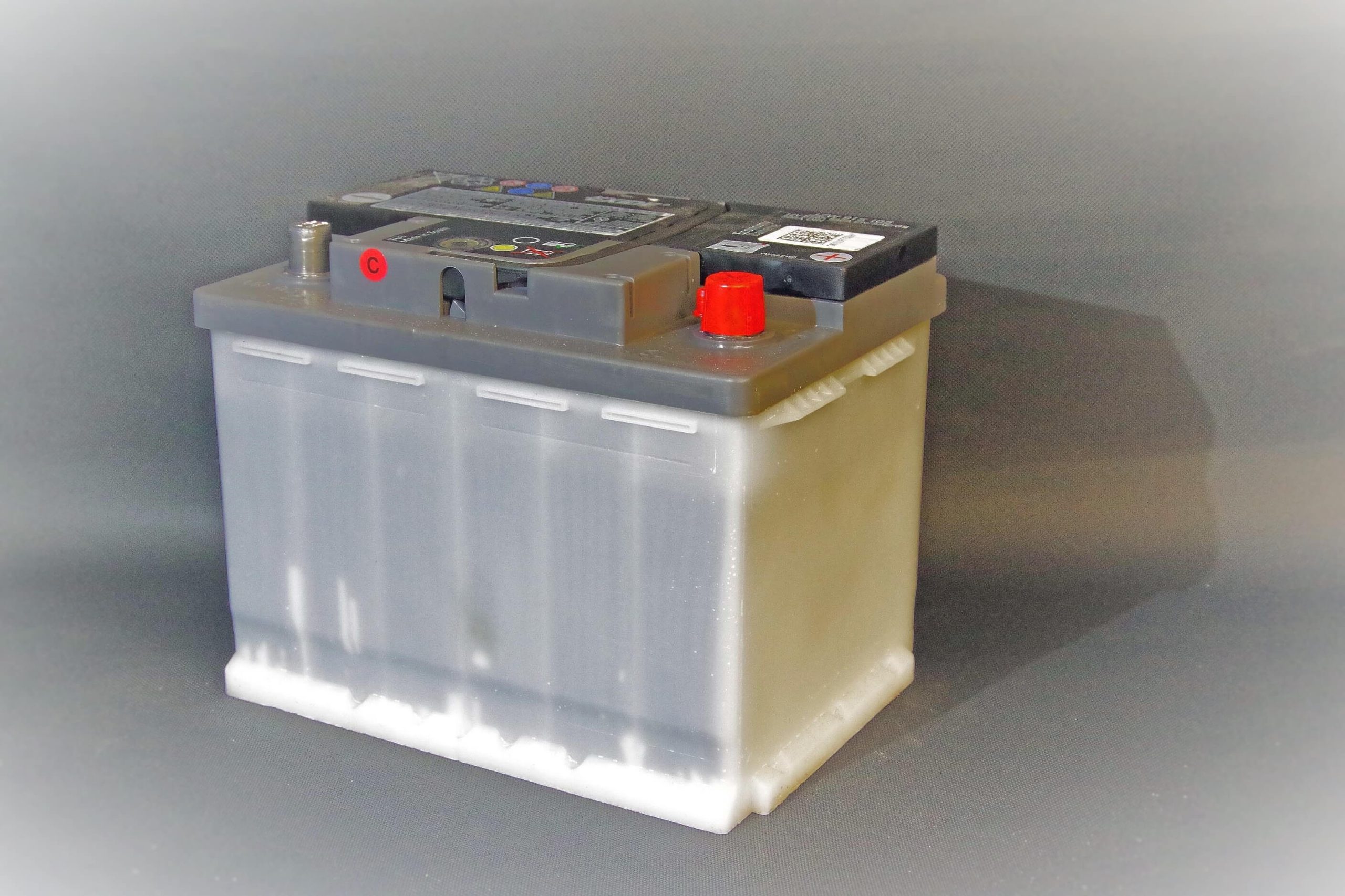
Identify the chemistry and voltage.
Wear eye protection and gloves; remove metal jewellery.
Ventilate the area and keep sparks or flames away.
Check for heat, swelling, cracks, leaks or unusual smells.
Lead-acid batteries contain corrosive acid and may release explosive gases. Moreover, acid contacting seawater can produce dangerous chlorine gas. Stop if a battery looks hot, swollen or damaged. Refer recurring lithium BMS faults to a marine electrician or the manufacturer.
How to Test a Marine Battery With a Multimeter
1. Identify and Inspect the Battery
First, identify the battery’s purpose, chemistry and voltage. Parallel units can mask a weak battery, so test them separately when safe isolation allows.
Before a boat battery voltage test, inspect the case, terminals and cables for corrosion, loose lugs, heat, swelling or leaks. A poor connection can imitate battery failure.
2. Remove Loads and Charging Sources
Switch off the engine, chargers and non-essential DC loads. Remember that pumps, alarms and trackers may bypass the main switch.
Then let a lead-acid battery rest so its surface charge dissipates. Trojan recommends at least six hours and preferably 24 hours without charging or discharging in its battery-maintenance guidance. A reading taken after charging may appear too high.
3. Measure Resting Voltage
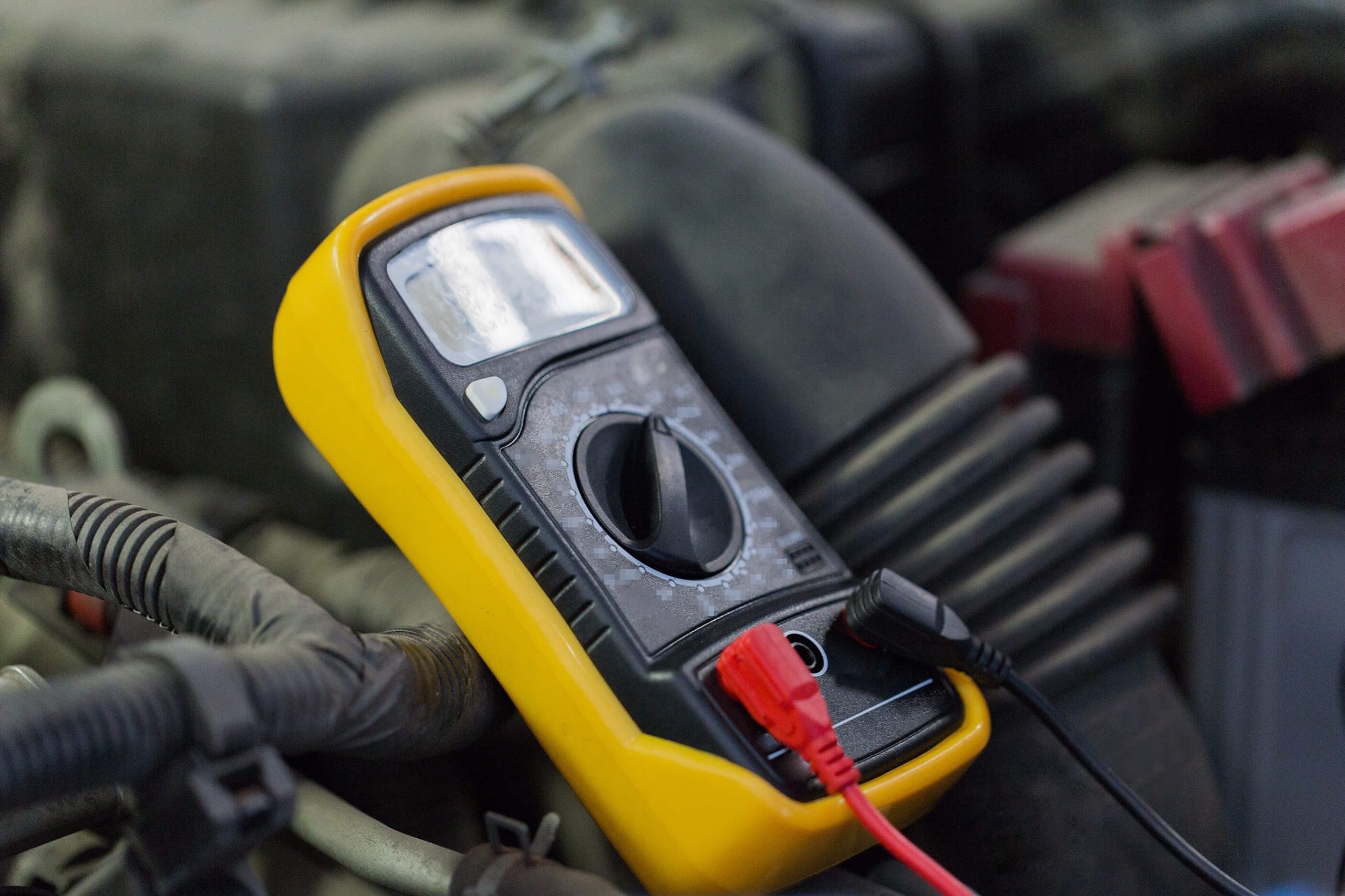
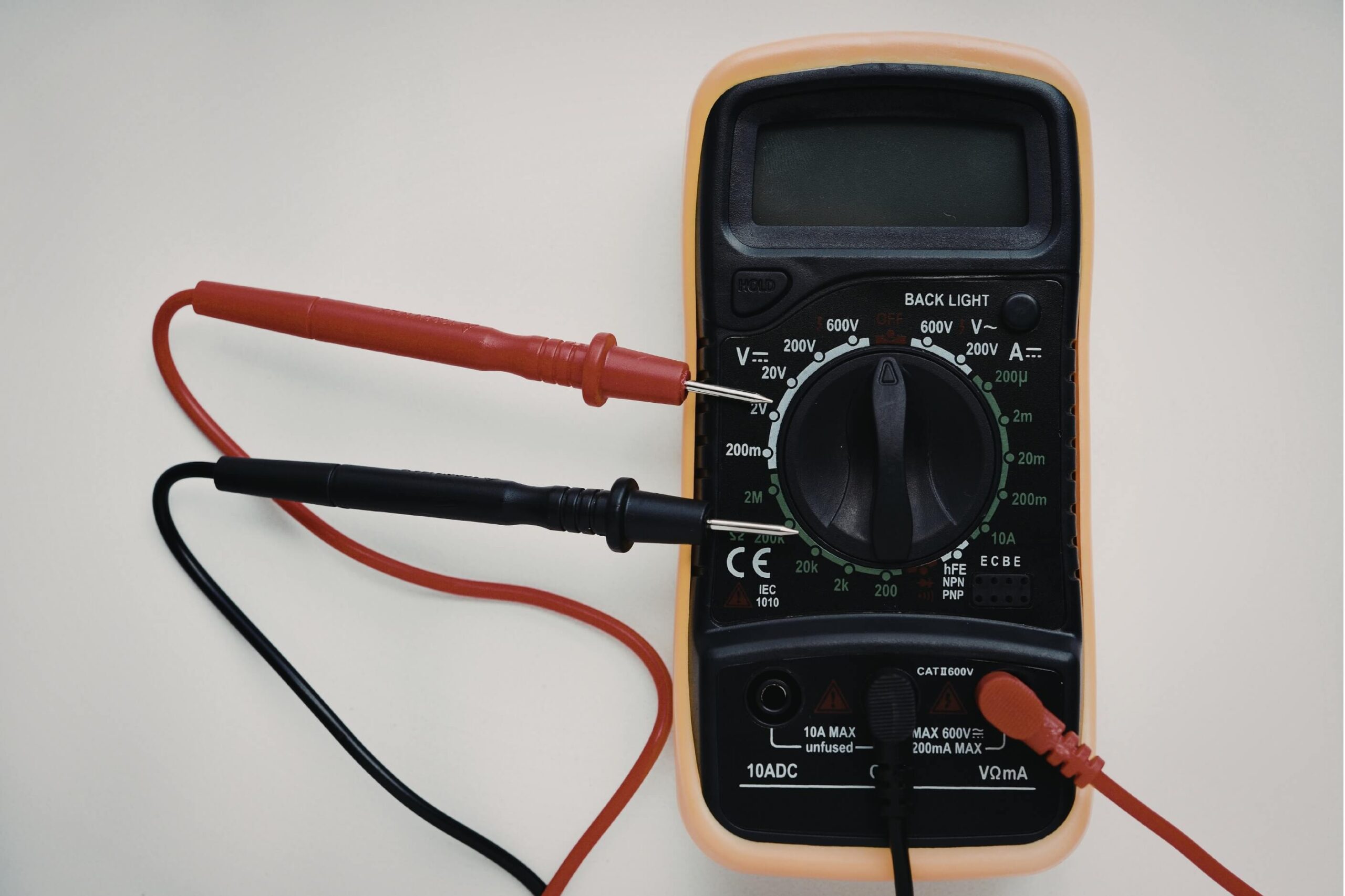
Here is how to test a marine battery with a multimeter:
Put the black lead in COM and red lead in V/ohms.
Select DC voltage and a suitable range.
Touch black to negative and red to positive.
Record the reading.
Measure on the posts first. A lower reading at the cable lugs under load suggests connection resistance.
Never place a meter set to amps across the terminals. Fluke’s guidance warns that using the amperage socket for voltage can create a short circuit.
4. Check Charging Voltage
Next, operate each charging source separately. A 12V lead-acid system commonly rises to about 13.2–14.8V, depending on chemistry, temperature and charging stage. However, manufacturer figures take priority.
If voltage does not rise, check the charger, alternator, regulator, fuses and cables. Excessive voltage may indicate a wrong profile or regulator fault. Never turn the battery switch off while the engine runs unless the system permits it.
Boat Battery Voltage Chart
This boat battery voltage chart gives approximate figures for a rested 12V flooded battery:
Resting voltage
Approximate charge
12.73V
100%
12.50V
80%
12.27V
60%
12.10V
50%
11.89V
40%
11.66V
20%
If you are asking what voltage should a boat battery read, a charged, rested 12V flooded battery normally sits near 12.7V. AGM models may rest slightly higher. Chemistry and temperature affect the result, so check the manufacturer’s data.
Load, Capacity and Battery-Type Tests
Starting Batteries
A boat battery load test checks performance under high current. For some lead-acid batteries, apply half the cold-cranking-amp rating for 15 seconds. At about 21°C, voltage should generally remain at or above 9.6V. However, follow the approved temperature-adjusted procedure.
Charge first and retest after any failure. Do not apply conventional marine battery load testing to lithium batteries without manufacturer approval.
House, AGM and Lithium Batteries
Deep cycle marine battery testing focuses on usable amp-hours. For a boat battery capacity test, charge fully, apply a known load, record current and runtime, stop at the specified voltage, then recharge. Never test a bank supporting critical equipment.
For AGM boat battery testing, use voltage, conductance and approved load testing. Never open the battery or add water, and use an AGM charging profile.
For lithium boat battery testing, review the shunt, BMS warnings, current and temperature. Zero voltage may indicate BMS protection rather than failure, so follow the manufacturer’s procedure.
Troubleshooting a Battery That Will Not Hold Charge
When a boat battery is not holding charge, separate battery failure from system failure:
Symptom
Possible cause
Next check
Low after charging and resting
Cell damage or poor charging
Recharge and retest
Normal voltage but slow cranking
Weak battery or bad connection
Load and voltage-drop tests
No voltage rise while charging
Charger, fuse or wiring fault
Measure source and battery
Bank drops overnight
Hidden electrical load
Parasitic-draw test
One unit differs from the others
Weak or imbalanced battery
Test each unit separately
For a boat battery parasitic drain test, switch off equipment and let electronics sleep. Clamp a DC meter around one cable, note the draw, then isolate circuits until it disappears. Trackers, pumps and faulty relays are common causes.
Recommended Boat Battery Testing Schedule
Interval
Recommended check
Before departure
Review voltage and alarms
Monthly
Inspect batteries and connections
Every 2–3 months
Record resting and charging voltage
Before/after storage
Charge and test each bank
Annually
Test starting and house batteries
After a fault
Investigate abnormal performance
Record each battery’s installation date, type, capacity and results. Trends reveal deterioration more reliably than a single reading.
When to Replace a Boat Battery
Knowing when to replace a boat battery depends on performance. Replace one that repeatedly fails testing, loses charge while isolated, has little usable capacity, or develops swelling, leakage or excessive heat.
First, check charging and cable voltage drop so the original fault does not damage the replacement. Follow manufacturer guidance for matched banks.
Common Mistakes to Avoid
Testing immediately after charging.
Assuming good voltage proves good health.
Load-testing a discharged battery.
Applying lead-acid procedures to lithium batteries.
Ignoring individual batteries within a bank.
Disconnecting a battery while the engine runs.
Ignoring temperature or manufacturer limits.
If the wiring is unclear, the bank uses 24V or 48V, or a lithium fault keeps returning, call a qualified marine electrician.
How Do You Check a Boat Battery With a Multimeter?
To understand how to check a boat battery, select DC volts, place black on negative and red on positive, then record the result. Remove chargers and loads for an accurate resting reading.
How Can You Tell if a Boat Battery Is Bad?
To learn how to tell if a boat battery is bad, look for slow cranking, rapid voltage loss, reduced runtime, load-test failure, swelling or leakage. Charge it and check connections first.
Can a Battery Show 12 Volts and Still Be Bad?
Yes. It may show normal voltage but collapse under load. Therefore, a proper 12V boat battery test includes a load, conductance or capacity check.
How Often Should Marine Batteries Be Tested?
Inspect monthly, record voltage every two to three months, and test more deeply each year. Also test before long passages, after storage and following any fault.
Should You Disconnect a Battery Before Testing It?
You can take a basic connected reading. However, chargers and loads may distort it. Safely isolate the battery for accurate testing if essential equipment remains protected.
Summary
Testing a boat battery takes more than finding 12 volts. Check charge, charging output and load performance; use BMS or shunt data for lithium banks. Record results and investigate changes early.
Join the newsletter for practical yacht maintenance advice, new guide releases, downloadable resources, product recommendations and seasonal reminders designed to help owners, captains and crew make better maintenance decisions onboard. As TYMH grows, subscribers will also get early access to new checklists, maintenance resources, recommended products and exclusive offers or discounts from selected marine brands.
Success
Thank you for signing up to receive updates from The Yacht Maintenance Hub.
Blog / Testing a Boat Battery: How to Check Voltage, Charge & Health Properly
We track how people interact with our online web content and resources, and some of that tracking involves storing cookies on your device. By continuing to use our site you accept that you agree to this. For more details see our Privacy Statement.
 310
310
310
310