The Yacht Maintenance Hub, The resource for Yacht Maintenance & Repairs310310
7 September 2025 | Read it in 8 minutes
Written by Archie Wilson
Archie Wilson is a commercially endorsed Yachtmaster Offshore, experienced Bosun, yacht crew member and founder of The Yacht Maintenance Hub. His background spans superyachts, private motor yachts, chase boats and sailing yachts, with hands-on experience in maintenance, refit work, boat building, deck operations and basic engineering. Having also lived aboard sailing yachts and helped smaller boat owners manage their own maintenance, Archie created TYMH to share practical guidance grounded in real onboard experience.
Boat antifouling paint helps control the growth that builds up below the waterline. However, choosing a suitable product involves more than picking a colour and rolling on another coat.
Your hull material, local waters, cruising speed and existing paint all affect the decision. Preparation and launch timing matter just as much.
These 15 facts explain what antifouling does, when you need it and how to avoid common mistakes before your next haul out.
Some links on this page are affiliate links. This means The Yacht Maintenance Hub may earn a commission if you click through and make a purchase, at no extra cost to you. We only recommend products, tools and marine suppliers that we believe are useful for yacht owners, captains, crew and marine professionals.
Quick Answer: What Is Boat Antifouling Paint?
Boat antifouling paint is an underwater coating that helps discourage marine growth. Conventional products release active ingredients, while foul-release coatings make growth easier to remove. Choose a system suited to your hull, local conditions and use, then follow its preparation, application and launch instructions.
15 Facts to Know Before Choosing Antifouling
1. Antifouling Paint Helps Control Marine Growth
Algae, slime and shell growth can build up on a boat kept in the water. Antifouling helps limit this growth on the hull and other suitably coated underwater surfaces.
It does not make the boat maintenance-free. You still need inspections and cleaning appropriate to the coating. Also, antifouling cannot repair damaged gelcoat, corrosion or osmosis. These problems need assessment before you cover them with fresh paint.
2. A Fouled Hull Can Increase Fuel Use
Growth makes the underwater surface rougher and increases drag. A motorboat may then need more power to maintain its usual speed, while a sailing yacht may feel noticeably slower.
The effect depends on the boat and the amount of fouling. Avoid relying on a fixed fuel-saving percentage when choosing paint. Instead, record speed, engine settings and fuel use under comparable conditions to help spot changes that deserve investigation.
3. Different Types of Antifouling Work Differently
Understanding the main coating types helps you ask better questions at the chandlery.
Type
How it works
Hard antifouling
Releases active ingredients through a relatively durable coating
Eroding or ablative antifouling
Gradually wears away, exposing fresh coating
Self-polishing copolymer, or SPC
Uses controlled surface renewal to manage coating wear and biocide release
Biocide-free foul-release coating
Creates a surface that makes firm attachment more difficult
These categories describe different mechanisms. The individual product instructions determine suitability, service life and maintenance.
4. Freshwater Boats Can Need Antifouling Too
Antifouling is not only for boats kept at sea. Algae and other organisms can foul boats in rivers, canals and lakes, particularly during extended periods afloat.
Choose a product approved for your water type. Some eroding coatings behave differently in freshwater, so a paint that works at a coastal marina may not suit an inland berth. Ask your yard about local growth and check the manufacturer’s recommendations before buying.
5. Not Every Boat Needs Antifouling Paint
A trailer boat launched briefly, cleaned after use and stored dry may not need antifouling. Your actual routine matters more than the boat’s size.
However, leaving that same boat afloat for several weeks changes its exposure. Consider how long it stays in the water and whether you can inspect and clean it regularly. Avoid applying paint automatically if a suitable cleaning and dry-storage routine already meets your needs.
6. The Hull and Underwater Fittings Need Different Checks
A product suitable for fibreglass may be unsuitable for aluminium. Some copper-based antifoulings can cause serious corrosion on aluminium, so use an expressly approved paint and primer system.
Check saildrives, outdrives, propellers and shafts separately. Keep sacrificial anodes unpainted, and follow equipment instructions around transducers and water intakes. Our guide on how to apply antifouling paint will help you with this.
7. Colour Can Help Inspections, but Cannot Identify the Paint
Colour affects how easily you notice slime, marks and worn areas. However, it does not tell you the coating’s chemistry or whether another product can go over it.
Find the old product name through invoices, maintenance records or the previous owner. If it remains unknown, somtimes you may have to strip the paint back and start with base primers. Select for compatibility and performance requirements before choosing the final shade.
8. Antifouling Needs Inspection and Eventual Recoating
Some systems target a single season, while others allow longer service intervals. There is no universal annual rule for every coating and cruising area.
Inspect the hull at haul out, noting growth, worn patches and loose layers. Follow the product’s service guidance and use your observations to plan the next job.
Applying another coat over failing paint will not fix the underlying problem. Old coating build-up may need removal before the finish becomes reliable again.
9. Preparation Determines How Well New Paint Adheres
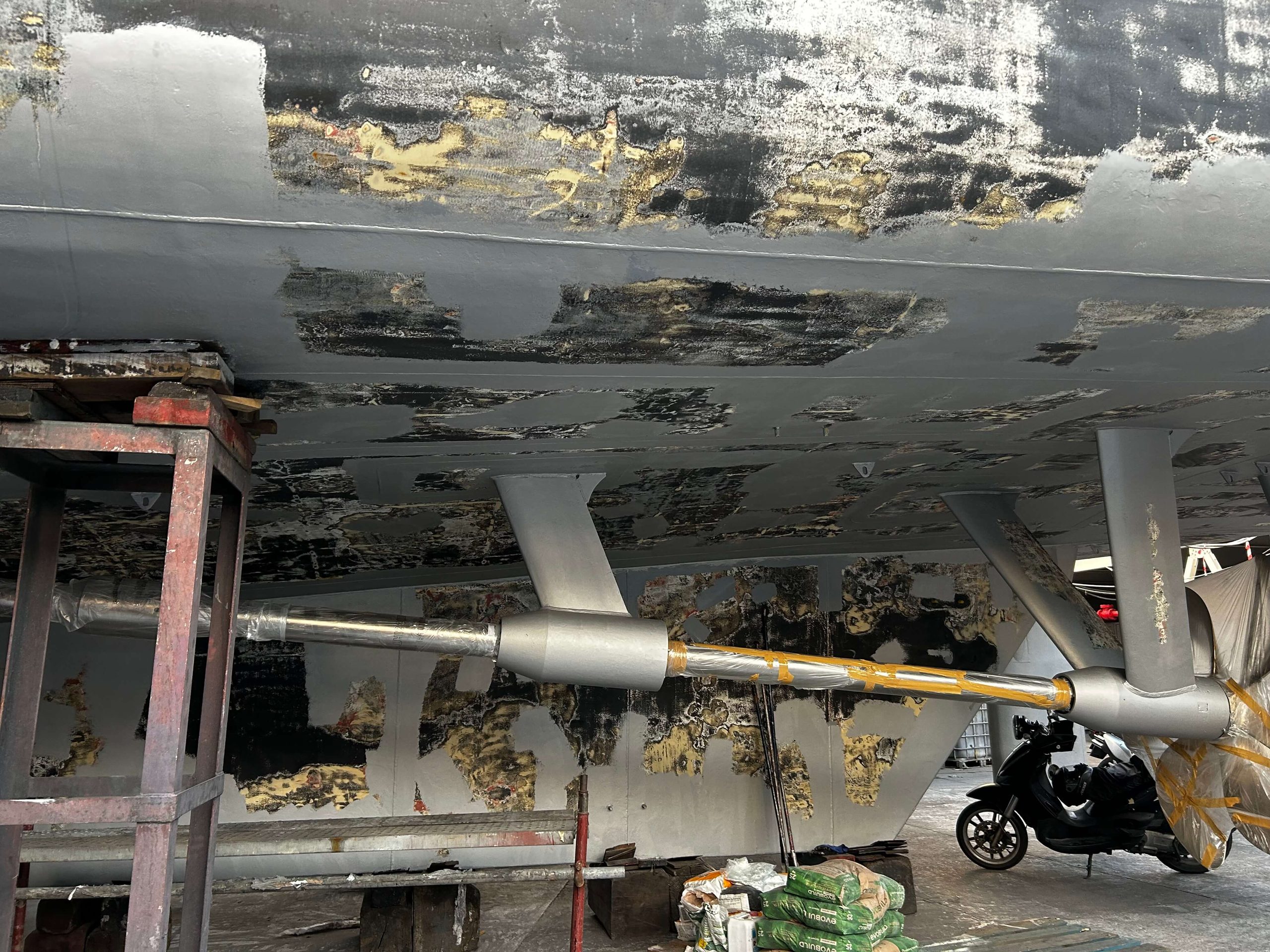
Start by removing growth and inspecting the clean hull. Deal with damaged areas and loose paint before following the specified cleaning, abrasion and priming process.
Sound, compatible antifouling may accept recoating after preparation. An unknown or incompatible finish may need an approved separating primer or removal.
For DIY preparation, avoid dry-sanding antifouling. Use the approved wet-abrasion method and collect the residue. During painting, follow coverage and film-thickness instructions instead of stretching a tin across too much hull.
10. Antifouling Work Needs Careful Waste Control
Paint debris and contaminated wash water should not enter drains or the sea. Arrange a suitable washdown area, use ground protection and follow the yard’s disposal procedures.
Wear the protective equipment specified in the safety instructions and work with ventilation.
Biocide-free alternatives include Hempel Silic One, a silicone foul-release system. It still requires its own preparation and maintenance routine. Check local approvals for any coating you choose.
11. Boat Use Helps Decide Between Hard and Self-Polishing Paint
A durable hard coating can suit some fast boats. Eroding or self-polishing products may suit cruising patterns where their renewal and wear characteristics match the boat’s use.
Tell the supplier your normal speed, time sitting idle and planned periods ashore. Hard paint is not automatically suitable for repeated dry storage.
For example, Micron 350 is an SPC product that excludes aluminium. Trilux 33 offers an aluminium-compatible option within its specified system. Confirm the current regional instructions.
12. DIY Application Can Save Labour Costs
An experienced owner can handle a straightforward recoat where the yard permits DIY work. Allow time for preparation, drying and the full application sequence.
Use a specialist for extensive stripping, unfamiliar substrates or unexplained coating failures. Yard staff should also handle hull supports and any stand movement needed to reach missed areas.
Plan the work with our boat haul out guide so access, equipment and other maintenance jobs fit together.
13. Antifouling Costs Include More Than Paint
Budget for lifting, washing, storage, relaunch, preparation, primer, equipment, waste disposal and any labour. Compare complete quotes with the same work included.
Calculate paint quantity using underwater area × required coats ÷ coverage per litre. For example, 25 m² with two coats at 10 m² per litre needs 5 litres before allowances. These are illustrative figures, not product specifications.
A cheaper compatible product can be adequate. Pay more when the complete system better fits your conditions and planned service period.
14. Maintenance Records Help Show How the Hull Has Been Cared For
Keep photographs, invoices, product names and application dates after each job. These records show what work was completed and make future coating decisions easier.
If you sell the boat, the same information helps explain its maintenance history to a buyer or surveyor. Fresh antifouling alone does not establish hull condition or guarantee a higher selling price. Record repairs honestly and investigate defects before painting over them.
15. Application and Launch Timing Must Match the Product
Check weather conditions, recoat intervals, minimum drying time and the maximum period before immersion. These limits vary between products and temperatures.
Autumn application can work if the paint permits your planned spring launch. Previously immersed coatings may also need preparation before relaunch after time ashore.
For the storage period between painting and launching, follow our winter boat storage guide. Do not assume every antifouling should go on immediately before the lift back into the water.
Frequently Asked Questions About Boat Antifouling Paint
Can You Paint Over Old Antifouling?
Yes, where the existing coating is sound, compatible and correctly prepared. Check the manufacturer’s overcoating guidance first. A separating primer cannot stabilise loose paint.
Can You Clean Antifouling Underwater?
Only where local rules and the coating instructions permit it. Aggressive scrubbing can damage the finish and release contaminants. Heavy growth may need contained cleaning ashore.
Does Antifouling Replace an Epoxy Barrier Coat?
No. Antifouling controls growth; an appropriate epoxy barrier system serves a different purpose. Ask a coatings specialist what your hull needs before combining products.
How Long Does Boat Antifouling Paint Last?
Some antifouling paints are designed for one season, while others support longer service intervals. Performance depends on local growth, boat use, preparation and coating thickness. Most are 1-2 years before recoating.
Can You Use Antifouling Paint on Aluminium Boats?
Yes, but choose an antifouling and primer system specifically approved for aluminium. Unsuitable copper-based paints can cause corrosion. Check compatibility with your hull, outdrive or saildrive before application, as these components may require different coating systems.
Summary
Choosing boat antifouling paint means matching the complete system to your hull, waters and maintenance routine. Identify the existing finish, prepare properly and follow the required coating and launch schedule.
Before buying, gather your previous paint details and planned launch date. Those two pieces of information can prevent an expensive compatibility or timing mistake.
This Article Was All About Boat Antifouling Paint!
Use TYMH’s practical winterisation checklist to help protect your engine, plumbing, batteries, deck gear, safety equipment and onboard systems before the cold weather sets in.
Success
Thank you for submitting the form, we will be in touch with you shortly.
Blog / 15 Must Know Facts About Boat Antifouling Paint
We track how people interact with our online web content and resources, and some of that tracking involves storing cookies on your device. By continuing to use our site you accept that you agree to this. For more details see our Privacy Statement.

 310
310