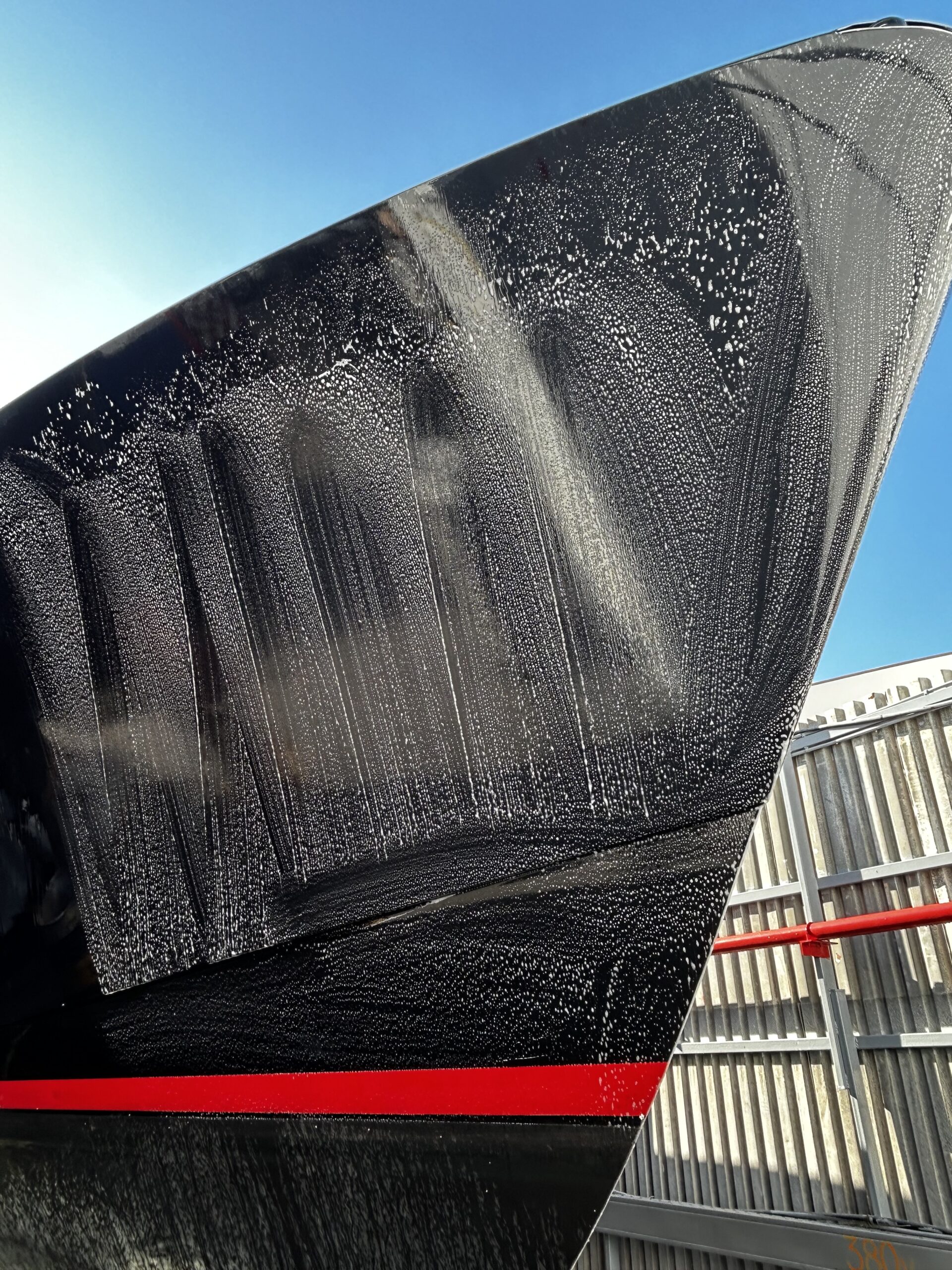
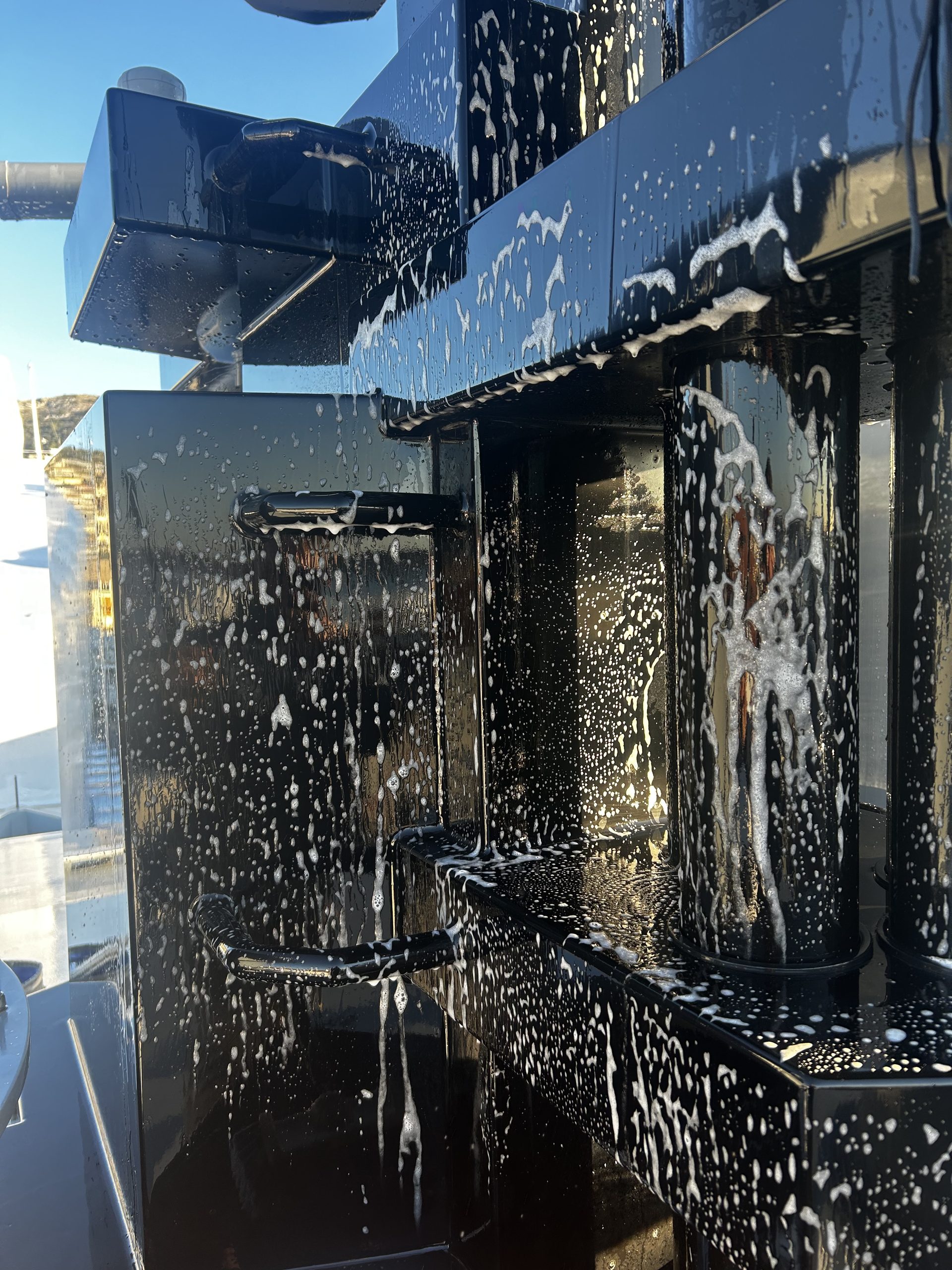
A good washdown removes contamination without compromising your boat’s finish. However, the wrong product, excessive detergent or a dirty brush can leave streaks and damage surfaces.
The right boat soaps lift dirt and oily grime. Meanwhile, thorough fresh-water rinsing removes loose salt. Choose your boat cleaning soap around the coating, whether waxed gelcoat, painted topsides or ceramic protection.
This guide compares ten options, explains their limitations and shows how to improve your washdown routine.
Some links on this page are affiliate links. This means The Yacht Maintenance Hub may earn a commission if you click through and make a purchase, at no extra cost to you. We only recommend products, tools and marine suppliers that we believe are useful for yacht owners, captains, crew and marine professionals.
Quick Answer: What Are the Best Boat Soaps?
The best boat soap matches your finish: Star brite Sea Safe suits general cleaning, Awlwash suits specified Awlgrip coatings, and DiTEC Elite offers ceramic compatibility. Combine a suitable soap with thorough fresh-water rinsing. The best boat wash cleans effectively while respecting existing protection.
Boat Soaps Compared
These boat soap reviews compare published specifications, intended uses and practical limitations. Recommendations reflect product suitability and practicality.
Boat soap
Main use
Star brite Sea Safe
General washdowns
Awlgrip Awlwash
Compatible painted finishes
3M Perfect-It
Maintained gelcoat
Meguiar’s M43
Waxed boats
Seapower Wash-N-Wax
Washing with added protection
Orpine Boat Soap
Frequent washdowns
Star brite Power Pine
Grime and odours
TotalBoat Boat Soap
General cleaning
Woody Wax Ultra Pine
Wash-and-wax maintenance
DiTEC Elite
Ceramic-coated surfaces
1. Star brite Sea Safe Boat Wash
Sea Safe removes dirt, grime and salt without stripping wax or polish. Its stated surface compatibility makes it a practical boat soap for gelcoat and surrounding fittings. Product guidance.
We would shortlist it for an owner maintaining a clean, waxed boat who wants a straightforward wash. However, persistent yellowing or rust needs separate treatment. Its appeal is routine care, with clear limits on what shampoo can achieve.
A useful everyday wash for owners who want one bottle for the hull and exterior fittings. Its wax-friendly formula helps you keep up with regular cleaning between polishing and protection jobs.
Awlwash cleans specified Awlgrip finishes without alkalis, acids or abrasives. Check your coating and regional version: Awlwash and Awlwash 2.0 have separate instructions. Product information.
On a professionally painted yacht, the paint maker’s care guidance provides a strong reason to choose this wash. We would confirm the coating name with the yard before ordering; familiarity with another boat’s cleaning routine cannot establish compatibility.
This product has been tested by TYMH and we can confirm its quality. Although it is more expensive its 1 gallon jug lasts for at least 3 months. Professional superyachts often use this product for paint warranty after resprays.
3. 3M Perfect-It Boat Wash
3M Perfect-It removes contamination without stripping wax. Its published dose is one US fluid ounce per US gallon of water, making this boat soap for dirt and grime straightforward to measure. Product information.
For a detailing kit, a separate wash helps you assess the surface before choosing further treatment. That practical role supports its inclusion. Nevertheless, chalky gelcoat needs assessment for restoration; compare our boat oxidation removers guide before buying more cleaner.
TYMH likes this product when paired with a 3m detailing system. When used with the wax and compounds it makes for a great basic gelocat detailing kit.
3M™ Perfect-It™ Boat Wash is a concentrated marine boat wash designed for cleaning common marine dirt, grime, algae and surface contamination from boat surfaces. 3M positions it as a general boat wash and as the first cleaning step in its Perfect-It™ gelcoat finishing system.
M43 removes scum and dirt while preserving wax. It merits consideration when choosing the best boat soap for fiberglass boats with maintained gelcoat. Product guidance.
We would consider M43 for owners who already wax regularly and want uncomplicated maintenance between applications. Its value comes from supporting that routine. However, preserving wax does not renew it, so keep inspecting the finish and maintaining its protection.
Meguiar’s Marine/RV Boat Wash is a liquid boat wash designed for routine cleaning of boats, yachts, RVs, and similar exterior surfaces. It is commonly used during regular washdowns to remove light dirt, grime, salt residue, and general surface contamination from gelcoat, fiberglass, and other suitable marine surfaces.
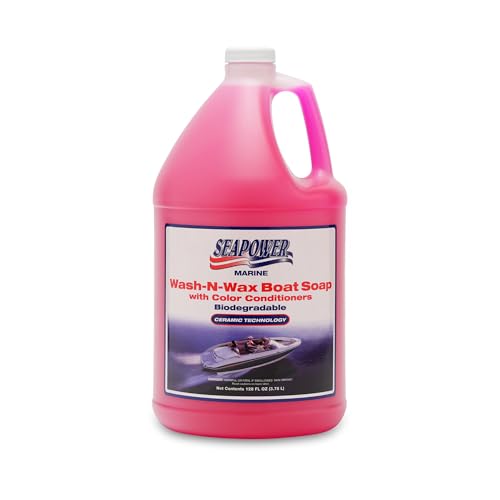
Seapower’s boat wash and wax combines cleaning with a carnauba-wax formulation. Check the selected version, since regional products and retailer variants can differ. Product guidance.
We would consider the combined formula for owners prioritising convenience on compatible finishes. Keep expectations realistic: a freshly glossy surface does not demonstrate how much protection remains or how long it will last. Continue your normal protection programme.
TYMH has tested this product over a 3 month trial. We found that after the paint was waxed separately this product helped to maintain the seal instead of washing it away over weekly washdowns. Although it is best to maintain your wax layer separately depending on your paints exsposure.
TYMH’s three-month trial gave us confidence in this wash for boats that already carry a sound wax layer. It offers a convenient cleaning step between separate applications of surface protection.
Orpine is a concentrated boat wash that removes salt and dirt while preserving wax. Its published dose is one US fluid ounce in three US gallons of water. Product information.
The small stated dose makes Orpine worth comparing for frequently washed boats. However, value depends on accurate measurement. We would keep a measuring cup with the wash gear and record usage before deciding whether a larger container makes sense.
Worth considering if frequent cleaning makes bottle consumption a concern. Its low recommended dose makes a little go a long way, provided you measure each bucket accurately.
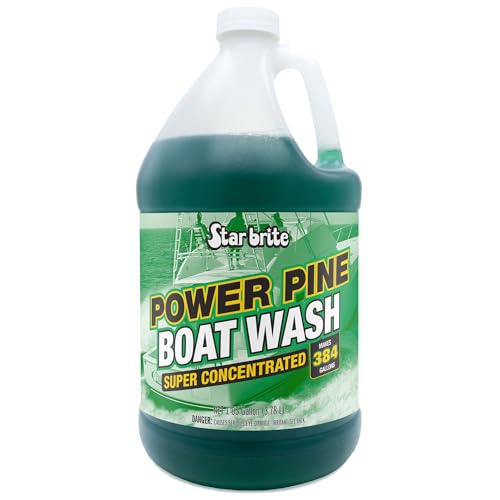
Power Pine targets dirt, salt deposits and fish odours while preserving wax or polish. Select the boat wash carefully; Power Pine Bilge Cleaner serves a different purpose. Product guidance.
Its odour-control role explains its place alongside plain maintenance washes, particularly for fishing boats. Nevertheless, we would inspect fish boxes and drains after cleaning. A pleasant smell should accompany removal of contamination, rather than hide trapped debris or drainage problems.
A useful pick for anglers dealing with the mess left after a day’s fishing. It combines an exterior wash with deodorising action, making it a practical addition to the post-trip cleanup.
This biodegradable boat soap covers varied tasks, including decks, hulls and suitable sails. TotalBoat permits warm or cold water and fresh or seawater. Product guidance.
For a smaller boat, the stated range of applications could simplify the cleaning locker. However, we would retain separate care instructions for sails and specialist coatings. Broad compatibility cannot replace material-specific guidance, and salt-removal washdowns still benefit from fresh-water rinsing.
A versatile option when you want one cleaner to cover several compatible surfaces onboard. Its ability to mix with seawater can also be useful away from a dockside fresh-water supply.
Ultra Pine’s concentrated gel cleans salt, fish residue and bird droppings while leaving a wax finish. It differs from Woody Wax’s separate deck protection products. Product guidance.
We would shortlist it for a boat already maintained with compatible wax products. Before changing an established system, check coating requirements and compare rinsing at the labelled dose. On walking surfaces, confirm approval for the application and remove any residue.
A useful choice for owners who prefer a wash that adds wax as it cleans. Its gel formula is aimed at everyday boating mess, from salt spray to residue left by fishing or birds.
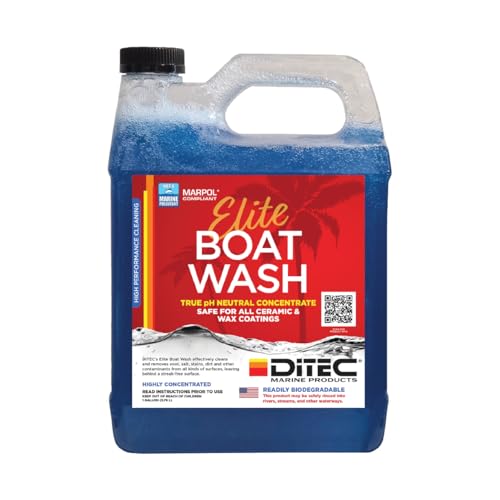
DiTEC describes Elite as a pH neutral boat soap for ceramic-coated and waxed surfaces. It targets soot, salt and oily contamination. Product guidance.
The explicit ceramic compatibility makes this a relevant boat soap for ceramic coated boats. We would send its details to the coating installer before purchasing. That confirmation offers a stronger basis for choosing than assuming neutral pH guarantees suitability.
A focused option for owners maintaining a ceramic-treated hull. It targets exhaust residue and oily film, making it worth considering where your coating supplier approves the product.
Choose a marine boat soap around the finish. For waxed surfaces, look for a boat soap that won’t strip wax. The best boat wash and wax suits surfaces that accept protective additives; specialist coatings may need another approach.
Remember that fiberglass describes the hull material, not its exposed finish. A fiberglass boat may carry gelcoat, painted topsides or ceramic protection. Check maintenance paperwork before choosing, especially after a refit. Neutral pH alone does not establish compatibility with every coating.
On steps and textured decks, confirm that any wash leaving wax or polymers has approval for that application. Keep grip in mind and rinse away residue.
A boat soap for salt removal helps lift mixed contamination, but fresh water removes loose salt. For stubborn stains, consult our best boat cleaners guide.
Hard-water spots, rust stains and oxidation need different approaches. Identify the mark first, test any suitable treatment discreetly, and stop if the surface changes colour or loses gloss.
What Does Each Wash Cost?
Compare cost per measured dose. For example, a hypothetical $24 bottle containing 960 ml provides 32 buckets at 30 ml per bucket: 75p per bucket. Use each product’s actual dilution instructions, then multiply by the buckets your boat needs.
A larger container can reduce purchase costs, but only if you use it regularly and have secure storage. For occasional cleaning, a smaller bottle may be more practical.
How to Wash Your Boat
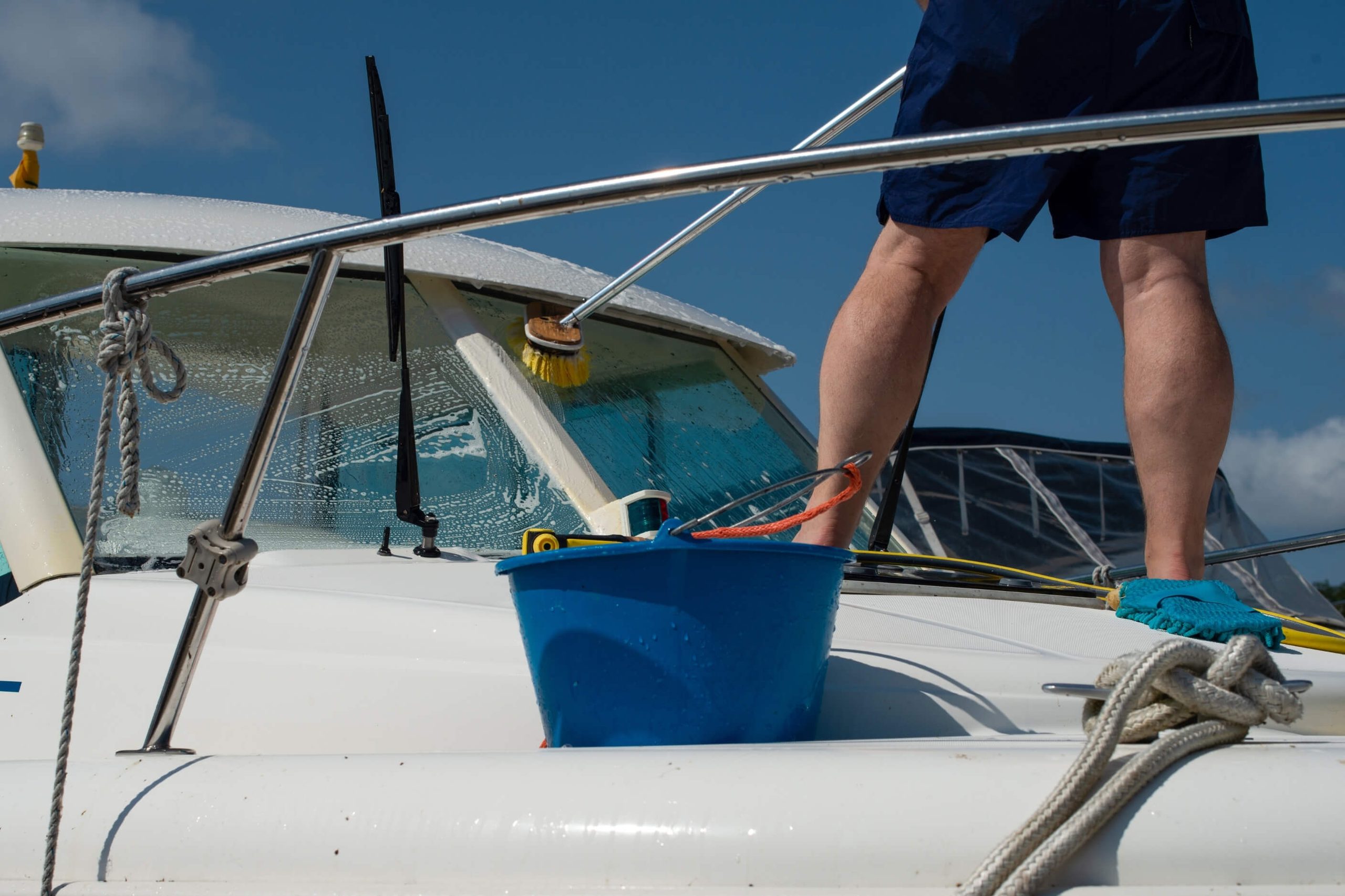
Prepare compatible soap, clean buckets, a measuring cup, a soft mitt or approved brush, and drying towels.
Work in shade or cool conditions.
Rinse away loose salt and grit.
Measure the manufacturer’s recommended dose.
Wash small sections from the top down.
Rinse your tools frequently and replace dirty water.
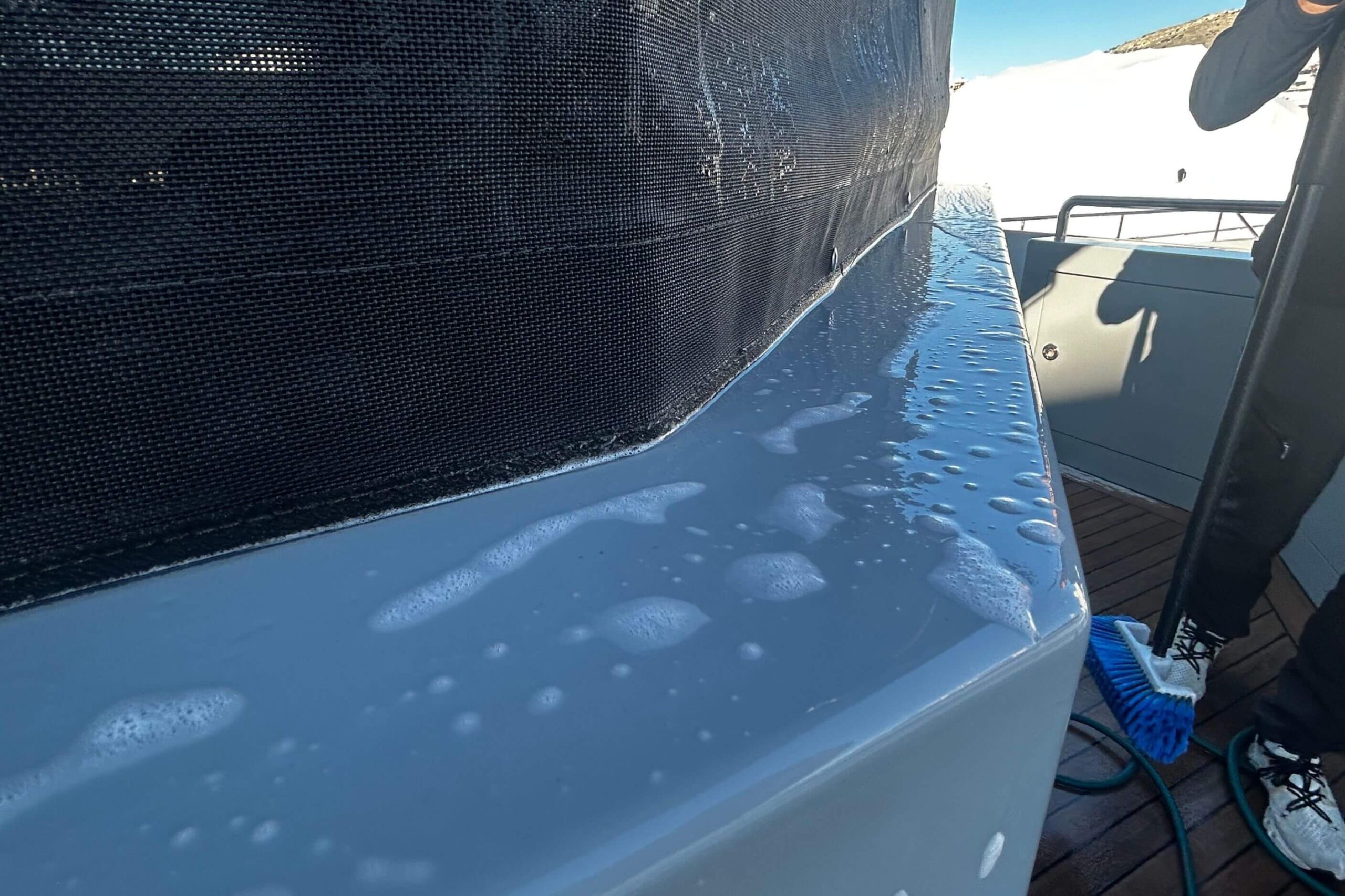
Rinse thoroughly before detergent dries.
Dry surfaces prone to water spots.
Avoid strong jets around seals and electrical fittings. For docking equipment, follow our boat fender cleaning guide.
Soft tools still need care: trapped grit can scratch a glossy surface. Rinse your mitt separately, inspect brush heads and replace damaged cleaning tools before starting.
Rinse exposed surfaces after saltwater trips. Add soap when grime remains. During regular use, inspect weekly and remove bird droppings or fish residue promptly.
Routine washing usually suits DIY care. However, consult your coating supplier or a marine detailer about peeling paint, chalking or unexpected reactions. Investigate recurring rust around fittings. Add these checks to your boat maintenance schedule.
For crew, label bottles and record dilution rates beside the cleaning equipment. A consistent routine helps prevent accidental product substitutions and makes persistent problems easier to identify.
Ignoring runoff: minimise detergent discharge and follow marina guidance, even with biodegradable products.
FAQs: Best Boat Soaps
What is the best boat soap for saltwater boats?
Star brite Sea Safe and Orpine offer useful general options. However, coating compatibility comes first. Thorough fresh-water rinsing remains essential, particularly around fittings and seams.
Can you use dish soap to wash a boat?
Choose a finish-approved wash for regular cleaning. Household formulations vary, and grease-cutting ingredients or additives may conflict with wax and coating requirements. Rinse thoroughly after accidental use.
Boat soap vs car soap: what matters?
Compatibility matters more than the label. Some washes cover both applications. Check supported surfaces, dilution and protective additives, then follow your coating supplier’s instructions. Example product guidance.
How often should you use soap?
Wash when contamination remains after rinsing. Increase frequency when the boat collects pollution, greasy deposits or bird droppings. Clean surfaces may only need a fresh-water rinse. A good general rule of thumb every 2/3 weeks will keep you in good condition.
Why does my boat still look streaky?
Check detergent concentration, rinsing, water hardness and surface temperature. If careful washing leaves marks, identify the deposit before reaching for stronger chemicals.
Summary
Choose boat soaps for your finish, measure accurately and rinse thoroughly. Before your next washdown, check coating instructions and clean your tools. For practical care tips and seasonal reminders, join the TYMH newsletter.
Join the newsletter for practical yacht maintenance advice, new guide releases, downloadable resources, product recommendations and seasonal reminders designed to help owners, captains and crew make better maintenance decisions onboard. As TYMH grows, subscribers will also get early access to new checklists, maintenance resources, recommended products and exclusive offers or discounts from selected marine brands.
Success
Thank you for signing up to receive updates from The Yacht Maintenance Hub.
Blog / 10 Best Boat Soaps for Removing Salt, Dirt and Grime
We track how people interact with our online web content and resources, and some of that tracking involves storing cookies on your device. By continuing to use our site you accept that you agree to this. For more details see our Privacy Statement.
 310
310
310
310