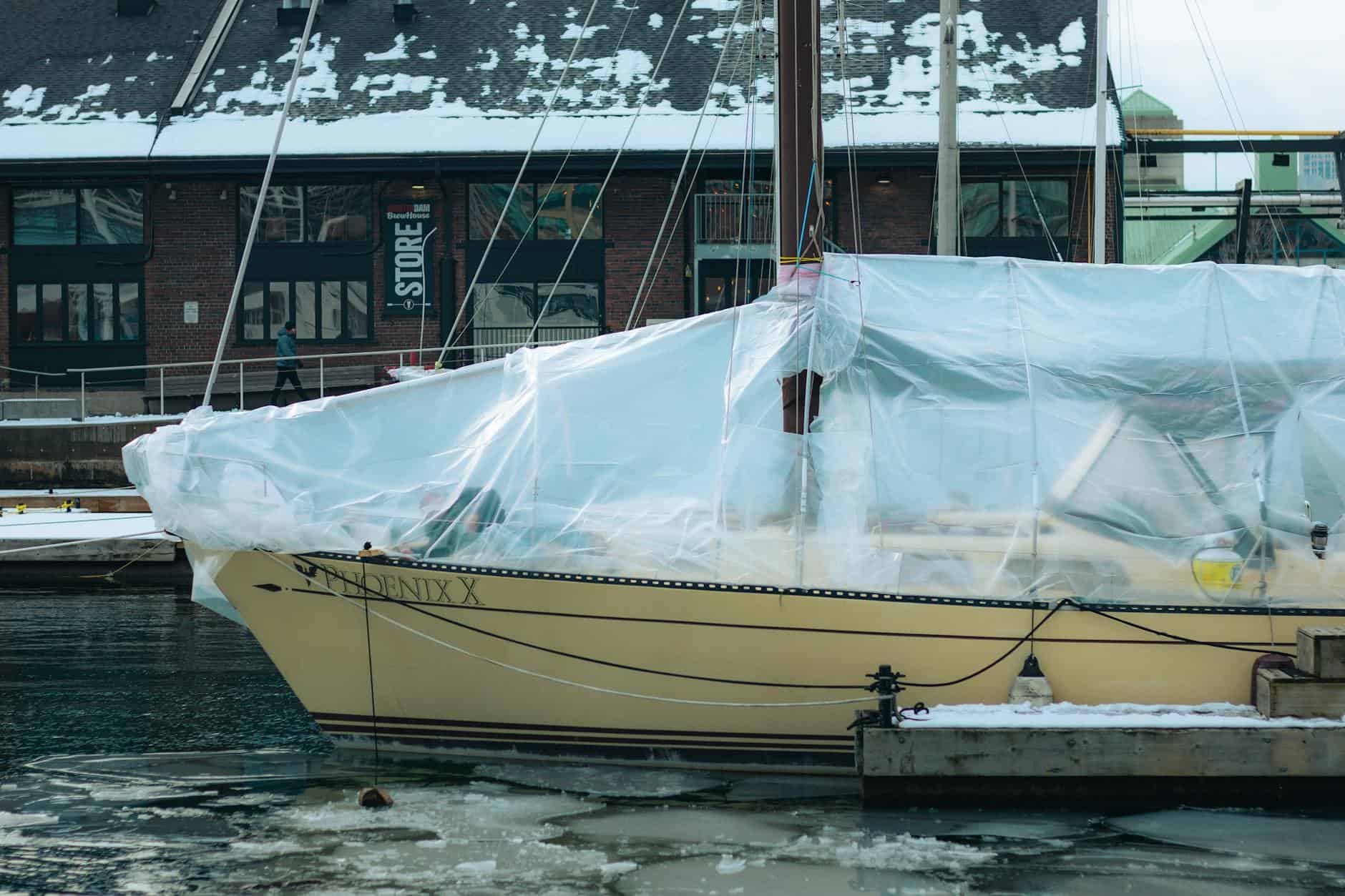
Good winter boat storage protects your boat through months of inactivity. Freezing water can damage engines and plumbing, while leaks, damp interiors and neglected batteries can create problems even in milder climates.
The right approach depends on where you store the boat, how exposed it is and who can inspect it. These 11 tips cover the main jobs before storage and the checks that keep small issues from becoming expensive repairs.
Some links on this page are affiliate links. This means The Yacht Maintenance Hub may earn a commission if you click through and make a purchase, at no extra cost to you. We only recommend products, tools and marine suppliers that we believe are useful for yacht owners, captains, crew and marine professionals.
Quick Answer: How Should You Store a Boat for Winter?
Clean and dry the boat, winterize vulnerable systems, arrange battery care and choose secure storage with suitable support or moorings. Fit a supported, ventilated cover where needed and organise regular inspections. Boats afloat must retain working drainage and power for essential bilge pumps.
Before starting, download the free TYMH Boat Winterization Checklist PDF. Use it to organise engine, plumbing, battery and final walkthrough tasks alongside the advice below.
11 Essential Winter Boat Storage Tips
1. Clean and Dry the Boat Thoroughly
Remove salt, dirt and food residues before storage. Wash the exterior with products suited to the finish, then clean the galley, heads and upholstery. Let surfaces and fabrics dry fully before fitting covers.
Inspect bilges for leaks and contamination. Collect oil through the yard’s waste arrangements rather than washing it overboard.
For your washdown kit, compare our boat soaps guide. A compatible wash, soft brush and absorbent drying towel can handle routine cleaning; stubborn stains may need a separate treatment.
2. Drain or Protect Vulnerable Water Systems
Water trapped in pumps, pipes, showers and toilets can freeze and split components. Follow each system’s storage instructions, including the freshwater tank, water heater, filters and any external shower.
Where draining alone is insufficient, use the correct winterization method and antifreeze approved for that system. Potable-water plumbing requires a product explicitly suitable for that purpose.
Label anything disconnected or isolated. The RYA’s winterising guidance highlights the importance of checking for trapped water. Ask a marine engineer to handle unfamiliar plumbing or cooling systems.
3. Prepare the Engine and Fuel System
Follow the engine manufacturer’s lay-up procedure for servicing, fuel treatment, draining and corrosion protection. Petrol, diesel and different injection systems can require different methods. Do not assume every engine should receive the same fogging treatment.
Record completed work and avoid restarting a winterized engine without checking its recommissioning requirements.
4. Plan Boat Battery Winter Storage
Identify the battery type before choosing a storage routine. Lead-acid batteries need appropriate charging and monitoring, while lithium batteries have their own storage-charge and temperature limits.
Isolate non-essential loads. However, a boat afloat still needs power for automatic bilge pumps and other essential equipment. Battery removal is only suitable where it does not disable required systems.
A compatible automatic maintainer can help where the storage site permits charging. The NOCO GENIUS5 is one option to assess against battery voltage, chemistry and capacity; it is not a universal charger for every yacht bank.
Compare our boat battery charger guide. Follow lithium charging-temperature limits, including when solar remains connected, and check the charger during visits.
5. Inspect the Hull and Arrange Proper Support
Check the clean hull for cracks, impact damage, blistering and corrosion. Photograph defects and arrange assessment before covering them with fresh coatings.
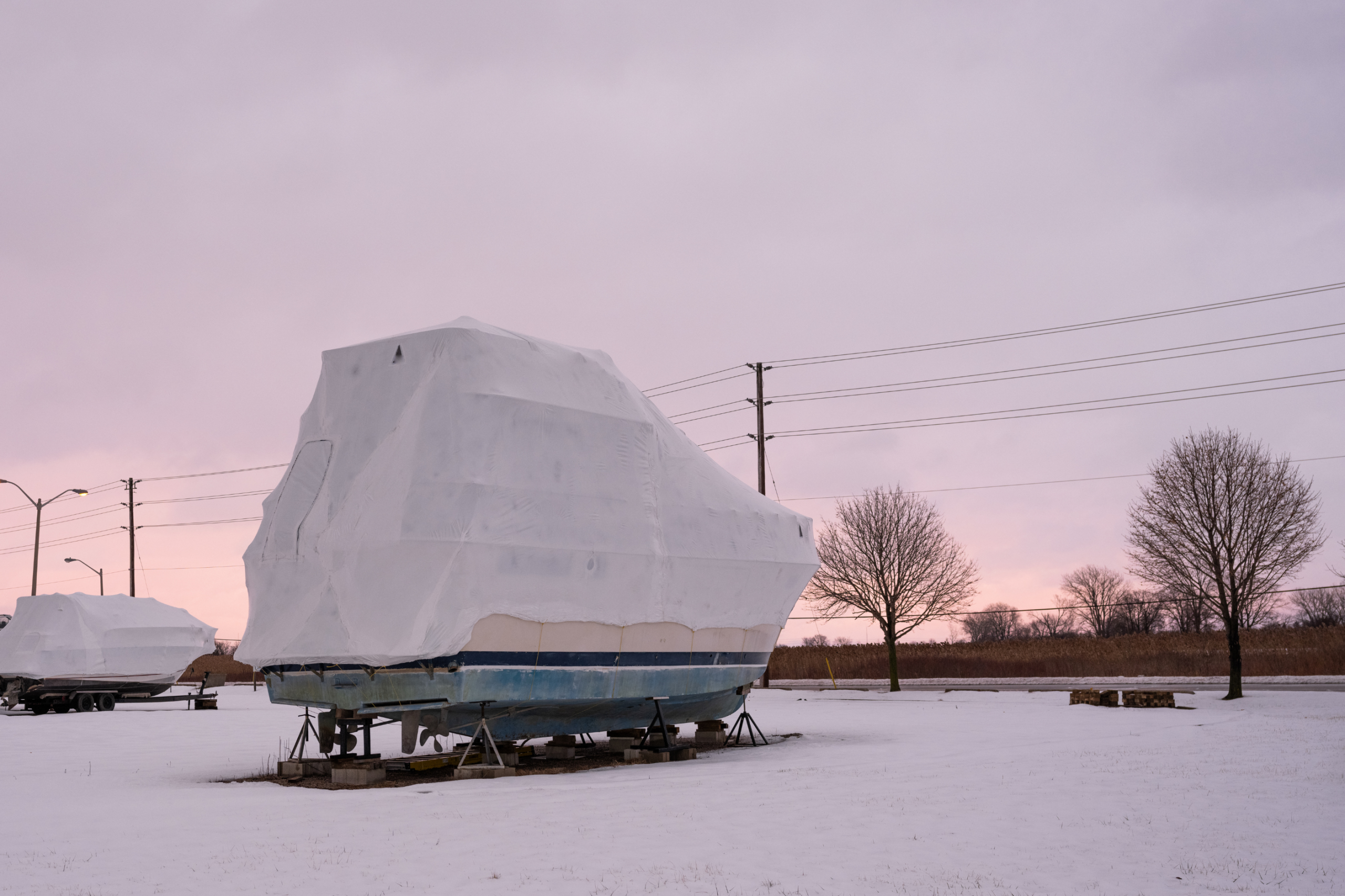
Ashore, have competent yard staff position blocks, stands or a cradle for your hull. Do not move supports yourself. Brownell’s stand guidance also warns against attaching covers to stands, because wind can pull them away.
Antifouling does not protect a hull from frost ashore. If repainting is due, use our boat antifouling paint guide to plan preparation and launch timing.
6. Choose the Right Winter Storage Location
Compare shelter, inspection access, security and the boat’s support requirements.
Storage option
Main advantage
Check before booking
Indoor storage
Shelter from direct rain, snow and wind
Heating, ventilation and access
Outdoor storage ashore
Access for hull maintenance
Supports, drainage and storm exposure
Marina berth afloat
Avoids lifting solely for storage
Flooding, ice, moorings and inspections
Home storage on a trailer
Convenient access for suitable small boats
Security, trailer condition and safe positioning
An unheated building can still freeze. Also, a berth or yard space does not automatically include boat checks.
Ask for an itemised winter boat storage quote covering lifting, supports, washing, electricity, inspections and relaunch. Use our boat haul out guide when comparing yard packages.
7. Fit a Supported, Ventilated Boat Cover
Choose a cover that fits the hull and deck layout. Support it so rain runs off, protect rubbing points and secure it independently of boat stands. A loose tarp can collect water and chafe against fittings.
Custom covers suit repeated use, while professionally installed shrink wrap offers another storage option. Both need ventilation and inspection access. Compare our guide to marine shrink wrap and custom covers.
Check that any cover-support poles or frame suit the cover and expected conditions. They still need inspection after severe weather.
8. Remove Valuables and Store Soft Furnishings Dry
Take portable electronics, tools and valuables somewhere secure where practical. Follow equipment instructions before disconnecting anything, and protect fixed displays with suitable covers.
Remove food, bedding and damp clothing. Store removable cushions ashore in dry conditions, or position them to allow airflow around their surfaces.
Leave cleaned fridge doors and internal lockers ajar where appropriate. Photograph the interior before departure, and record removed equipment so spring recommissioning does not become a search for missing parts.
9. Control Damp and Condensation
Start with leak repairs and thorough drying. Then maintain weather-protected ventilation and airflow around enclosed spaces. A humidity meter can help you spot changes between visits.
Star brite No Damp is a passive moisture-absorber option for suitable enclosed spaces. Check and replace or refill it according to its instructions. It cannot compensate for an ongoing leak or dry an entire wet boat.
A powered dehumidifier needs safe electricity, reliable drainage and a suitable operating-temperature range. Follow its ventilation instructions; leaving the cabin wide open can make it work on incoming outside air.
Persistent damp deserves investigation, not just another tub of moisture absorber.
Useful for helping reduce excess humidity and musty odours in enclosed cabins and lockers while the boat is stored. The moisture-absorbing crystals work without shore power, and the refillable bucket can be emptied and topped up for continued use.
10. Check Safety, Drainage and Mooring Arrangements
Before leaving, confirm the yard’s rules for charging equipment, portable fuel containers, gas bottles and chemicals. Check shore-power leads and connections, and isolate unused electrical loads.
For boats afloat, inspect mooring lines, chafe protection, fenders and bilge-pump operation. Have seacocks set and labelled for the vessel’s storage arrangement. Do not blanket-close valves needed for cockpit drainage.
Keep drains clear of leaves. If the ashore storage procedure requires a hull drain plug to be removed, record it for relaunch. Never remove that plug while afloat.
Do not rely on a portable heater as the only protection against freezing.
11. Inspect the Boat Throughout Winter
Agree who will check the boat and what they should do if something is wrong. A practical starting schedule is:
When
What to inspect
Soon after storage begins
Cover fit, leaks, drainage and battery setup
Weekly where practical
Cover, bilge, moorings or visible supports, damp and security
Before and after severe weather, when safe
Storm damage, snow loading and blocked drains
At equipment-makers’ intervals
Battery condition, charger status and moisture absorbers
Adjust this schedule for exposure, equipment and insurance requirements. If you cannot visit, arrange a caretaker or yard inspection service.
Keep dated photographs and a short maintenance log. Record closed valves, removed plugs and unfinished repairs for spring.
Common Winter Boat Storage Mistakes
Covering a damp boat: Let upholstery, lockers and cleaned surfaces dry before closing up.
Assuming indoor storage cannot freeze: An unheated building still needs appropriate winterization.
Disconnecting essential power: Boats afloat need a reliable supply for automatic bilge pumps.
Relying on a heater alone: A power failure can leave vulnerable systems unprotected.
Assuming the yard will inspect everything: Agree the checks, frequency and responsibilities before leaving.
Practical Tips for Owners and Crew
Assign one person to oversee storage: Keep inspection dates, maintenance records and contractor updates together.
Photograph the final setup: Capture covers, moorings or supports, battery connections and any existing damage.
Label isolated systems: Record closed valves, disconnected equipment and removed drain plugs for spring recommissioning.
Prepare a short handover: Include access arrangements, emergency contacts and instructions for reporting leaks or storm damage.
Keep a spring job list: Separate work required before launch from improvements that can wait. Book specialist work early where needed.
Frequently Asked Questions About Winter Boat Storage
Can You Store a Boat Outside All Winter?
Yes, with suitable supports, weather protection, drainage, winterization and inspections. The arrangement must suit local wind, rain, snow and freezing conditions.
Is Indoor Boat Storage Worth Paying More For?
It can be worthwhile where weather exposure is severe or fitting a suitable cover is difficult. Compare total seasonal costs and access. An unheated building still needs appropriate freeze protection.
Can You Leave a Boat in the Water Over Winter?
Yes, where the berth, climate and insurance conditions allow it. Maintain secure moorings, working drainage, essential bilge-pump power and regular checks. Ask the marina about local ice and storm risks.
Should You Remove Boat Batteries for Winter Storage?
Removing batteries can suit a boat stored ashore, provided no essential systems need power. If the boat remains afloat, maintain a reliable supply for automatic bilge pumps. Follow the battery manufacturer’s guidance on storage temperature, charge level and maintenance.
How Do You Prevent Mould During Winter Boat Storage?
Clean and dry the interior, remove damp bedding and repair leaks before covering the boat. Provide weather-protected ventilation and airflow around cushions and lockers. Moisture absorbers can help in enclosed spaces, but recurring condensation or musty smells need investigation.
Prepare Once, Then Keep Checking
Successful winter boat storage combines proper preparation with regular attention. Clean and dry the boat, protect its systems and make sure someone can respond when a cover shifts or a leak appears.
Use TYMH’s practical winterisation checklist to help protect your engine, plumbing, batteries, deck gear, safety equipment and onboard systems before the cold weather sets in.
Success
Thank you for submitting the form, we will be in touch with you shortly.
We track how people interact with our online web content and resources, and some of that tracking involves storing cookies on your device. By continuing to use our site you accept that you agree to this. For more details see our Privacy Statement.
 310
310
310
310