A dull, oxidised hull can make even a well-maintained boat look tired. However, the right Boat Polishers can quickly bring back gloss, remove light surface oxidation, and help protect the finish before damage gets worse.
Choosing the right boat polishing machine matters because gelcoat is different from car paint. It is usually thicker and harder, but it also suffers from UV, salt, grime, fender marks, and poor washing. Therefore, using the wrong boat buffer polisher can waste time or leave swirl marks, heat damage, or uneven shine.
In this guide, we compare rotary boat polisher, dual action boat polisher, and cordless boat polisher options. You will learn which type is best for gelcoat, oxidation, waxing, and regular yacht maintenance.
Some links on this page are affiliate links. This means The Yacht Maintenance Hub may earn a commission if you click through and make a purchase, at no extra cost to you. We only recommend products, tools and marine suppliers that we believe are useful for yacht owners, captains, crew and marine professionals.
Quick Answer: What type of boat polisher is best?
The best boat polishers depend on the job. A rotary boat polisher is best for heavy oxidation and fast correction, a dual action boat polisher is safer for beginners and finishing work, and a cordless boat polisher is useful for quick touch-ups and awkward areas.
For most owners, the best setup is a good dual action machine for regular maintenance and a rotary polisher only when heavier gelcoat correction is needed.
What Is a Boat Polisher?
A boat polisher is a powered tool used to apply compound, polish, wax, or sealant to marine surfaces. It helps restore gloss, remove oxidation, and improve the appearance of fiberglass and gelcoat.
You may also see these tools described as marine polishers, boat buffer, marine buffer polisher, fiberglass boat polisher, gelcoat polisher, boat hull polisher, or fiberglass polishing machine. Although the names overlap, the machine type makes a big difference.
The three main options are:
Rotary polishers
Dual action polishers
Cordless polishers
Each one has a place onboard. However, not every machine suits every polishing job.
Why Boat Polishers Matter
Gelcoat slowly loses shine because of UV exposure, salt, air pollution, hard water, and repeated washing. As a result, the surface can become chalky, faded, stained, or dull.
Polishing removes a very fine layer of oxidised material and refines the surface. Then, wax or sealant protects the finish and slows down future damage.
Good boat polishing tools can help:
Restore faded gelcoat
Remove light oxidation
Improve wax protection
Reduce dull patches
Speed up seasonal detailing
Improve resale appearance
Reduce the need for aggressive sanding
However, polishing should not replace good maintenance. If the boat needs heavy compounding every few months, the real issue may be poor washing, weak protection, or too much UV exposure without regular waxing.
Rotary vs Dual Action vs Cordless Boat Polishers
Polisher Type
Best For
Main Benefit
Watch Out For
Rotary boat polisher
Heavy oxidation and faded gelcoat
Strong cutting power
Can create heat or holograms
Dual action boat polisher
Beginners, waxing, finishing
Safer and easier to control
Slower on heavy oxidation
Cordless boat polisher
Small jobs and quick touch-ups
No cable drag
Limited battery life
Rotary Boat Polishers
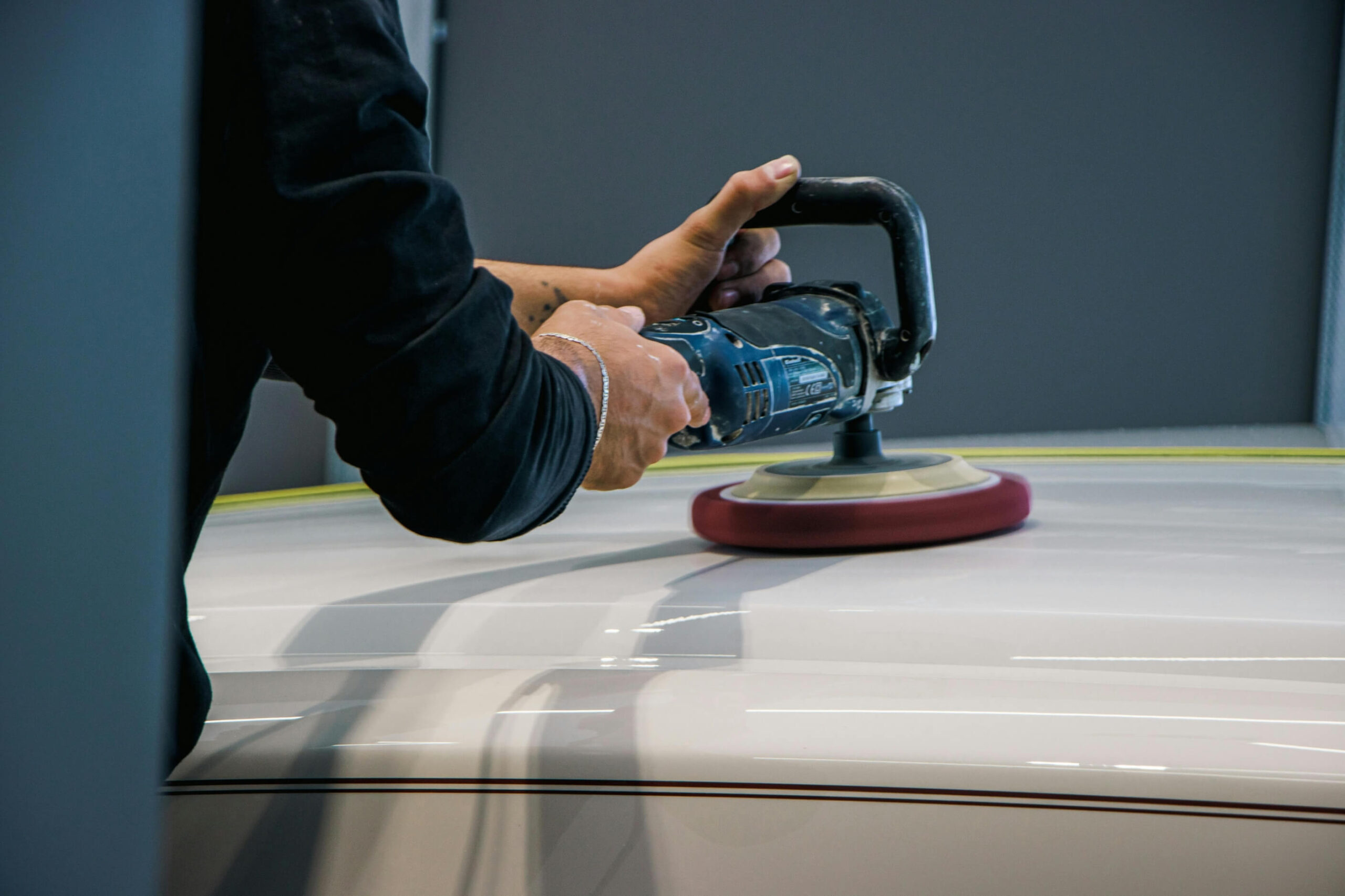
A rotary boat polisher spins in a direct circular motion. Because of this, it cuts quickly and works well on hard, oxidised gelcoat.
This type of marine detailing polisher is often used by professional detailers and yacht crew because it saves time on large hulls. It is especially useful when the gelcoat has gone chalky or has lost most of its shine.
Best Uses for Rotary Polishers
A rotary machine is best for:
Heavy oxidation
Faded topsides
Older fiberglass hulls
First-stage compounding
Large correction jobs
Professional gelcoat restoration
If you need a boat polisher for oxidation, a rotary machine is usually the strongest option. It can also be the best polisher for gelcoat that needs serious correction.
Pros and Cons
Pros
Cons
Fast correction
Easier to misuse
Good for heavy oxidation
Can create heat
Works well on hard gelcoat
May leave holograms
Efficient on large hulls
Needs more skill
TYMH Advice
A rotary polisher is a powerful tool, not a beginner shortcut. Therefore, use low speed first, keep the pad moving, and avoid pressing hard on corners, chines, and raised mouldings.
Also, avoid dry buffing. If the pad becomes clogged or the compound dries out, stop and clean the pad before continuing.
Dual Action Boat Polishers
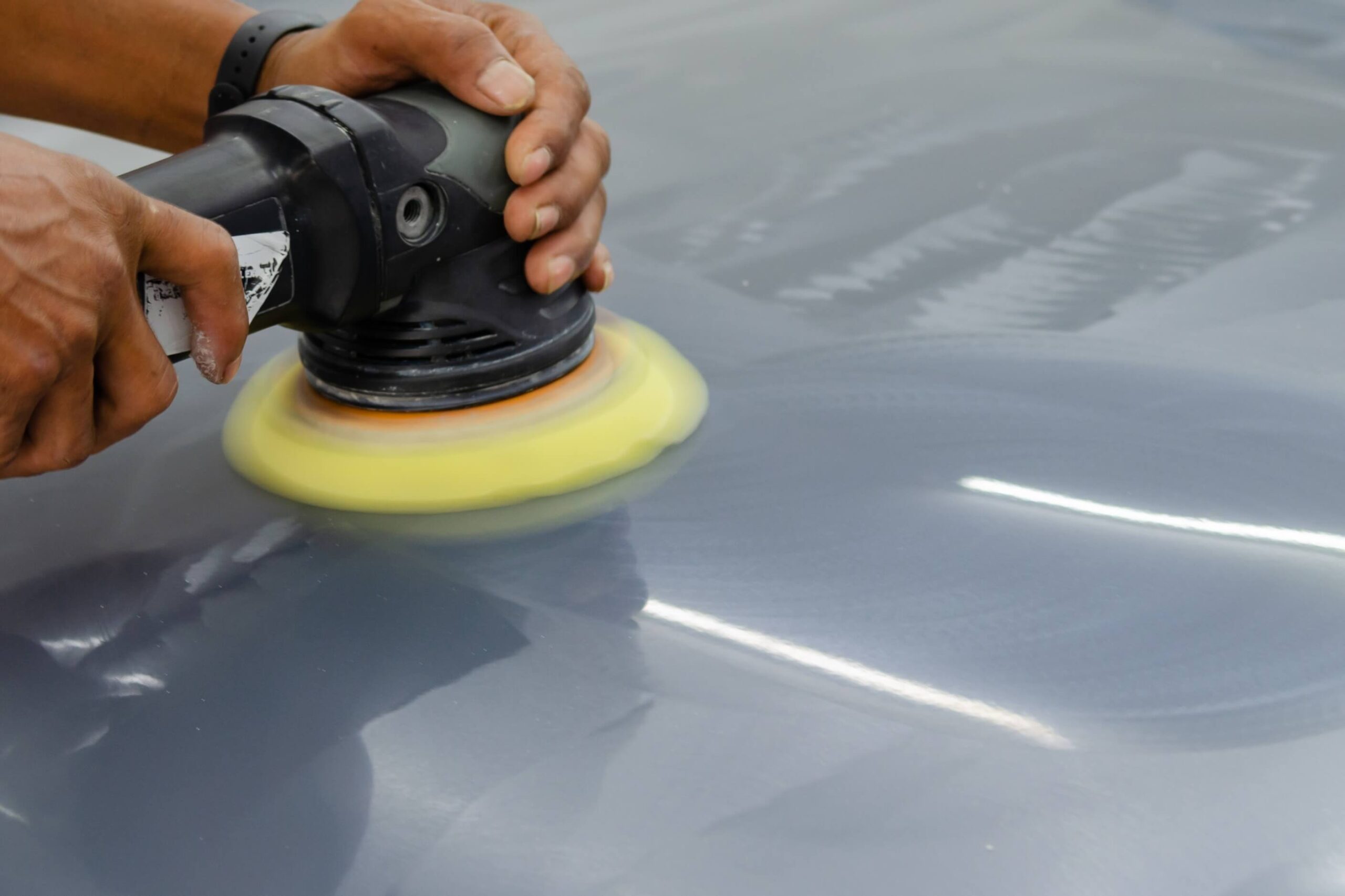
A dual action boat polisher combines spinning with an orbital movement. As a result, it is less aggressive than a rotary machine and easier to control.
This makes it a safer choice for owners, beginners, and crew carrying out regular maintenance. It is also excellent for final polishing and wax application.
Best Uses for Dual Action Polishers
A dual action machine is best for:
Beginner polishing
Light to medium oxidation
Final finishing
Wax application
Swirl reduction
Regular gelcoat maintenance
If you want one safe marine polisher for regular upkeep, start with a dual action machine. It gives a good balance of correction, control, and finish quality.
Pros and Cons
Pros
Cons
Safer for beginners
Slower on heavy oxidation
Less heat build-up
Can stall on curves
Good finish quality
Needs correct pads
Great for waxing
Takes longer on big hulls
TYMH Advice
For most yacht owners, a dual action polisher is the best first purchase. It is easier to learn, less likely to damage the surface, and more suitable for routine polishing and waxing.
However, if the gelcoat is badly oxidised, you may still need a rotary machine or a professional detailer.
Cordless Boat Polishers
A cordless boat polisher runs on batteries rather than plugging into the yacht or shore. Therefore, it is useful in marinas, on moorings, around tenders, or in areas where cable management is awkward.
Cordless machines also reduce the risk of dragging cables across clean gelcoat or wet decks. However, battery life can limit larger jobs.
Best Uses for Cordless Polishers
A cordless machine is best for:
Tender polishing
Transoms
Small topside sections
Cockpit mouldings
Quick touch-ups
Marina work
Awkward areas
Pros and Cons
Pros
Cons
No cable drag
Battery life limits use
Easy to move around
More expensive with batteries
Good for quick jobs
Less ideal for full hulls
Useful onboard
Can feel heavy
TYMH Advice
Cordless polishers are convenient, but they should not always replace corded machines. For example, polishing a full hull is usually easier with a corded boat polishing machine. However, for crew touch-ups and tender work, cordless tools are very useful.
Now you know what option works best for you check out our recommendations below!
A practical choice for experienced owners and crew tackling regular compounding and polishing work. Variable-speed controls and soft start help manage application and reduce product splatter, while constant-speed control keeps the machine running consistently under load.
Description:
A good starting point for owners taking on regular machine polishing and wax application. Its dual-action movement provides a forgiving approach to maintaining gloss, with adjustable speeds and interchangeable pads to suit different stages of the job.
Description:
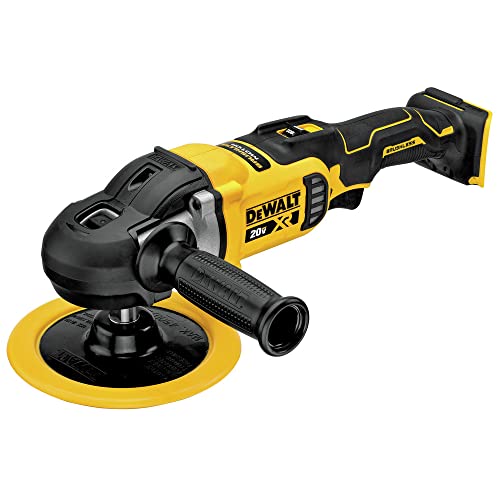
A useful cordless option for experienced users moving between polishing jobs around the boat. Its brushless motor and variable-speed controls suit corrective work, especially if you already own compatible DeWalt batteries. Battery and charger are sold separately.
Description:
A strong option for experienced owners and crew carrying out regular compounding and polishing work. Soft start and variable-speed controls help manage the rotary action, while corded power suits longer sessions on larger surfaces.
A practical choice for experienced owners and crew tackling regular compounding and polishing work. Variable-speed controls and soft start help manage application and reduce product splatter, while constant-speed control keeps the machine running consistently under load.
A good starting point for owners taking on regular machine polishing and wax application. Its dual-action movement provides a forgiving approach to maintaining gloss, with adjustable speeds and interchangeable pads to suit different stages of the job.
A useful cordless option for experienced users moving between polishing jobs around the boat. Its brushless motor and variable-speed controls suit corrective work, especially if you already own compatible DeWalt batteries. Battery and charger are sold separately.
A strong option for experienced owners and crew carrying out regular compounding and polishing work. Soft start and variable-speed controls help manage the rotary action, while corded power suits longer sessions on larger surfaces.
We earn a commission if you make a purchase, at no additional cost to you.
Best Boat Polisher by Job Type
Job
Best Tool
Why
Heavy oxidation
Rotary boat polisher
Fast correction
Light oxidation
Dual action boat polisher
Safer control
Waxing
Boat wax polisher or dual action
Smooth application
Tender work
Cordless boat polisher
Easy movement
Large hull
Rotary plus dual action
Correction and finishing
Beginner use
Dual action
Lower risk
Professional detailing
Rotary and dual action
Full correction system
What Should Be in a Boat Polishing Kit?
A good boat polishing kit should include more than the machine. Pads, compounds, towels, and protection products all affect the final result.
Useful items include:
Cutting compound
Finishing polish
Marine wax or sealant
Wool cutting pads
Foam polishing pads
Soft finishing pads
Microfiber towels
Masking tape
Pad cleaning brush
Extension lead or spare batteries
Gloves and eye protection
The right boat polishing pads matter because each pad has a different level of cut. Wool pads cut quickly, microfiber pads offer strong correction, foam cutting pads are more controlled, and soft finishing pads are best for wax or sealant.
As a rule, start with the least aggressive pad and compound that works. Then, step up only if the surface still looks dull.
How to Use a Boat Polisher Safely
Before polishing, wash the boat properly and remove salt, dirt, and loose grime. Then dry the surface fully. If you polish over contamination, you may create scratches.
Next, tape sensitive areas such as rubber seals, decals, stainless fittings, painted stripes, and sharp edges. After that, test a small section before polishing the whole boat.
A simple process is:
Wash and dry the surface.
Tape sensitive fittings and edges.
Choose a suitable pad and compound.
Test a small area.
Work in small sections.
Keep the pad flat.
Keep the machine moving.
Wipe residue with clean microfiber.
Inspect the finish in good light.
Apply wax or sealant.
Also, avoid polishing in direct sun or on hot gelcoat. Shade, early morning, or indoor shed work usually gives better results.
How Often Should You Polish a Boat?
Most boats do not need heavy polishing every season. In fact, too much aggressive compounding can reduce gelcoat thickness over time.
Task
Suggested Interval
Washdown
After use or as needed
Wax or sealant
Every 3–6 months
Light machine polish
Once or twice per year
Heavy compounding
Only when needed
Professional correction
Every few years, if required
Boats in high-UV areas may need more frequent waxing. However, good washing and protection should reduce the need for heavy polishing.
DIY vs Professional Polishing
DIY polishing is suitable when the boat has light oxidation and the owner has time to work carefully. A dual action machine is usually the safest choice for this.
However, call a professional when:
Gelcoat is badly oxidised
The boat has expensive paint
There are deep sanding marks
The surface looks patchy or thin
You need a show-quality finish
The boat is large and time is limited
A professional detailer will usually use several machines, pads, and compounds. More importantly, they will know when not to polish further.
The first mistake is starting too aggressively. Instead, test a small area and increase cutting strength only when needed.
Another common mistake is polishing without waxing afterwards. Polishing restores gloss, but wax or sealant protects it.
Also, avoid holding the machine still. Keep it moving because heat builds quickly, especially with rotary polishers.
Finally, do not try to fix every surface problem with polish. Cracks, crazing, osmosis blisters, failing paint, and deep damage need proper repair advice.
FAQs: Boat Polishers
What are the best boat polishers for beginners?
The best boat polishers for beginners are usually dual action machines. They are easier to control and safer than rotary polishers.
Is a rotary or dual action polisher better for gelcoat?
A rotary polisher is better for heavy oxidation. However, a dual action polisher is better for regular maintenance, finishing, and waxing.
Can I use a car polisher on a boat?
Yes, some car polishers can work on boats. However, use pads and compounds suitable for fiberglass and gelcoat.
What is the best boat polisher for oxidation?
The best boat polisher for oxidation is usually a rotary machine with the correct marine compound and pad. For light oxidation, a dual action machine may be enough.
How often should I polish my boat?
Most boats only need light polishing once or twice per year. Heavy compounding should only be done when oxidation requires it.
Summary
The right Boat Polishers can save hours and protect the appearance of your boat. Rotary machines are best for heavy oxidation, dual action machines are safer for regular maintenance, and cordless machines are useful for quick onboard jobs.
For most owners, start with a quality dual action marine buffer polisher, good boat polishing pads, and a reliable wax or sealant. Then, if the gelcoat needs deeper correction, use a rotary machine carefully or bring in a professional.
Use TYMH’s practical winterisation checklist to help protect your engine, plumbing, batteries, deck gear, safety equipment and onboard systems before the cold weather sets in.
Success
Thank you for submitting the form, we will be in touch with you shortly.
Blog / Best Boat Polishers Compared: Rotary vs Dual Action vs Cordless
We track how people interact with our online web content and resources, and some of that tracking involves storing cookies on your device. By continuing to use our site you accept that you agree to this. For more details see our Privacy Statement.
 310
310
310
310